Holidays in Port Isaac, North Cornwall – Harbour, Port Gaverne & Port Quin
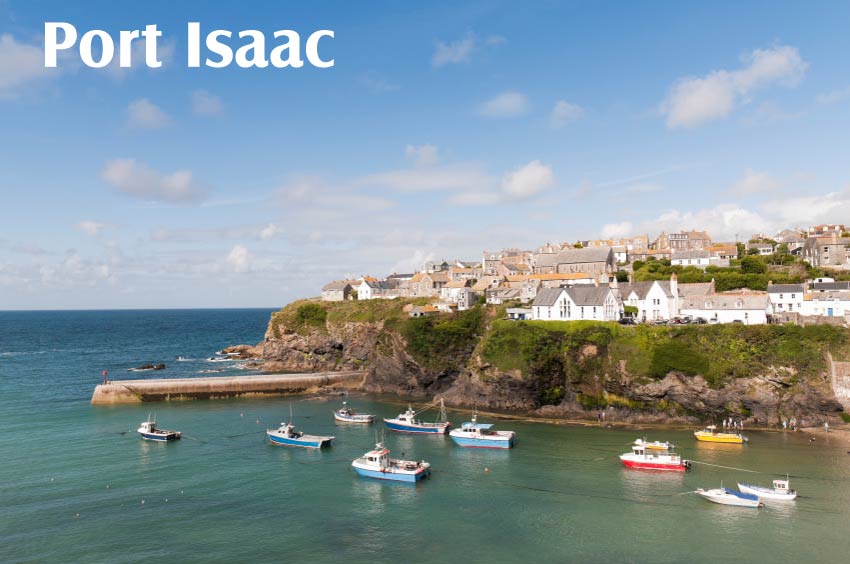
Port Isaac in North Cornwall
North Cornwall Towns and Villages | Padstow | Wadebridge | The Camel Estuary | Rock | Polzeath | Port Isaac | Trebarwith Strand | Tintagel | Bossiney Cove | Rocky Valley | Boscastle | Crackington Haven | Bude | Launceston | Camelford | Altarnum | Bodmin |
On This Page
- Holidays in Port Isaac
- Best Time to Visit
- The Harbour, The Platt & Beach
- Port Gaverne & Nearby Beaches
- Things to Do, Shops & Food
- Coast Path Walks: Port Gaverne & Port Quin
- Doc Martin & the Fisherman’s Friends
- History: Fishing & Trading
- Famous People, TV & Music
- Polzeath, Padstow, Wadebridge & Tintagel
- Staying in Port Isaac & Responsible Tourism
- Visitor Information
- Stay & Explore near Port Isaac
- Family Holidays & Short Breaks
- Frequently Asked Questions
HOLIDAYS IN PORT ISAAC
Port Isaac is one of the most picturesque fishing villages in Cornwall – a tight cluster of whitewashed and slate-hung cottages tumbling down two steep valleys to a small harbour on the Atlantic coast of North Cornwall. Its Cornish name, Porthysek, means “corn port”, a reminder of the trade that once passed over its quays, and fishing boats still work from the harbour today, landing crab, lobster and fish on the slipway known as The Platt.
Millions of people know the village without ever having been here. For almost twenty years Port Isaac played Portwenn in the ITV drama Doc Martin, and it is the home of the Fisherman’s Friends, the shanty-singing fishermen whose story became a hit film and a stage musical. Yet away from the cameras it remains a real working village, with a lifeboat station, a primary school, a parish church and a strong community spirit.
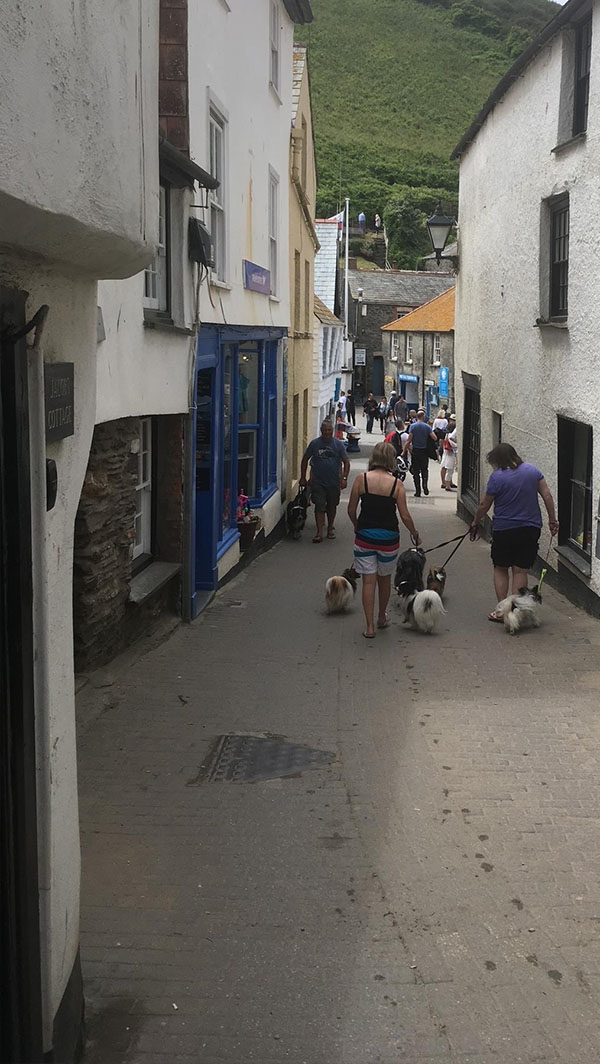
A holiday in Port Isaac is all about slowing down. Wander the narrow lanes – one of them, Squeezy Belly Alley, is barely wide enough for one person – browse the galleries and small shops, eat fresh seafood beside the harbour and watch the boats come in on the tide. The village sits within the Cornwall National Landscape and its historic core has been a Conservation Area since 1971, with around ninety listed buildings.
Port Isaac is also a superb base for walking. The South West Coast Path passes right through the village, leading east to the little cove of Port Gaverne and west over spectacular cliffs to the National Trust hamlet of Port Quin and the clifftop folly of Doyden Castle. Inland lie quiet lanes, the medieval church of St Endellion and rolling farmland.
Within half an hour’s drive are the surf beaches of Polzeath, the sailing village of Rock, the harbour town of Padstow, the market town of Wadebridge on the Camel Trail, and the legendary castle at Tintagel. Holiday accommodation ranges from fishermen’s cottages in the old village to farmhouses, B&Bs and campsites in the countryside – see self-catering in Port Isaac and all holiday accommodation in Port Isaac.
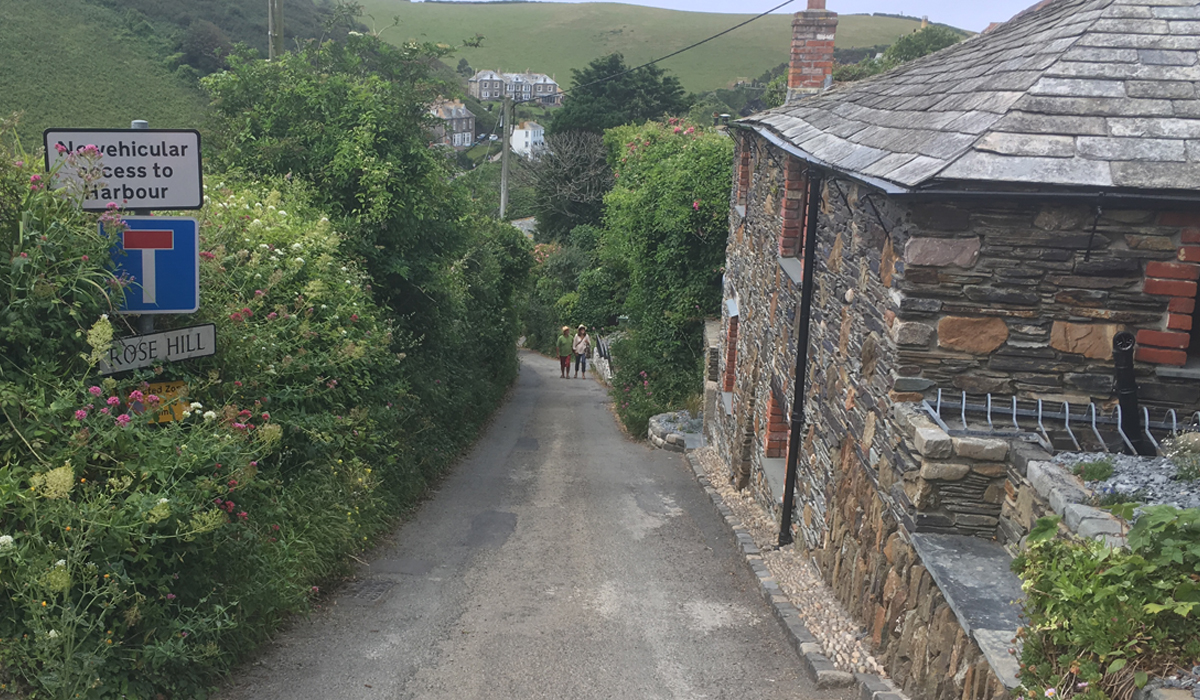
The village falls naturally into two parts. At the top, Trewetha Lane and New Road form the main road through the village towards Port Gaverne, with the main car park and a Co-op for everyday supplies. Below them lies the old village around the harbour, with Fore Street running down the eastern side to The Platt and Roscarrock Hill climbing the western side towards the cliffs. The steep lane of Rose Hill makes a short cut from Trewetha Lane straight down into the heart of the old village.
Port Isaac is easy to reach by road, lying a few miles off the A39 between Wadebridge and Camelford on the B3267, and roughly midway along the coast between Padstow and Tintagel. Most visitors arrive by car, but Go Cornwall Bus route 96 links the village with Wadebridge, Polzeath, Rock and Camelford, and the nearest main line station is Bodmin Parkway. Once you have arrived, the car is best left behind – everything in the old village, from the harbour to the galleries and the coast path, is within a few minutes’ walk.
The village suits many different kinds of holiday. Couples come for quiet walks, fine views and seafood suppers; walkers use it as a base for some of the most spectacular stretches of the South West Coast Path; families enjoy the rock pools, crabbing and nearby beaches; and fans of Doc Martin come to find Portwenn’s surgery, school and harbour. Photographers and artists are drawn by the changing light on the harbour, and many visitors return year after year to the same cottage.
Evenings in Port Isaac are gentle and unhurried. As the day visitors leave, the harbour grows quiet, the fishing boats settle on the sand and the lights come on in the cottages climbing the hillsides. Take a crab sandwich or fish and chips down to the harbour wall, enjoy a drink at the Golden Lion overlooking The Platt, or walk up Roscarrock Hill to watch the sun go down over the Atlantic.
Best Time to Visit Port Isaac
Spring and early summer (April to June) are perhaps the loveliest times to visit, when the clifftops are bright with thrift, campion and bluebells, the coast path is quiet and the days are long. July and August bring warm weather, the busiest streets and the best chance of catching an evening of shanty singing on The Platt, but car parks fill early and accommodation must be booked well ahead.
September and October are favourites with walkers and couples: the sea is at its warmest, the crowds have gone and the light on the harbour is wonderful. Winter is peaceful and atmospheric, with Atlantic storms crashing against the breakwaters, though some cafés, shops and galleries close or shorten their hours. Whatever the season, check the tide times before you plan your day – at high tide the harbour beach disappears altogether.
↑ Back to top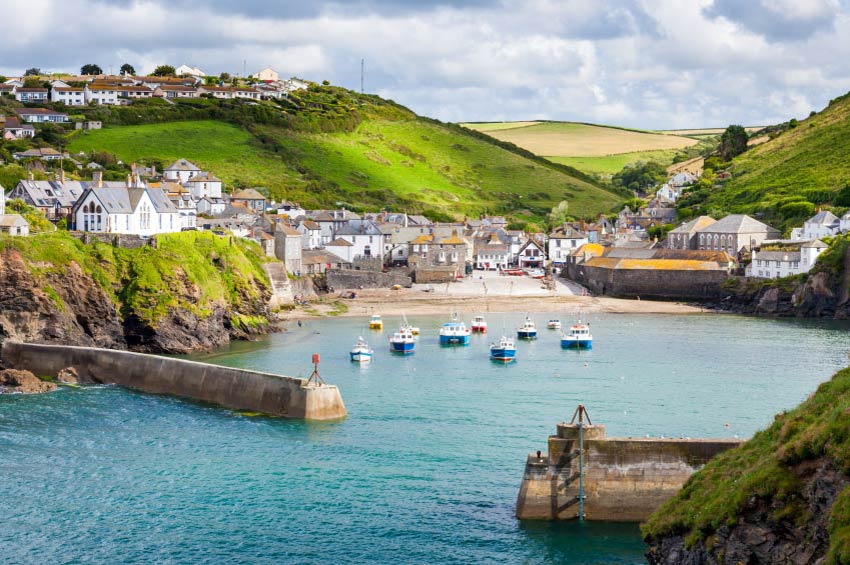
THE HARBOUR, THE PLATT & THE BEACH
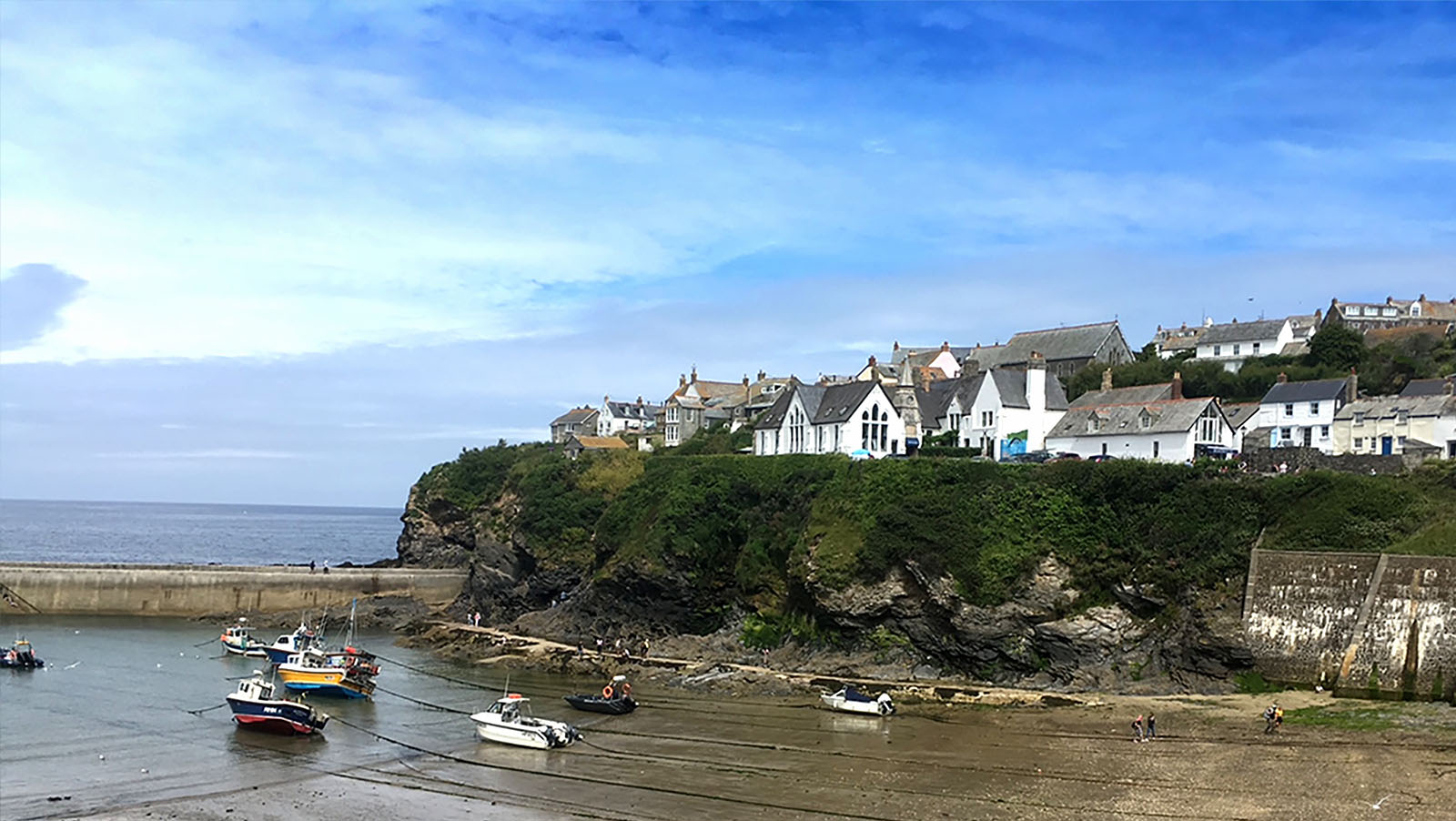
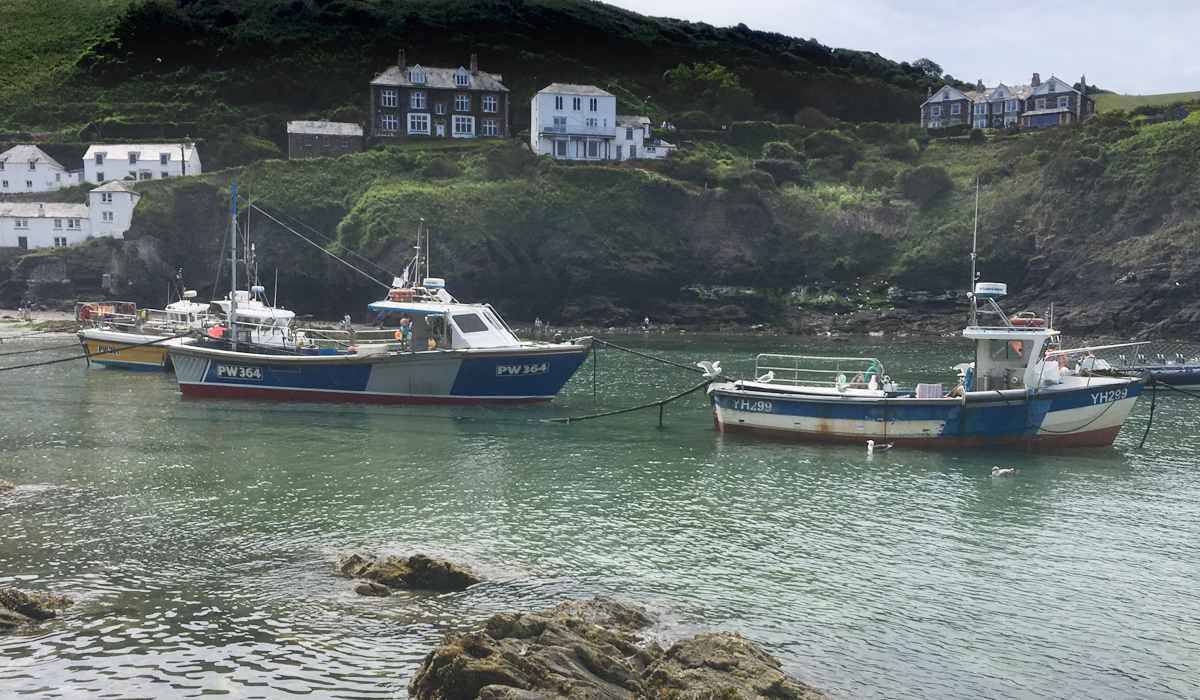
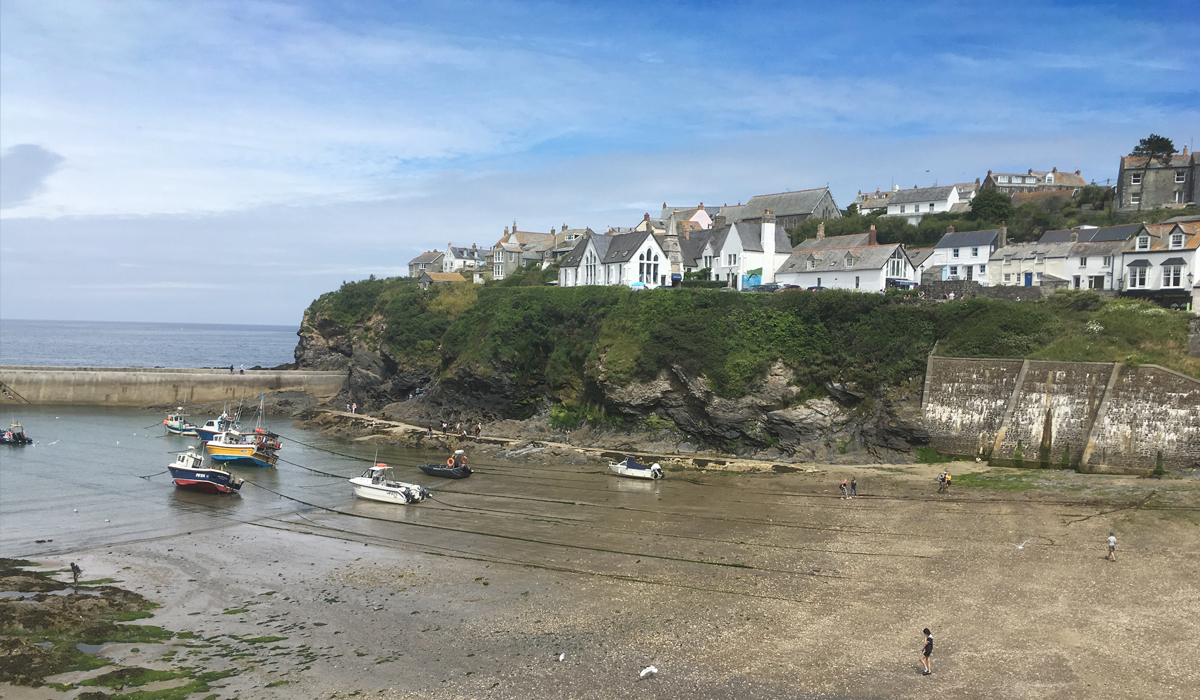
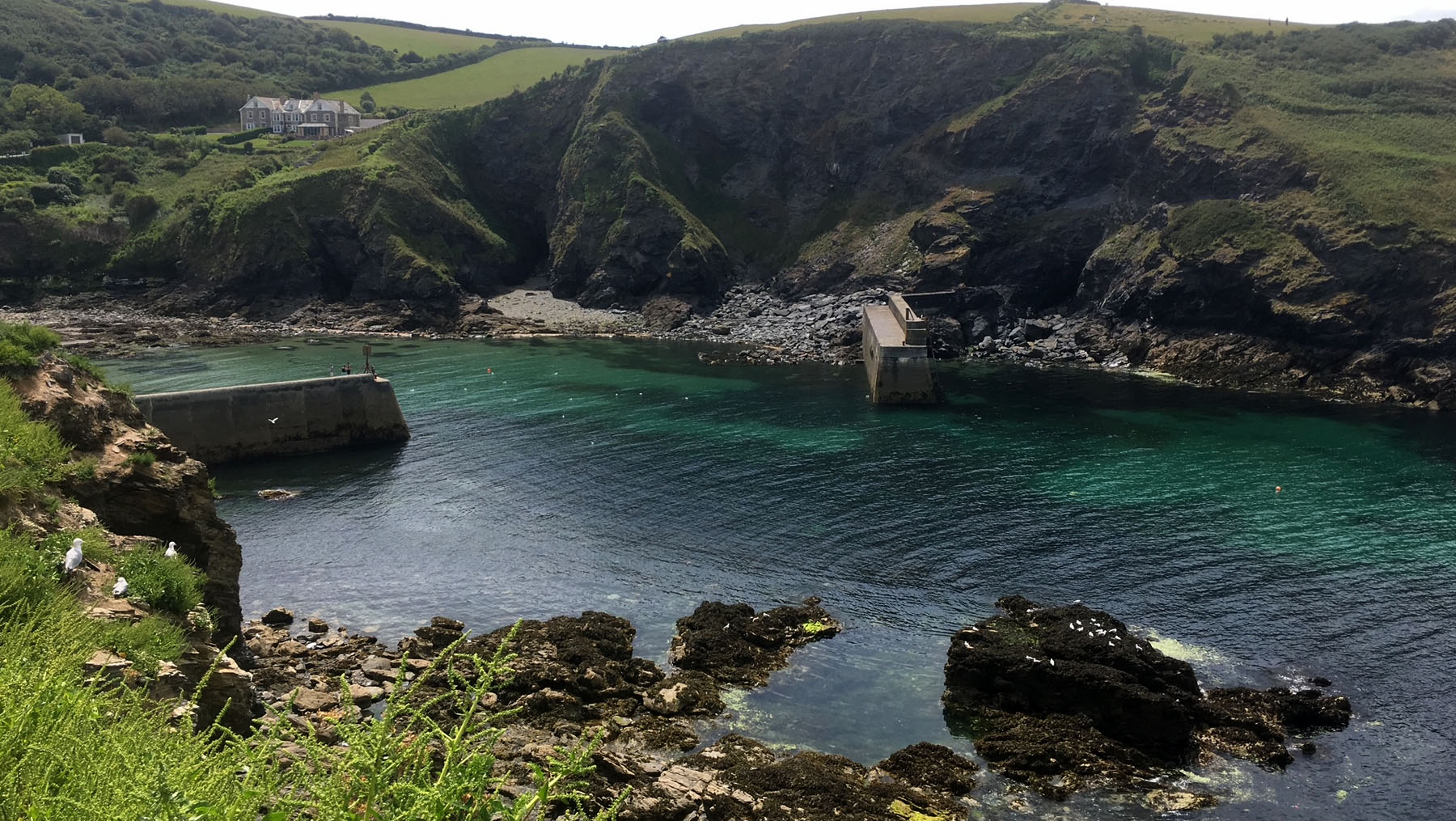
The harbour is the heart of Port Isaac. A pier was first built here in the reign of Henry VIII, and the cove is now protected by two concrete breakwaters that leave a narrow entrance for the fishing boats. Inside, the harbour dries out at low tide, leaving the boats resting on the sand and shingle, and at high tide the water fills the cove right up to the slipway. Watching the harbour empty and fill with the tide is one of the simple pleasures of a stay here.
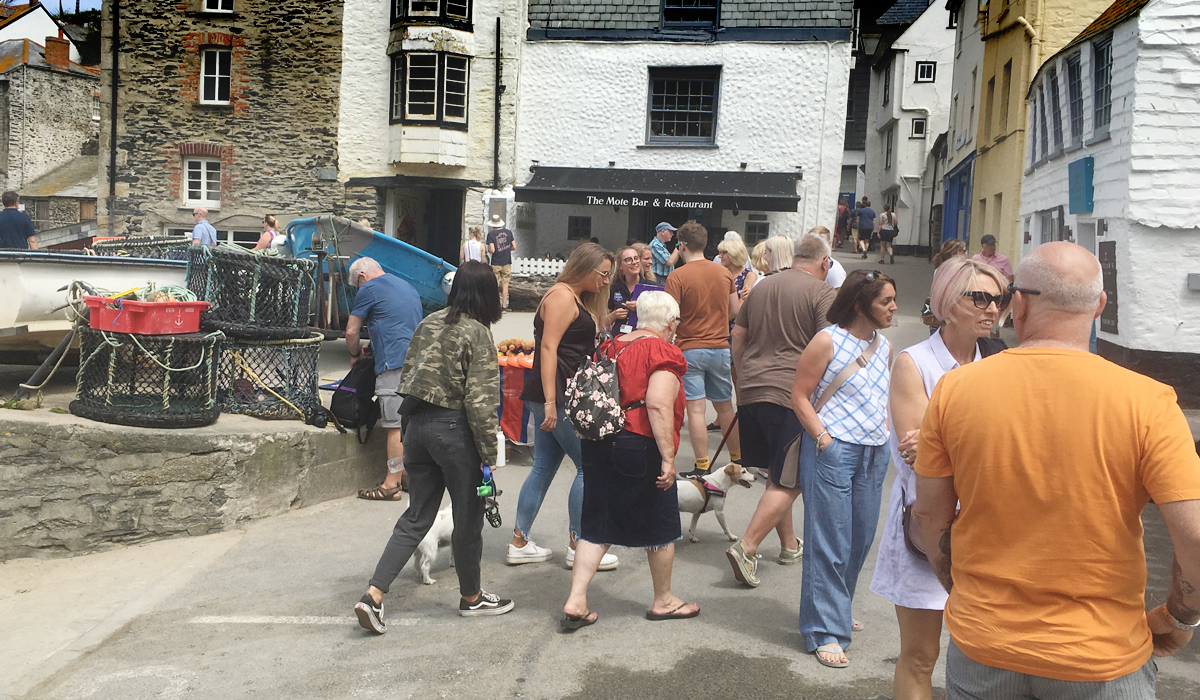
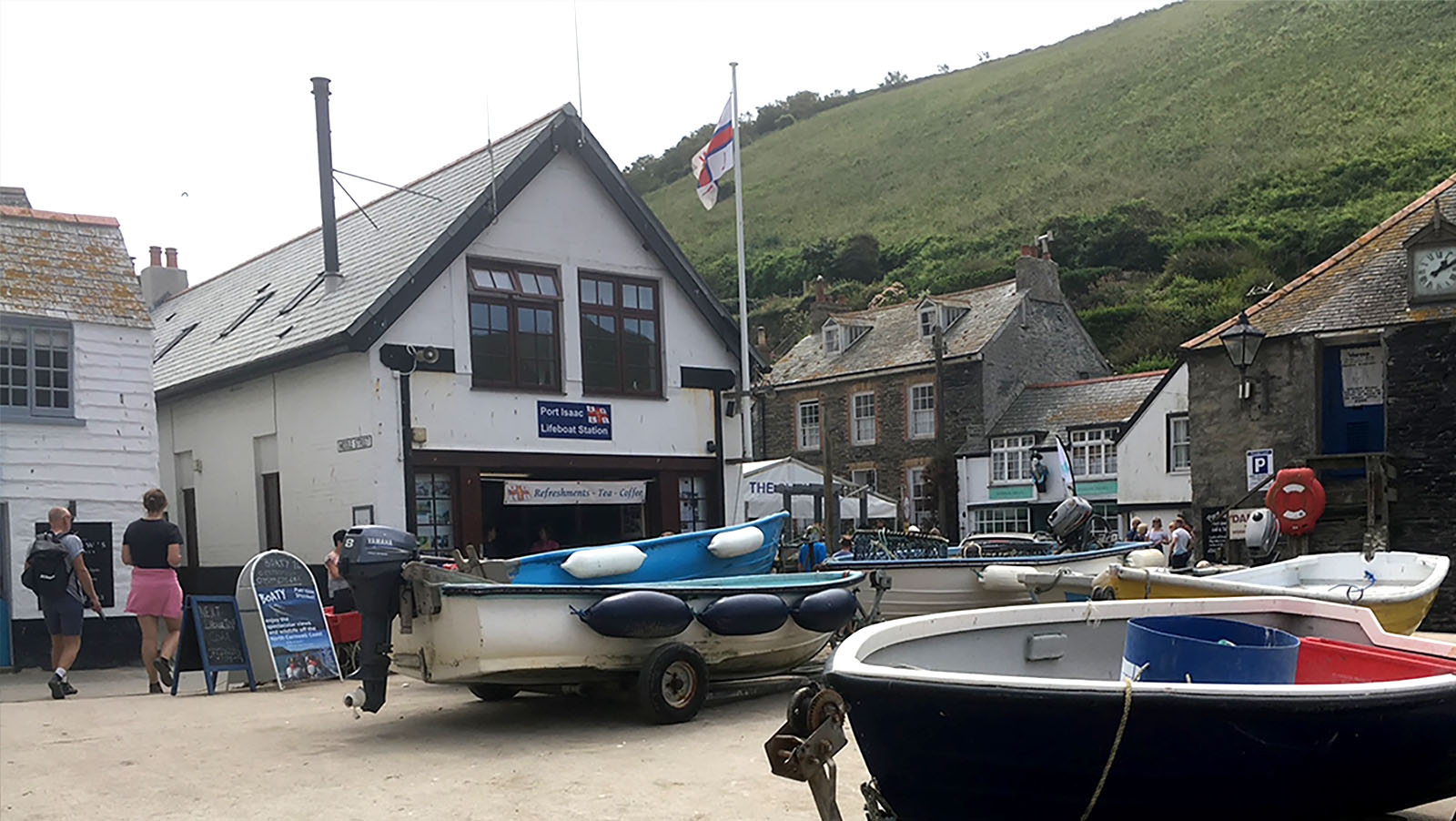
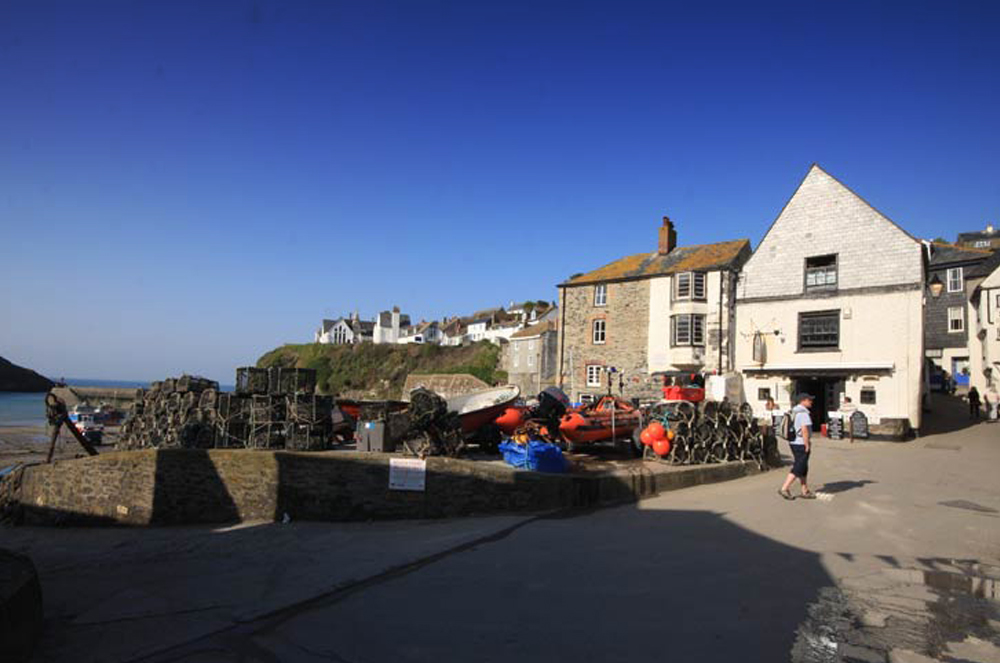
The Platt is the broad slipway and open space at the back of the harbour beach, where the old fish cellars and boathouses stand. It is where fishermen land their catch, mend their pots and launch their boats, and where the Fisherman’s Friends first sang to crowds of visitors on summer evenings. Beside it, the RNLI inshore D-class lifeboat is kept in a station built in 1927. A lifeboat has served Port Isaac since 1869, when the boat had to be hauled through the narrow streets to launch; the old boathouse later became the village post office and is now a gift shop. Just off The Platt is Squeezy Belly Alley, one of the narrowest alleyways in Britain.
The harbour beach appears as the tide drops, with sand and shingle, rock pools under the cliffs and plenty to explore. It is completely covered at high tide and is not lifeguarded, so it is best for paddling, rock pooling and crabbing rather than swimming, and the harbour mouth should always be avoided because of boat traffic. Stone steps lead up from the beach onto the headland, with views back over the village and out to sea.
Port Isaac is still a working harbour, and the rhythm of the fishing boats shapes the day. Crab and lobster pots are stacked on The Platt between trips, small boats are hauled up on trailers above the tide line, and in summer local skippers run mackerel-fishing and sightseeing trips from the harbour, when dolphins, seals and even basking sharks are sometimes seen offshore. Fresh crab and lobster landed here appear on menus around the harbour, including at Outlaw’s Fish Kitchen beside the lifeboat station, and on summer evenings the harbour is a favourite spot to watch the boats come home.
For the best views of the harbour, walk up Roscarrock Hill on the western side, past Fern Cottage, to the coast path above the village – the classic panorama over The Platt, the breakwaters and the cottages of Fore Street. On the eastern side, the walk down Fore Street from the top of the village gradually reveals the harbour below, and the coast path from the New Road car park runs along the clifftops to the harbour entrance. In winter, when Atlantic storms drive waves over the breakwaters, the harbour shows a wilder side, and the village is wonderfully peaceful.
↑ Back to top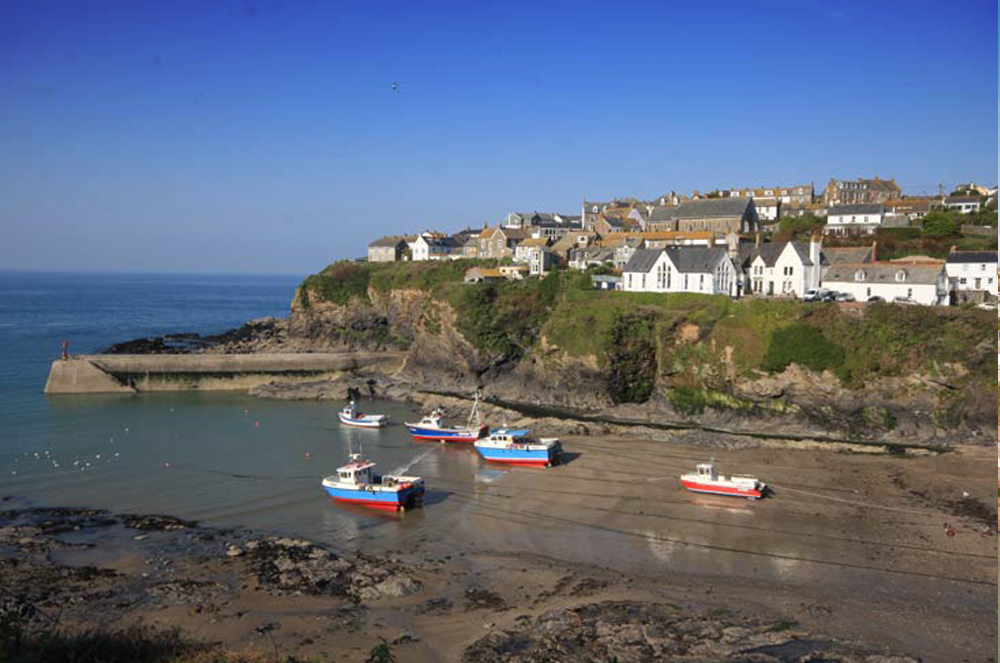
Tides & safety
The harbour beach is covered at high tide and has no lifeguards. Check tide times, keep clear of the harbour mouth and slipway when boats are moving, and don’t use inflatables. In an emergency at sea or on the coast, call 999 and ask for the Coastguard.
PORT GAVERNE & NEARBY BEACHES
Just over the headland to the east, a few minutes’ walk along the coast path, is Port Gaverne – a narrow, sheltered inlet with a shingle and sand beach, rock pools and a cluster of old stone buildings. Although it feels like part of Port Isaac today, it was once a busy port in its own right. In 1807 the Delabole Slate Company cut a road from its great quarry down to the cove, and for most of the 19th century slate was carried here by horse and cart and loaded straight onto ships beached on the sand. The trade moved to the railway after it reached Delabole in the 1890s.
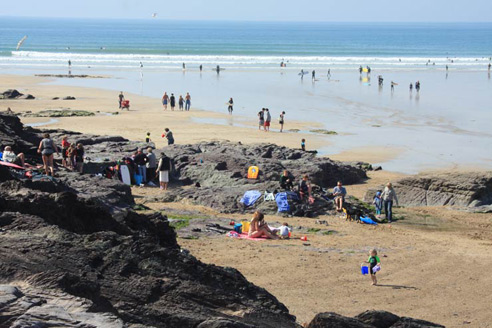
Port Gaverne was also a pilchard-fishing station, and its old fish cellars, built from 1802, still line the road; some are now holiday cottages. The Port Gaverne Hotel, formerly the Union Inn, has welcomed visitors since the early 20th century. The beach is cared for by the National Trust, after a local family gave it to the Trust to protect the character of the cove. As the tide drops, sand, flat rocks and some of the best rock pools in the area appear, making it a favourite with young families; at high tide the sheltered water is good for swimming, kayaking, paddleboarding and diving, though the middle of the cove is kept clear for fishermen launching boats. Dogs are welcome all year. There are no lifeguards, and roadside parking is very limited, so walk over from Port Isaac.
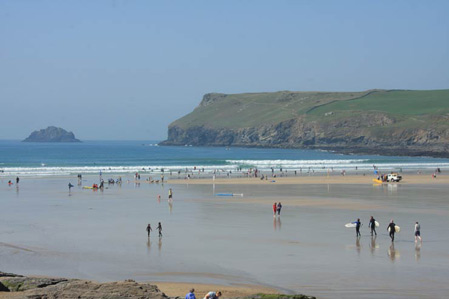
For a big sandy beach, head west to Polzeath, about 6 miles by road – one of Cornwall’s best family surf beaches, with RNLI lifeguards in season. On the way are the National Trust coves of Lundy Bay and Epphaven, reached on foot across the fields, and further round the estuary are Daymer Bay and Rock. To the north-east, Trebarwith Strand near Tintagel has a superb sandy beach at low tide.
↑ Back to top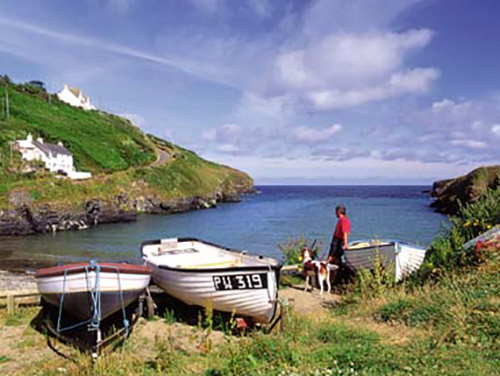
Port Isaac harbour beach
Small sand-and-shingle beach inside the breakwaters, revealed at low tide. Rock pools, crabbing and boat watching. No lifeguards; covered at high tide.
Port Gaverne
Sheltered National Trust cove a short walk east, with rock pools, some sand at low tide and calm water for paddleboarding and snorkelling.
Lundy Bay
A secluded National Trust cove between Port Quin and Polzeath, reached by a footpath through the fields. Sand at low tide and dramatic rocks.
Polzeath
The nearest big surf beach, about 6 miles by road, with RNLI lifeguards in season, surf schools and cafés.
Daymer Bay
Wide, sheltered sands on the Camel estuary, ideal for young children, with St Enodoc Church hidden in the dunes behind.
Trebarwith Strand
A fine sandy beach near Tintagel, about 8 miles north-east, exposed only at low tide – check the tide before you go.
THINGS TO DO IN PORT ISAAC: SHOPS, GALLERIES & FOOD
Port Isaac is a small village, but there is plenty to fill a few days. Much of the pleasure comes from simply exploring: the lanes of Fore Street, Middle Street, Church Hill and Roscarrock Hill twist between old cottages, opening suddenly onto views of the harbour, and every corner seems to have a story.
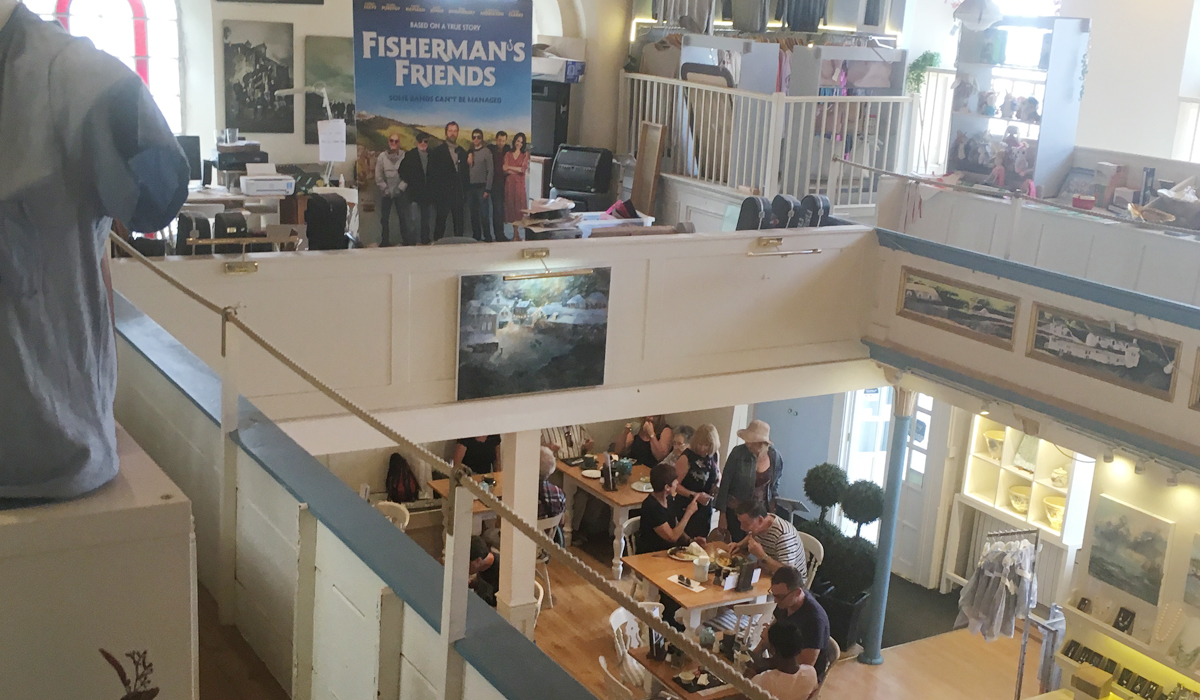
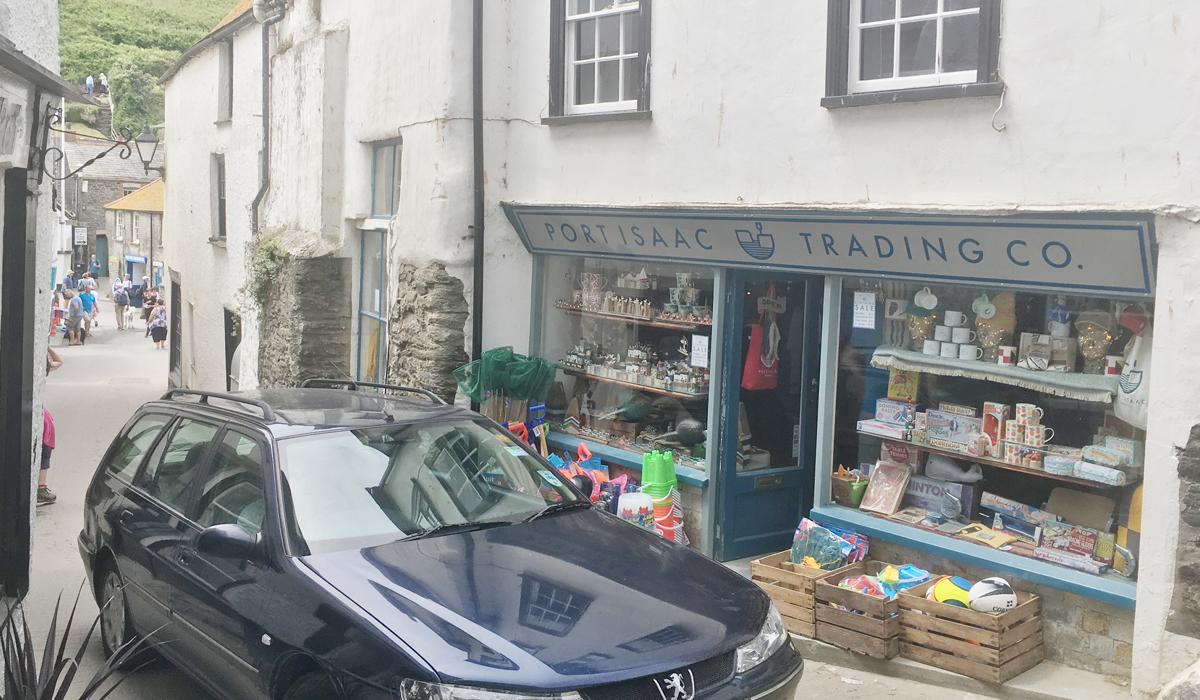
Shops and galleries cluster around the harbour and up the hill. You will find small galleries selling paintings, prints and ceramics by Cornish artists, gift and clothing shops, and the old lifeboat house, now a gift shop. At the foot of Roscarrock Hill, the former Methodist chapel is now the Port Isaac Pottery and Café, selling locally made pottery and artwork. For everyday supplies there is a Co-op on Trewetha Lane at the top of the village. Local artists have long been drawn to the village by its light and its views, and many of their works show the harbour, the boats and the cliffs you can see from the door.
Food and seafood are a highlight of any visit. Fresh crab and lobster are landed on The Platt, and the village has seafood restaurants, pubs, cafés, bakeries and pasty shops – from crab sandwiches eaten on the harbour wall to sit-down meals overlooking the sea. Chef Nathan Outlaw helped put Port Isaac on the food map, and his relaxed Outlaw’s Fish Kitchen beside the harbour serves small plates of local fish. The Golden Lion, an 18th-century inn above the harbour, and the Port Gaverne Hotel are traditional places for a pint. In summer, booking ahead for evening meals is wise.
- Watch the tide and the boats from the harbour wall and The Platt – fishing boats still land crab, lobster and fish here.
- Follow the Doc Martin trail – find Fern Cottage, the Old School and other Portwenn locations. See Doc Martin & the Fisherman’s Friends.
- Hear the Fisherman’s Friends if you are lucky enough to catch one of their summer evenings on The Platt.
- Walk the coast path east to Port Gaverne or west to Port Quin and Doyden Castle – see our Port Isaac to Port Quin circular walk.
- Go rock pooling on the harbour beach or at Port Gaverne at low tide.
- Squeeze through Squeezy Belly Alley, just off The Platt – one of the narrowest alleyways in Britain.
- Take a boat trip or go mackerel fishing from the harbour in summer – dolphins and even basking sharks are sometimes seen offshore.
- Browse the galleries and shops for paintings, pottery and gifts by local makers.
- Eat fresh seafood – crab sandwiches, fish and chips, or a meal overlooking the harbour.
- Visit St Endellion Church, the medieval parish church two miles inland, home to the St Endellion music festivals.
St Endellion festivals
The parish church of St Endellion, two miles inland, hosts the long-established St Endellion Easter and Summer music festivals of classical music. Check the festival’s own website for dates and tickets.
COAST PATH WALKS TO PORT GAVERNE & PORT QUIN
The South West Coast Path runs through the heart of Port Isaac. Heading east, the path climbs out of the village from near the old lifeboat house and follows the cliff edge over the headland to Port Gaverne in well under a mile – an easy stroll with fine views, though the road back up from Port Gaverne is steep. Beyond it the path continues over wild and rugged cliffs towards Tintagel, one of the toughest stretches of the whole coast path.
Heading west, the coast path from Roscarrock Hill to Port Quin is about 3 miles of magnificent but strenuous walking, dropping steeply into a series of valleys and climbing out again past Varley Head, Pine Haven and Kellan Head. The classic circular walk goes out by the inland Postman’s Path across Roscarrock Farm and returns along the cliffs via Kellan Head and Pine Haven – about 5 miles, taking three to four hours. The return leg is a real rollercoaster of steep, unfenced climbs and descents, so take food, water and good boots. Near the end, just above Roscarrock Hill, look out for Bert Large’s bench, used in several episodes of Doc Martin. Follow our Port Isaac to Port Quin circular walk for route details.
Port Quin is a tiny hamlet in a narrow inlet, much of it owned by the National Trust, which lets several of its stone cottages and fish cellars as holiday homes. There are no shops, cafés or public toilets, but there is a small National Trust car park, and at low tide the cove reveals sand, rock pools and small caves. It was once a pilchard-fishing village with small antimony and lead mines nearby, but by the mid-19th century it was in decline and many families emigrated, some to Canada. A local legend tells that every man in the village was lost at sea in a single storm, leaving the cottages empty – a story more likely born of the collapse of fishing and mining.
On the headland above Port Quin stands Doyden Castle, a small castellated folly built around 1830 by Samuel Symons of Wadebridge as a retreat for entertaining his friends. It is now a National Trust holiday let, and has appeared on screen in Poldark in the 1970s, Jamaica Inn and, in 2011, Doc Martin. Beyond Port Quin the coast path continues past Lundy Bay to Pentire Point and The Rumps – see our Pentire Point & The Rumps walk.
These cliffs are a haven for wildlife. In spring and early summer the path is lined with thrift, sea campion, bluebells and gorse, while fulmars, gulls and shags nest on the ledges below, and grey seals are often seen in the coves or bobbing offshore. On calm days, keep an eye out for dolphins and, in summer, the occasional basking shark. For a shorter outing, combine the easy cliff walk to Port Gaverne with a return through the valley, or simply walk out to the headland above the harbour for the view. Experienced walkers can follow the coast path all the way west to Polzeath and return to Port Isaac on the route 96 bus, which links the two villages. Whichever route you choose, check the weather and tide times before you set out, stay well back from the unfenced cliff edges, and keep dogs on a lead near grazing livestock. Good walking boots are essential, as the paths can be muddy and slippery after rain.
↑ Back to top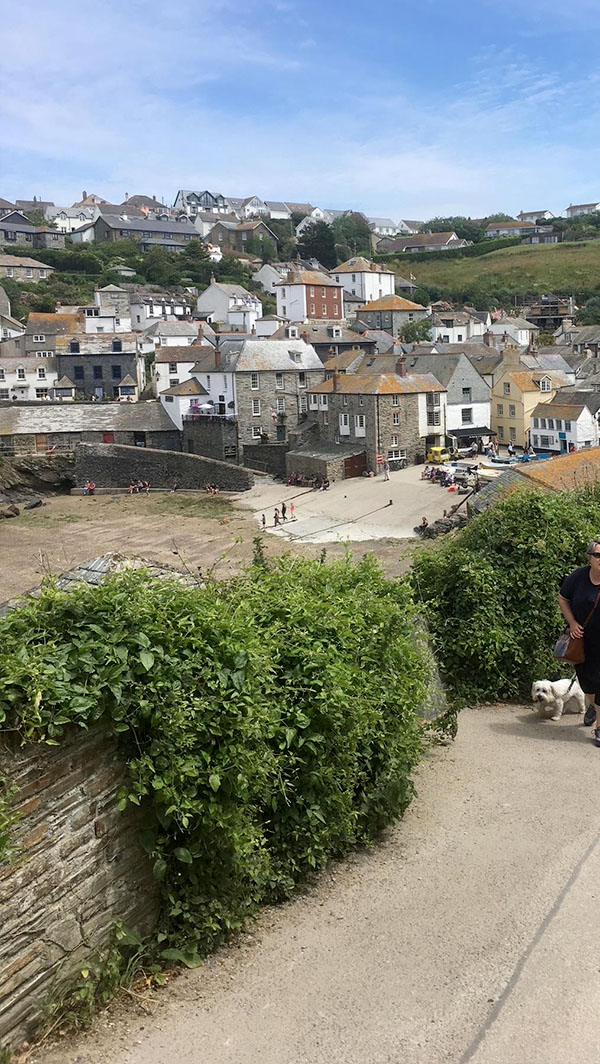
DOC MARTIN, PORTWENN & THE FISHERMAN’S FRIENDS
Doc Martin, the ITV comedy drama starring Martin Clunes as the brilliant but awkward surgeon Dr Martin Ellingham, was filmed in Port Isaac over ten series from 2004 to 2022, with the village playing the fictional Portwenn. Created by Dominic Minghella, it was filmed on location around the harbour and Roscarrock Hill, with most interiors shot in a converted barn at a local farm. Before the series, two Sky television films, Doc Martin and Doc Martin and the Legend of the Cloutie, were also made here, using the village’s real name.
Fans come from all over the world to find the locations. Fern Cottage on Roscarrock Hill, above the harbour, was the Doc’s surgery and home; the Old School, now a hotel and restaurant, was Portwenn’s school; and Mrs Tishell’s pharmacy and Louisa’s house were on Fore Street. Doyden Castle at Port Quin and Port Gaverne also appeared. Many of these buildings are private homes or businesses, so please enjoy them from the street and respect the privacy of the people who live in them.
The Fisherman’s Friends are a group of Port Isaac fishermen, lifeboat crew and friends who have sung sea shanties together since 1995, first on The Platt for charity. In 2010 they signed a record deal with Universal, and their first album reached the UK top ten. Tragedy struck in February 2013 when singer Trevor Grills and tour manager Paul McMullen were killed in an accident at a venue in Guildford. The group’s story was told in the film Fisherman’s Friends (2019), its sequel Fisherman’s Friends: One and All (2022) and Fisherman’s Friends: The Musical, which opened at the Hall for Cornwall in Truro in 2021.
Alongside Martin Clunes, Doc Martin starred Caroline Catz as the village schoolteacher Louisa Glasson, Ian McNeice as the plumber turned restaurateur Bert Large, Selina Cadell as the pharmacist Mrs Tishell and Eileen Atkins as the Doc’s Aunt Ruth, with many local people appearing as extras. The final series was shown in 2022, ending with a Christmas special, but the village has kept its Portwenn connection: visitors still pose outside Fern Cottage, sit on Bert Large’s bench on the coast path above Roscarrock Hill and follow self-guided trails around the locations.
For almost two decades, filming was part of village life. Every couple of years the cast and crew arrived for several months, the harbour and lanes were dressed as Portwenn, and residents and holidaymakers alike gathered to watch scenes being shot on The Platt and Roscarrock Hill. The series brought Port Isaac worldwide fame and a steady stream of visitors from as far away as the United States and Australia, and it remains one of the main reasons many people first come to the village.
The 2019 film Fisherman’s Friends, starring Daniel Mays, James Purefoy and Tuppence Middleton, tells the story of a London music executive who stumbles on the singers in Port Isaac and sets out to win them a record deal. Much of it was filmed in and around the village, and the harbour and The Platt appear throughout. Today, if you are in Port Isaac on a summer evening when the group is singing, joining the crowd on The Platt to hear sea shanties sung where it all began is one of the most memorable experiences of a Cornish holiday.
↑ Back to top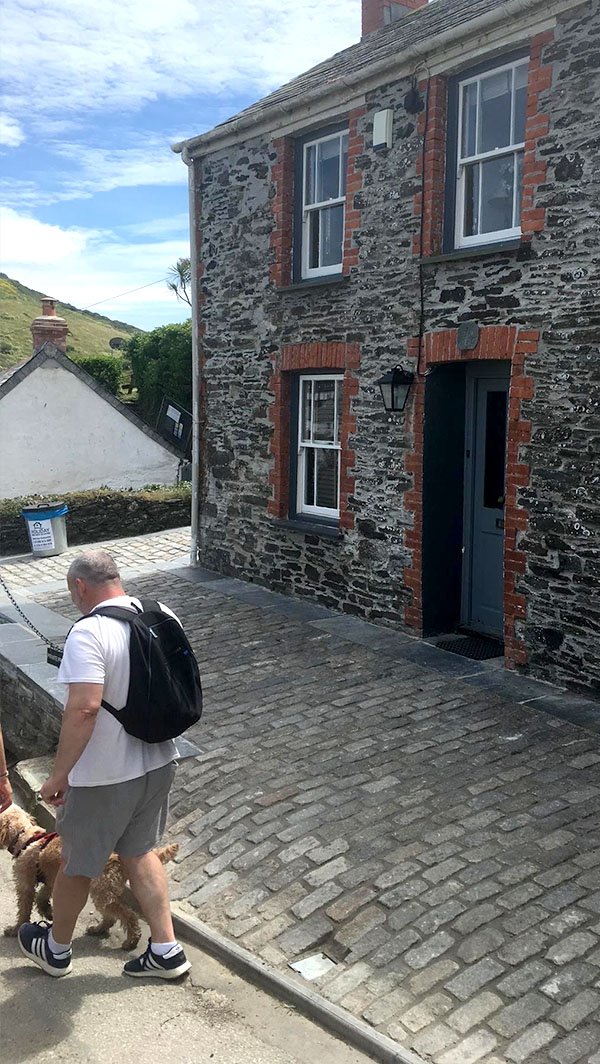
Port Isaac on screen
- Poldark (BBC, 1975–77)
- The Nightmare Man (BBC, 1981)
- Oscar and Lucinda (1997)
- Swept from the Sea (Amy Foster, 1997)
- Saving Grace (2000)
- Doc Martin (Sky films; ITV 2004–2022)
- The Shell Seekers (2006)
- Fisherman’s Friends (2019) & One and All (2022)
HISTORY OF PORT ISAAC: FISHING & TRADING
Port Isaac has probably been a landing place since Celtic times, and by the Middle Ages it was a thriving little port serving the farms and villages inland. Its harbour was dredged in the Tudor period and a pier built under Henry VIII. Over the centuries small sailing vessels brought in coal, timber, limestone, salt, pottery and heavy goods, and carried away corn, stone and ores; ships were even built on the beach below Roscarrock Hill.
The great industry, though, was pilchard fishing, which dates back before the 16th century. Huge shoals arrived each late summer and autumn, and the fish were landed, salted and pressed in the cellars around the harbour, the oil and fish being sold far afield. In 1850 Port Isaac had 49 registered fishing boats and four fish cellars. Next door, Port Gaverne grew rich on slate from Delabole, shipped from its beach throughout the 19th century.
The decline of the pilchard shoals and the arrival of the railway – Port Isaac Road station opened four miles away in 1895 – brought an end to the coastal trade, though in 1897 some 150 tons of fish were still carted to the station. After the First World War tourism became the village’s mainstay. St Peter’s Church was built in 1882–84 as a chapel of ease to St Endellion, and the North Cornwall railway line closed in 1966. Today a handful of boats still fish for crab, lobster and fish from The Platt, keeping alive a tradition that has lasted for centuries.
↑ Back to top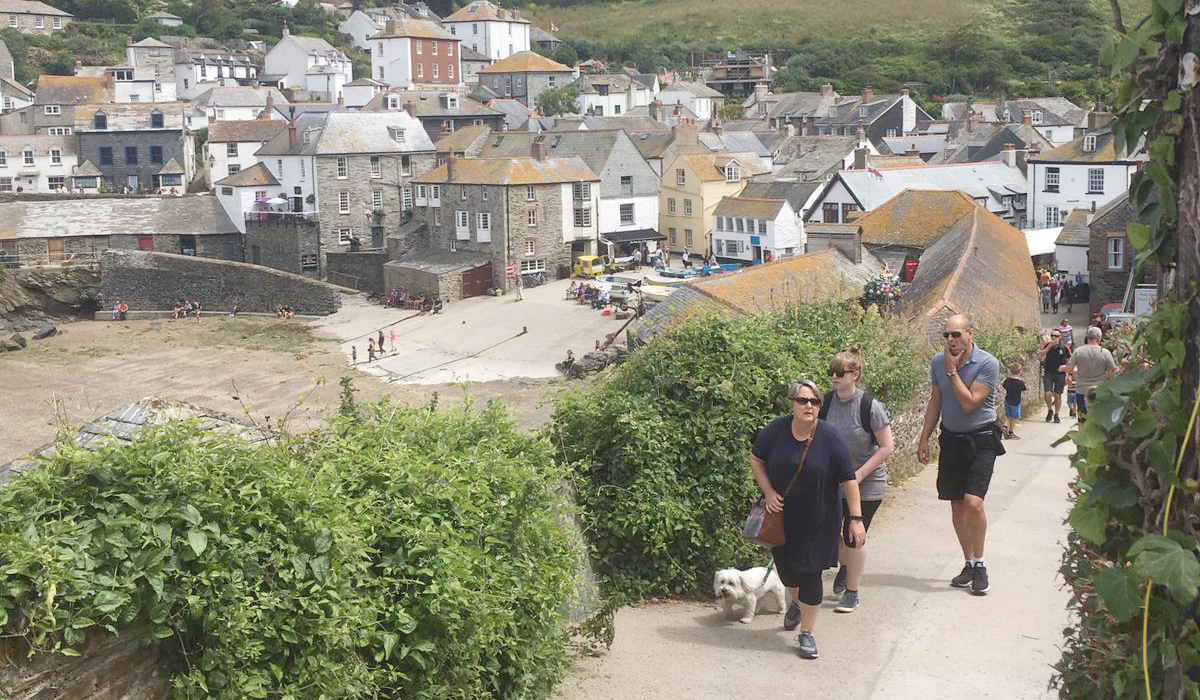
FAMOUS PEOPLE, TV & MUSICAL CONNECTIONS
- The Fisherman’s Friends – the Port Isaac shanty group, singing together since 1995, whose story became two feature films and a stage musical.
- Martin Clunes – the actor who played Dr Martin Ellingham in Doc Martin, filmed in the village from 2004 to 2022.
- Nathan Outlaw – the Michelin-starred chef whose Port Isaac restaurants helped make the village a destination for seafood lovers.
- Edmund Henry Hambly (1914–1985) – orthopaedic surgeon, politician and promoter of the Cornish language, associated with the village.
- Brenda Blethyn and Vanessa Redgrave – stars of Saving Grace (2000) and The Shell Seekers (2006), both filmed in and around Port Isaac.
POLZEATH, PADSTOW, WADEBRIDGE & TINTAGEL
Port Isaac lies at the centre of one of the most beautiful stretches of the North Cornwall coast, and some of Cornwall’s best-known places are within an easy drive.
- Polzeath (about 6 miles) – a big, lifeguarded surf beach beside Pentire Point, perfect for learning to surf, with the coast path to The Rumps.
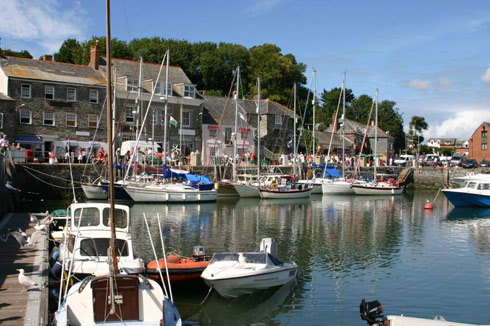
- Rock (about 7 miles) – a sailing village on the Camel estuary, with Daymer Bay and John Betjeman’s grave at St Enodoc Church.
- Padstow – the famous harbour town across the Camel estuary, reached by road via Wadebridge or on foot by the ferry from Rock.
- Wadebridge (about 9 miles) – the nearest market town, with its medieval bridge, shops and supermarkets, bike hire for the Camel Trail and the Royal Cornwall Showground.
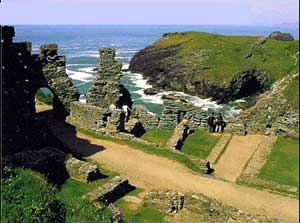
- Tintagel (about 9 miles) – the dramatic clifftop ruins of Tintagel Castle (English Heritage), linked to the legend of King Arthur, and the National Trust’s Old Post Office.
- Camelford and Delabole – inland, the old market town of Camelford and the village of Delabole, with its huge slate quarry, worked for centuries.
STAYING IN PORT ISAAC & RESPONSIBLE TOURISM
Choosing where to stay. Cottages in the old village are full of character, but the lanes are steep, narrow and often stepped, with no parking at the door – check how far your holiday home is from the nearest car park, and whether it suits anyone with limited mobility, a buggy or a lot of luggage. Properties on the edge of the village, at Port Gaverne or in the countryside around Trelights, St Endellion and Port Quin often have parking and gardens, and many holiday cottages welcome dogs. Book early for the school holidays, and consider a stay in spring or autumn.
Being a good visitor. Port Isaac is a real village, home to fishing families and residents all year round. Please park in the car parks at the top of the village and walk down, rather than driving into the narrow streets. Remember that the harbour is a working place: keep clear of the slipway, boats, ropes and fishing gear. Many of the famous Doc Martin buildings are private homes – take photos from the street and never knock on doors or peer through windows.
Looking after the coast. Stay on the coast path and away from cliff edges, keep dogs on a lead near livestock and nesting seabirds, and take your litter home. Give seals and other wildlife plenty of space, and never disturb them on beaches or rocks. Supporting local shops, cafés, galleries and fishermen – especially out of season – helps keep the village alive for the people who live here.
↑ Back to topVISITOR INFORMATION
Parking & Harbour Access
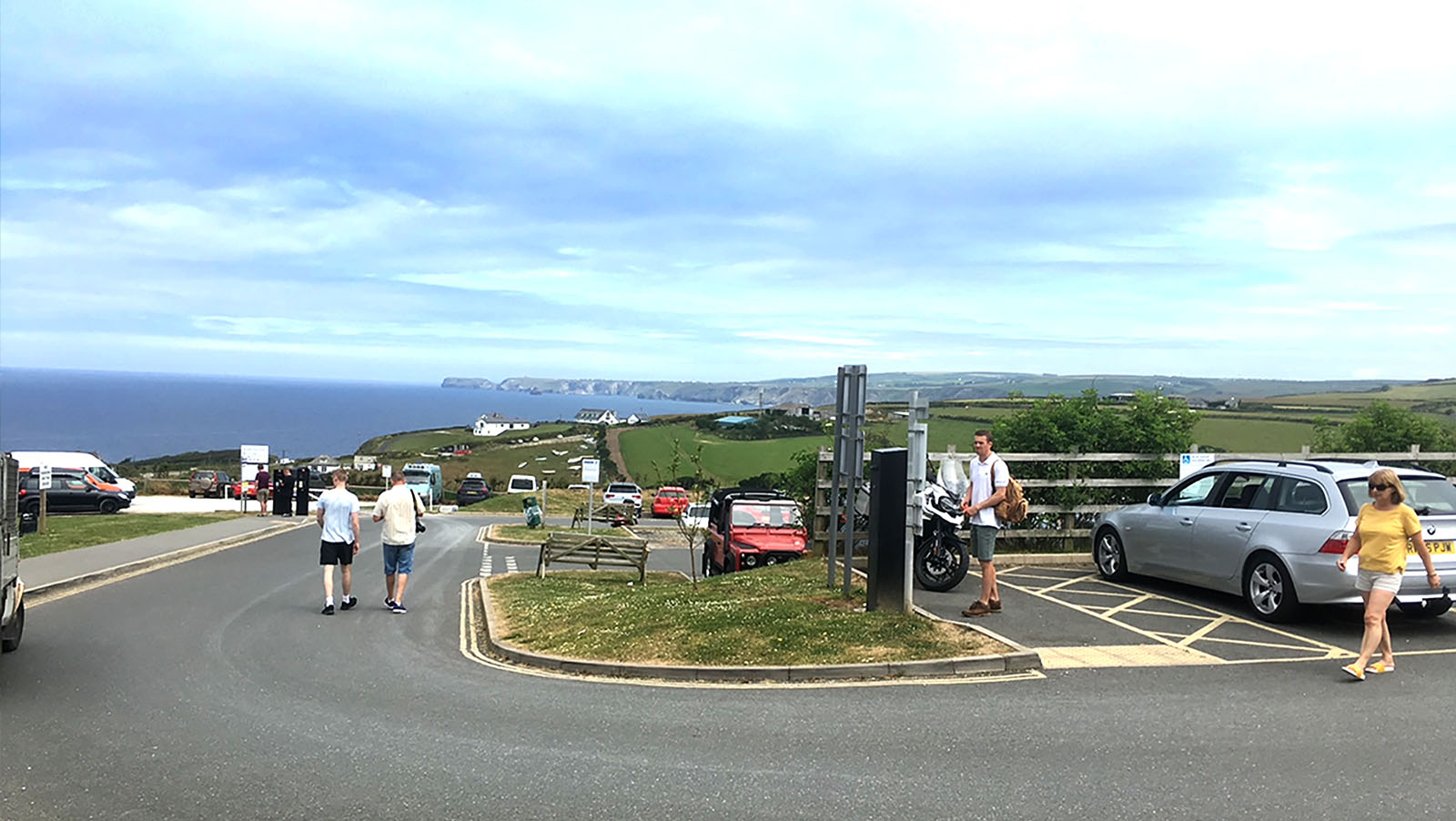
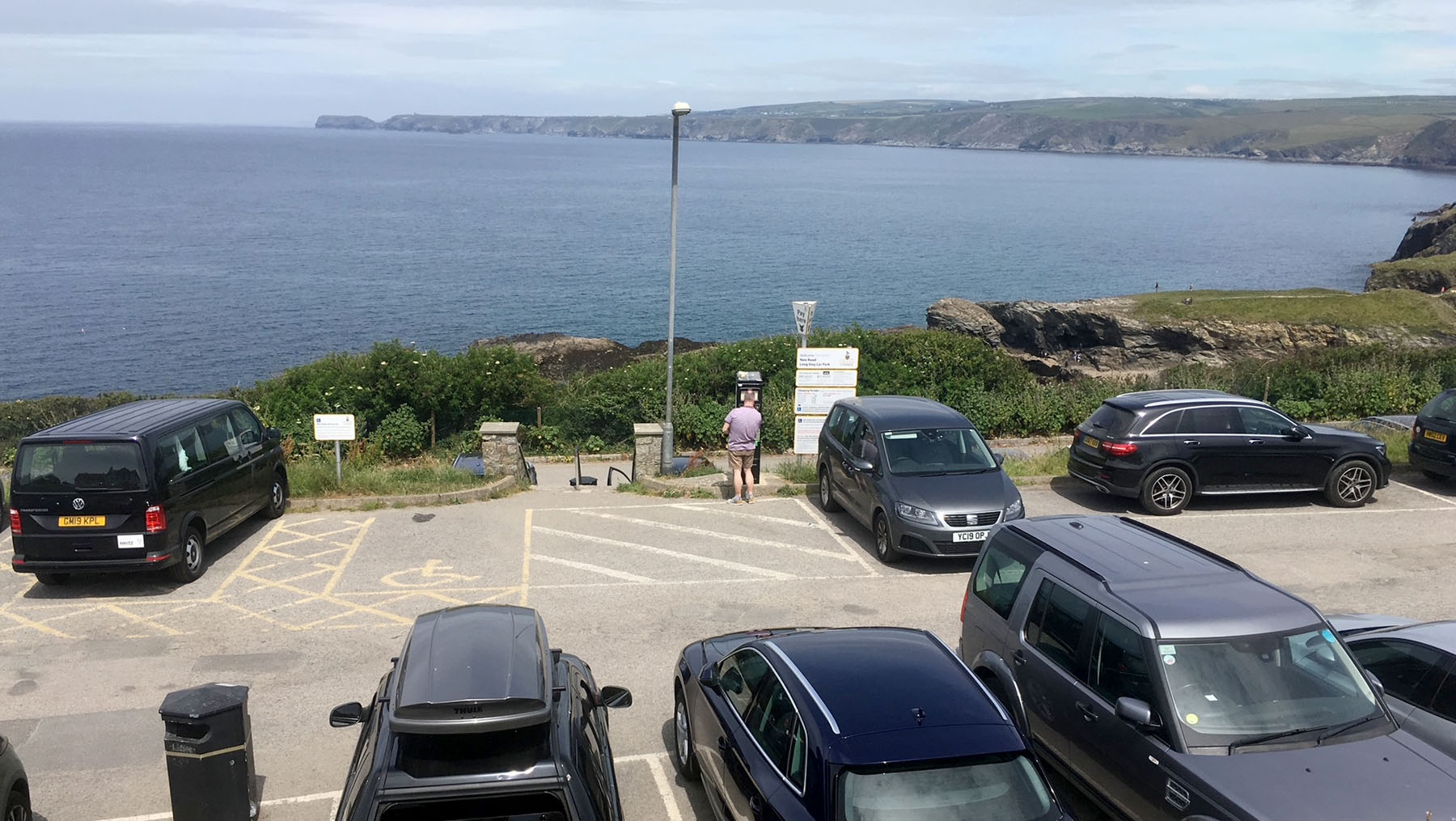
The Main Car Park on Trewetha Lane (B3267), run by the parish council, is the first thing you reach entering the village: about 140 spaces including disabled bays, an overflow area, toilets and a small café, open 24 hours, roughly ten minutes’ walk to the harbour. The New Road (St Endellion) car park (Cornwall Council) sits on the clifftop beside the coast path towards Port Gaverne and is often full early. There is no general parking in the old village or at the harbour. Sat-nav: PL29 3SG.
Bus & Train
Go Cornwall Bus route 96 links Port Isaac with Wadebridge, St Endellion, Polzeath, Rock, Delabole and Camelford, with a few journeys continuing to Bodmin. Services are limited and there is no Sunday service. The nearest railway station is Bodmin Parkway on the main line, about 18 miles away.
Facilities & Supermarkets
Public toilets at both car parks and at the harbour, at the bottom of Roscarrock Hill, including accessible facilities. A Co-op on Trewetha Lane sells everyday groceries, snacks and drinks. The nearest large supermarkets are in Wadebridge (about 9 miles) and Bodmin, and online grocery deliveries reach most holiday cottages.
Cafés & Restaurants
Seafood restaurants, pubs, cafés, bakeries and pasty shops around the harbour and on the hill, including Outlaw’s Fish Kitchen beside the lifeboat station, the dog-friendly Golden Lion, the Port Isaac Pottery & Café and, at Port Gaverne, the Port Gaverne Hotel. Some places close or shorten their hours in winter, and booking is advisable for summer evenings.
Health
Port Isaac Surgery, Hillson Close (PL29 3TR) is the village GP practice. The nearest Minor Injury Unit is at Bodmin Community Hospital. Call NHS 111 for urgent advice, and 999 in an emergency – ask for the Coastguard for incidents at sea or on the cliffs. The nearest major A&E is the Royal Cornwall Hospital, Truro; Derriford Hospital, Plymouth is also within reach.
Disabled Access
The Main Car Park on Trewetha Lane has dedicated disabled bays and accessible toilets, and there are accessible toilets at the harbour. Beyond that, Port Isaac is challenging for wheelchair users: Fore Street and Roscarrock Hill are steep, narrow and cobbled in places, and the beach is reached by slipway and shingle. At Port Gaverne a gentle slipway leads down to the sand, with a few disabled spaces nearby.
Vets
There is no vet in Port Isaac. The nearest veterinary practices are in Wadebridge, about 9 miles away, with further practices in Bodmin and Camelford. Keep your holiday cottage owner’s details handy, and use the RCVS directory to find the nearest open practice, including out-of-hours care.
National Trust & English Heritage
The National Trust cares for much of the coast around Port Isaac, including Port Quin, Doyden Castle, the beach at Port Gaverne, Lundy Bay and Pentire Point. Nearby are Tintagel Castle (English Heritage) and the National Trust’s Tintagel Old Post Office, with Lanhydrock near Bodmin.
Attractions & Beaches
Port Isaac harbour beach, Port Gaverne, Lundy Bay and Polzeath for the seaside; the Camel Trail from Wadebridge for cycling; Tintagel Castle, Boscastle and the Bodmin & Wenford Railway for days out.
STAY & EXPLORE NEAR PORT ISAAC
FAMILY HOLIDAYS & SHORT BREAKS IN PORT ISAAC
Family holidays in Port Isaac are about rock pools, crabbing lines and fishing boats rather than a big sandy beach. Children love exploring the harbour as the tide goes out, spotting seals from the headland and hunting for Doc Martin’s Portwenn, while the lifeguarded surf beach at Polzeath and the sheltered sands of Daymer Bay are a short drive away for bucket-and-spade days.
A self-catering holiday in Port Isaac gives you the freedom to enjoy crab and lobster straight from The Platt, local bread and a pasty for the coast path. Holiday cottages in Port Isaac range from fishermen’s cottages in the old village, with views straight down to the harbour, to farmhouses, barn conversions and dog-friendly cottages in the countryside around Port Gaverne, Trelights, St Endellion and Port Quin, many with parking and gardens.
Port Isaac is also a perfect place for a short break or romantic weekend out of season, with long walks to Port Quin and Doyden Castle, seafood suppers and quiet evenings by the harbour as the tide comes in. B&Bs, inns, hotels, holiday parks and campsites in the area offer shorter stays, and booking direct with the owner means no agency fees.
Browse self-catering holidays in Port Isaac for holiday cottages and apartments, or holidays and short breaks in Port Isaac for every type of accommodation – B&Bs, hotels, holiday parks, camping and glamping – all listed on Cornwall Online by their owners.
↑ Back to topFREQUENTLY ASKED QUESTIONS ABOUT PORT ISAAC
Yes. Port Isaac played the fictional village of Portwenn in all ten series of the ITV drama Doc Martin (2004–2022), starring Martin Clunes. Fern Cottage on Roscarrock Hill, above the harbour, was the Doc’s surgery, and the Old School Hotel was the village school. Both are private businesses or homes, so please view them from the street.
Use the car parks at the top of the village and walk down. The Main Car Park on Trewetha Lane (B3267), run by the parish council, is the first thing you reach as you enter the village, with around 140 spaces, toilets and a small café, and is about ten minutes’ walk from the harbour. The New Road (St Endellion) car park, on the clifftop beside the coast path towards Port Gaverne, is closer but often full early. The streets down to the harbour are very narrow and steep, with no general parking, so visitors should not drive into the old village.
Yes, a small harbour beach of sand and shingle that appears at low tide behind the breakwaters. It is covered completely at high tide and is not lifeguarded. The sheltered cove at Port Gaverne, a few minutes’ walk east, has rock pools and some sand at low tide, and the nearest lifeguarded surf beach is Polzeath.
The Fisherman’s Friends, the Port Isaac shanty group formed in 1995, made their name singing on The Platt, the slipway at the back of the harbour beach. They still sometimes perform there for charity on summer evenings – check local notices for dates.
The South West Coast Path from Port Isaac to Port Quin is about 3 miles of strenuous walking, with several steep climbs and descents. Many walkers return by the inland field path, sometimes called the Postman’s Path, across Roscarrock Farm to make a circular walk of about 5 miles. Allow three to four hours and wear proper walking boots.
There is no railway station; the nearest main line station is Bodmin Parkway. Go Cornwall Bus route 96 runs between Wadebridge and Camelford via Rock, Polzeath and Port Isaac, with connections at Wadebridge and Bodmin. Services are limited, and there is no Sunday service, so check the timetable before you travel.
Yes. Dogs are welcome on Port Isaac’s harbour beach and at Port Gaverne all year round, with no seasonal restrictions. Keep them under close control around children, wildlife and the working slipway, and clean up after them. Some other beaches nearby, including Polzeath, have seasonal dog restrictions.
Yes, for families who enjoy rock pooling, crabbing, boat watching and coastal walks rather than a big sandy beach. The harbour beach is small and tidal, but Polzeath’s lifeguarded surf beach is a short drive away, and the steep streets are easier with a baby carrier than a buggy.
North Cornwall Towns and Villages | Padstow | Wadebridge | The Camel Estuary | Rock | Polzeath | Port Isaac | Trebarwith Strand | Tintagel | Bossiney Cove | Rocky Valley | Boscastle | Crackington Haven | Bude | Launceston | Camelford | Altarnum | Bodmin |