Holidays in Crackington Haven, North Cornwall – Beach, Folded Cliffs & Coast Path

North Cornwall Towns and Villages | Padstow | Wadebridge | The Camel Estuary | Rock | Daymer Bay | Polzeath | Port Isaac | Trebarwith Strand | Tintagel | Bossiney Cove | Rocky Valley | Boscastle | Crackington Haven | Bude | Launceston | Camelford | Altarnum | Bodmin |
On This Page
- Holidays in Crackington Haven
- The Beach
- The Village & Coombe Barton Inn
- Map
- Folded Cliffs & Geology
- History of Crackington Haven
- Cambeak, The Strangles & High Cliff
- St Gennys Church
- Things to Do
- Walks from Crackington Haven
- Around Crackington Haven
- Local Events
- Visitor Information
- Stay & Explore
- Family Holidays & Short Breaks
- FAQs
Crackington Haven at a Glance
A small village and cove in the parish of St Gennys on the North Cornwall Heritage Coast, about 7 miles south-west of Bude and 4 miles north of Boscastle. Sand and pebble beach, Seaside Award 2026, RNLI lifeguards in summer, the Coombe Barton Inn, cafés and famous folded cliffs. Sat-nav: EX23 0JG.
HOLIDAYS IN CRACKINGTON HAVEN
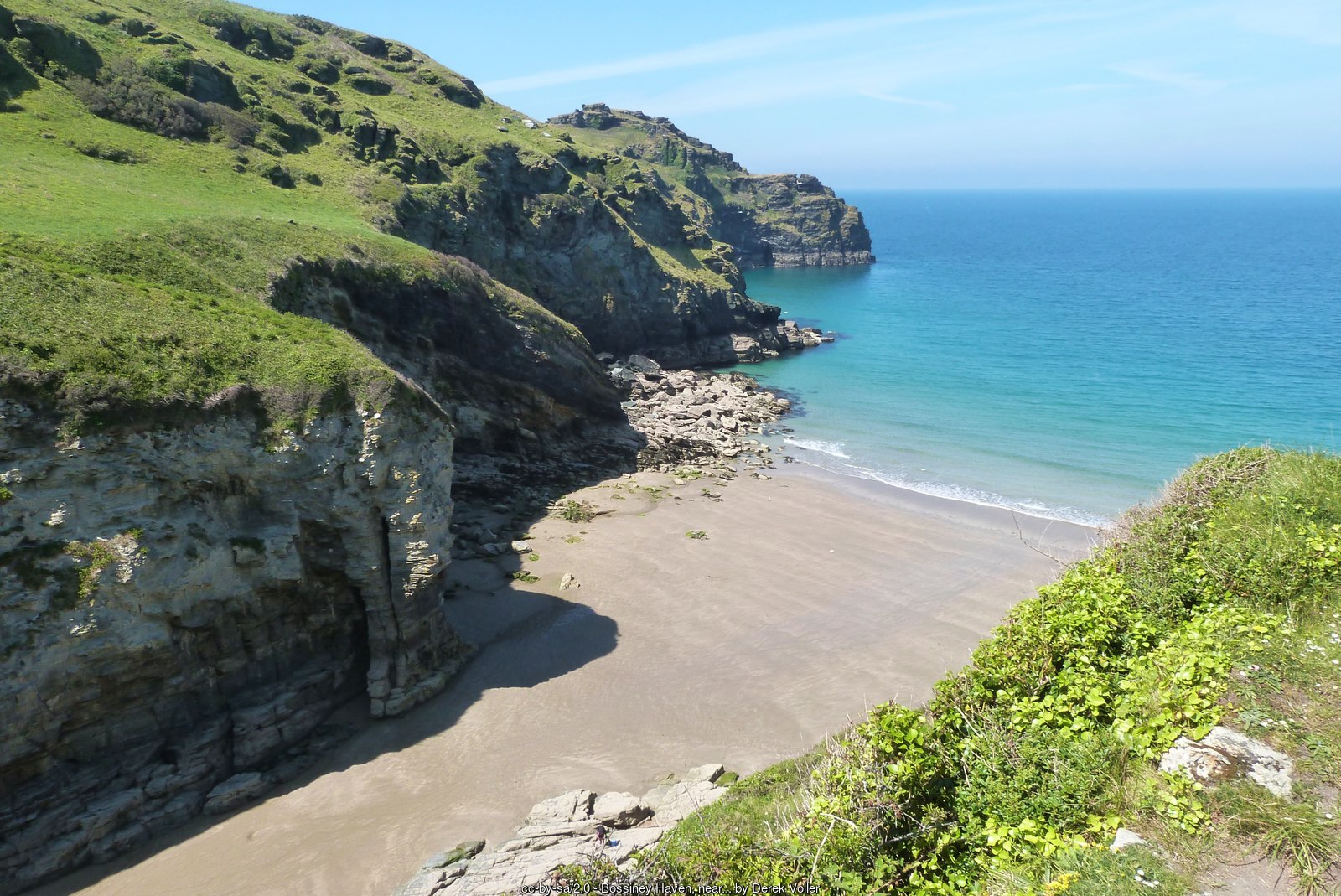
Crackington Haven is one of the most spectacular places on the North Cornwall coast. A narrow, steep-sided valley runs down to a small cove of pebbles and sand, guarded by great headlands – Pencannow Point to the north and Cambeak to the south – whose cliffs of dark shale and sandstone are folded into astonishing zig-zag shapes.
Whichever way you approach, the views as you drop down into the haven are breathtaking. There has been only limited development over the years, and what there is sits comfortably in the valley: a pub, a couple of cafés, a beach shop, a handful of cottages and houses, and holiday homes scattered on the hillsides above.
It is a superb place for a family day out. The gently shelving beach is sheltered by the headlands, there are rock pools to explore at low tide, RNLI lifeguards patrol in the summer holidays, and the toilets, car park and cafés are only a few steps from the sand. In 2026 the beach holds a Seaside Award for its water quality and facilities.
Crackington Haven is also a walker’s paradise. The South West Coast Path climbs out of the cove in both directions: south over Cambeak to the remote beach of The Strangles and High Cliff, the highest cliff in Cornwall, and north past Pencannow Point to the little church of St Gennys. Much of the cliff land and farmland around the haven is cared for by the National Trust.
The village sits within the Cornwall National Landscape and the Heritage Coast, and many visitors come back time and again – for the summer sun and surf, but also for the peace of the quieter months, when Atlantic gales send the waves crashing against the cliffs and the valley is almost empty.
This guide covers everything you need for a holiday in Crackington Haven: the beach, the village and the Coombe Barton Inn, the famous folded cliffs, the history of the haven, Cambeak, The Strangles and High Cliff, St Gennys Church, things to do, walks, places nearby and local events, plus practical information on parking, buses, shops and health services.
↑ Back to top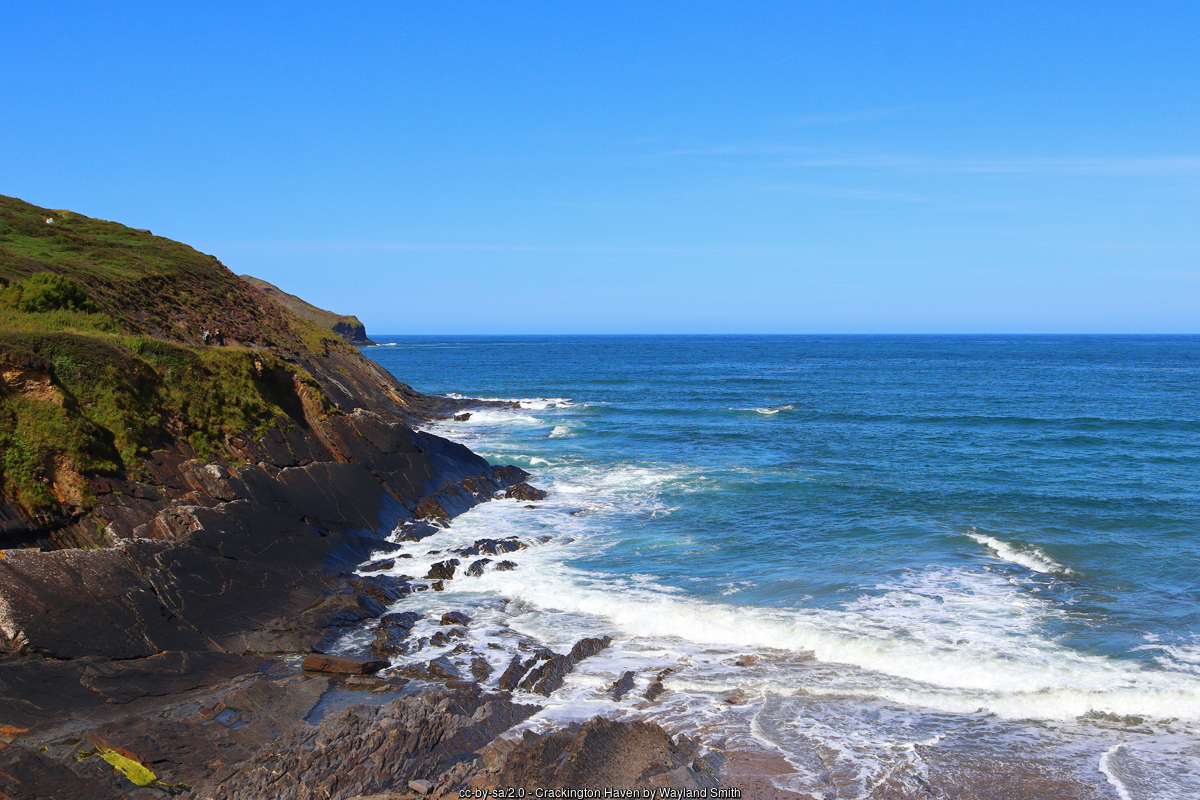
CRACKINGTON HAVEN BEACH
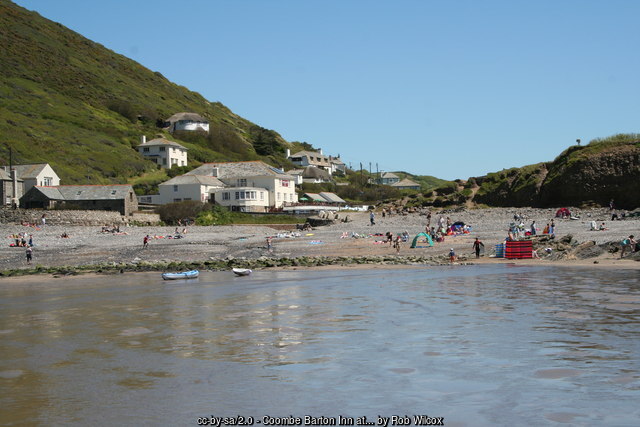
Crackington Haven beach lies in an enclosed bay at the mouth of the valley, sheltered on both sides by high cliffs. The upper beach is mainly pebbles, but as the tide goes out a good stretch of sand is uncovered across the bay, and the beach shelves gently into the sea – making it a good family beach, especially around low to mid tide.
Along the western fringe of the beach, and below the cliffs on either side, ledges of folded rock run out into the sea, and at low water they are full of rock pools – perfect for crabbing and shrimping. A small stream crosses the beach on its way to the sea, and only the road separates the beach from the village cafés and the pub.
RNLI lifeguards patrol the beach daily through the main summer holiday period, usually from 10am to 6pm; always swim between the red and yellow flags. Outside the patrol season there is no lifeguard cover, and the sea here can be powerful, with rip currents when the surf is up.
Crackington Haven also has a quiet surfing reputation. The beach can produce a fun right-hand wave over sand, at its best in a north-westerly swell with a light south-easterly offshore wind, and it is usually far less crowded than the big surf beaches around Bude. Surfboards and wetsuits can be hired in the village in season.
At high tide, particularly on big spring tides, the sand disappears and the sea can reach the pebbles close to the road, so check tide times before planning a full day on the beach. Dogs are not allowed on the beach between 10am and 6pm from 15 May to 30 September. A Coastal Protection Order means stones, rocks and fossils must not be taken from the beach.
Out of season, the beach takes on a different character. On stormy winter days the Atlantic rollers thunder into the bay and spray flies over the headlands, while on calm, clear days you may have the sand and rock pools almost to yourself – with a warm welcome waiting at the pub afterwards. See our Crackington Haven beach guide for more details.
↑ Back to top

THE VILLAGE & COOMBE BARTON INN
Crackington Haven is a small village, but it has everything you need for a day at the beach. Grouped around the bridge and the road behind the beach are the Coombe Barton Inn, the Cabin Café and a second café, a beach shop selling buckets, spades and beach goods, surf hire, public toilets and the car park.
The big white building overlooking the beach is the Coombe Barton Inn. It was originally built as the house of the captain, or manager, of the local slate quarries, and today it is the village pub, with a large bar and restaurant looking out over the beach and the sea. It serves Cornish ales and food at lunchtime and in the evening, welcomes families and dogs, and has rooms for visitors.
The stream that runs down the valley passes under the road bridge beside the car park on its way to the beach. A water mill once stood in the village, and its leat can still be traced. The bridge, several homes and the pub were badly damaged in August 2004, when the same storm that devastated Boscastle sent a flash flood down the valley; the village has long since recovered.
Above the beach, houses and holiday cottages are scattered across the steep hillsides of the valley, and the lanes climb inland to the hamlets of Middle and Higher Crackington. The village is part of the parish of St Gennys, a large rural parish of farms, hamlets and deep wooded valleys stretching along the coast between Bude and Boscastle.
For a small place, Crackington Haven has a strong sense of community. The Go Cornwall Bus 95 stops by the Cabin Café and Tremayna Chapel, and the village is a popular stop for walkers on the South West Coast Path – it is the end of one of the toughest stages of the whole path, the switchback walk from Boscastle over High Cliff.
↑ Back to top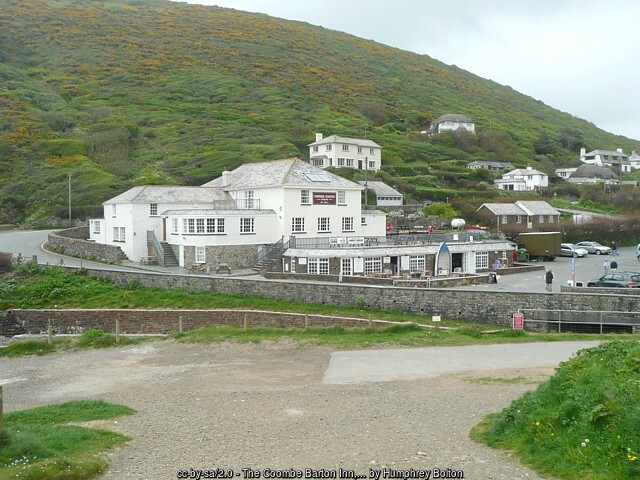


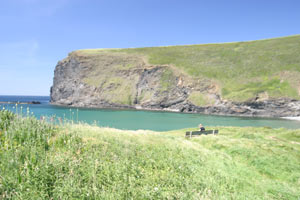
MAP OF CRACKINGTON HAVEN
FOLDED CLIFFS & GEOLOGY
Crackington Haven is famous among geologists. The cliffs around the cove are made of layers of sandstone and dark shale, laid down as sediment on the floor of a deep sea in the Carboniferous period, around 300 million years ago. Later, during the great mountain-building episode that shaped south-west Britain, these layers were squeezed, buckled and folded.
The result can be seen all around the haven: rock beds bent into tight arches (anticlines) and troughs (synclines), zig-zag folds, faults and steeply tilted strata, picked out by the alternating pale sandstone and dark shale. The rocks take their name from the village – geologists call them the Crackington Formation, and the sequence runs along much of this coast – part of the Carboniferous rocks of the Bude and Culm Coast.
Erosion is still very active here. The soft shales are easily worn away, rocks fall from overhanging cliffs, and old landslips have created slumped and fissured undercliffs on the way to Cambeak. The headland of Cambeak itself stands out because it is made of harder rock than the cliffs on either side.
The cove and its cliffs are part of a Site of Special Scientific Interest, and fossils, including goniatites – relatives of the ammonites – have been found in the rocks. A Coastal Protection Order protects the beach, so please photograph anything you find and leave it in place. Keep well away from the base of the cliffs, which can collapse without warning.
A few miles north along the coast, the cliffs at Millook Haven show the same rocks folded into a spectacular pattern of chevron folds, one of the most photographed geological sights in Cornwall. Together, Crackington and Millook draw students and researchers from all over the country – see our geology guide to the Bude and Culm Coast for more on these remarkable rocks.
↑ Back to top
The Crackington Formation
Sandstones and dark grey shales of Upper Carboniferous age, about 300 million years old, folded into anticlines, synclines and chevron folds. Best seen in the cliffs either side of the cove, on Cambeak and at Millook Haven. Please leave all rocks and fossils on the beach.
Bude & Culm Coast geology →
HISTORY OF CRACKINGTON HAVEN
Crackington is an old name. Its Cornish form, Porthkragen, is usually translated as “sandstone cove”, and the manor of Crackington is recorded in the Domesday Book of 1086. For centuries the valley was a farming community, with scattered farmsteads such as Trevigue, first mentioned in 1327, sheltering in the hillsides out of the westerly gales.
Until the 19th century Crackington Haven was a small working port – though it never had a quay or jetty. Little sailing vessels were run up onto the beach at high tide to unload coal and limestone from South Wales, then loaded with slate from the local quarries and farm produce for the return voyage. A lime kiln at the haven burnt the limestone to make lime to sweeten the acid local soil, and sand and seaweed were carried up from the beach to the fields as fertiliser.
In 1836 royal assent was given to an ambitious plan to transform the haven into a new town called Port Victoria, with a 12-acre harbour and a railway link to Launceston. Like several grand Victorian schemes on this coast, it was never built – which is why Crackington Haven remains the small, unspoilt place it is today.
This wild stretch of coast has claimed many ships over the centuries; in one year in the 1820s, 23 ships were believed lost along it. The people of St Gennys were known of old as “wreckers and wrestlers”, and the churchyard is the last resting place of many shipwrecked sailors. A more recent wreck lies just south of the beach at Tremoutha Haven: the German E-boat S89, which broke free of her tow in heavy weather on 5 October 1946 and ran ashore. Her engines can still be seen among the boulders at low tide.
The arrival of the railway in North Cornwall in 1893 brought the first holidaymakers, and tourism gradually replaced the sea trade. In 2004 the village suffered badly in the flash flood of 16 August, but it has recovered, and today Crackington Haven is a peaceful holiday village, much of its coast protected by the National Trust.
↑ Back to top
CAMBEAK, THE STRANGLES & HIGH CLIFF
South of Crackington Haven lies some of the most dramatic coastline in Cornwall. The coast path climbs steeply out of the cove above Tremoutha Haven, dipping into little hanging valleys where streams tumble over the cliff edge as waterfalls, to reach Cambeak – a narrow headland around 100 metres high, with views north to Pencannow Point and, on a clear day, as far as Lundy and Trevose Head.
Beyond Cambeak, below the path, is the Northern Door, a natural arch cut through a fin of rock, and the small sandy cove of Little Strand. Then comes The Strangles, a remote National Trust beach of sand, shingle and striped pebbles beneath towering cliffs, reached only on foot by a steep path. There are no facilities, the beach is cut off at high water and the currents are dangerous – it is a place for exploring at low tide, not for swimming.
Above The Strangles rises High Cliff, at about 223 metres (735 feet) the highest cliff in Cornwall. Its great slope of grass and scrub drops almost to the sea, and the views from the top, along the Heritage Coast in both directions, are magnificent. Thomas Hardy and Emma Gifford walked these cliffs during their courtship in the 1870s, and the landscape found its way into his novel A Pair of Blue Eyes.
Inland, the National Trust farm of Trevigue, with its 16th-century farmhouse, is run by Trust tenants who manage the clifftops for wildlife. Soay sheep, goats and cattle graze the heath to keep scrub in check, and wild flowers such as kidney vetch, bird’s-foot trefoil, tormentil and thrift flourish, with butterflies such as the common blue, clouded yellow and small copper. Kestrels, buzzards, stonechats and linnets are often seen, and grey seals around the rocks below.
See our guide to The Strangles for more on visiting the beach.
↑ Back to top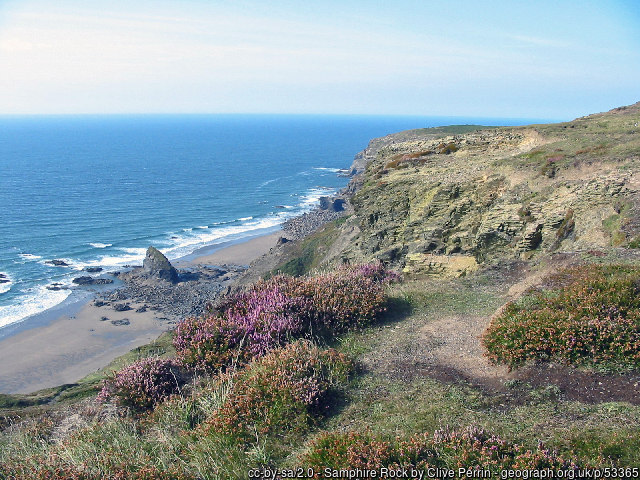
Safety on the Cliffs
The cliff edges around Crackington Haven are unfenced and the paths steep and slippery when wet. Keep children and dogs close, stay on the path, check tide times before going down to The Strangles, and never swim there. In an emergency call 999 and ask for the Coastguard.
ST GENNYS CHURCH
Half a mile north of the haven, over Pencannow Point, the little church of St Gennys stands on a sloping site above the sea, with breathtaking views along the coast towards Bude, Morwenstow and, on a clear day, Lundy Island. It is a medieval church thought to stand on an early Christian site, and part of the building is Norman.
The church has a short, sturdy tower with a pyramidal roof housing a ring of four bells, and inside, the aisle arcades are built partly of granite and partly of Polyphant stone. It was restored in 1871. The dedication is usually thought to be to the 4th-century martyr St Genesius, though it may instead commemorate a Welsh saint, Gwynws.
The churchyard is the last resting place of shipwrecked mariners from this dangerous coast – and perhaps a few smugglers too. Nearby are two holy wells, one of which was restored in the 1920s. The walk from Crackington Haven over Pencannow Point to the church and back is one of the shortest and most rewarding walks from the village.
↑ Back to top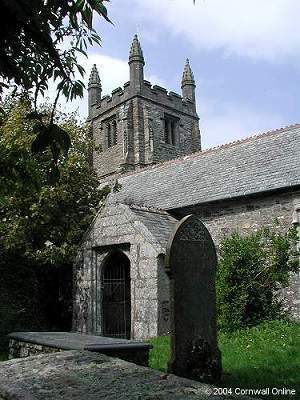
THINGS TO DO IN CRACKINGTON HAVEN
Crackington Haven is a place to slow down. A day on the beach, a walk on the cliffs and a meal at the pub is a perfect holiday day here – but there is plenty more to discover nearby, from Hardy country to the harbours of Boscastle and Bude.
Here are some of the best things to do in and around Crackington Haven:
- Spend a day on the beach – best around low tide, when the sand and rock pools are uncovered.
- Explore the rock pools – on the folded rock ledges either side of the cove.
- Try surfing – with board and wetsuit hire in the village in season.
- Study the folded cliffs – the zig-zag rocks that gave the Crackington Formation its name.
- Climb Cambeak – the dramatic headland south of the cove.
- Walk to The Strangles – a remote National Trust beach below High Cliff.
- Stand on High Cliff – the highest cliff in Cornwall.
- Visit St Gennys Church – over Pencannow Point, with views to Lundy.
- See the chevron folds at Millook – a few miles north along the coast.
- Explore Boscastle – the National Trust harbour village about 4 miles south.
Tide Times
Crackington Haven is at its best around low tide, when the sand and rock pools are exposed. The Strangles is cut off at high water. Always check tide times before you go – they are posted locally and online.
Surfing
The beach can work at most states of tide, at its best with a north-westerly swell and a light south-easterly wind. Beginners should stick to small days and lifeguarded hours.
WALKS FROM CRACKINGTON HAVEN
Crackington Haven is a superb base for walking. The parish of St Gennys takes great pride in its footpaths, and with the help of the National Trust and the coast path team they are well signed and maintained, leading along the cliffs and through quiet wooded valleys.
The classic short walk heads south over Cambeak to the clifftop above The Strangles, then turns inland past Trevigue farm and returns down the wooded Ludon Valley, where oak, ash, holly, hazel and willow line the stream – around three and a half miles. The National Trust’s “Crackington cracker” walk follows a similar route.
Heading north, the coast path climbs over Pencannow Point to St Gennys Church, an easy loop of about two and a half miles. Keen walkers can carry on north towards Millook and Widemouth Bay, or south over High Cliff and Beeny Cliff to Boscastle – one of the hardest but most spectacular stages of the South West Coast Path. The 95 bus makes it easy to walk one way and ride back.
Wherever you walk, wear good boots, take water and keep well back from the unfenced cliff edges. The paths are steep, with steps and stiles, and can be muddy, and dogs should be kept under close control near livestock.
↑ Back to topCrackington Haven Walks
Our Crackington Haven walks guide has full directions and a map for two loops – Cambeak, The Strangles and the Ludon Valley, and Pencannow Point and St Gennys. See also our Boscastle circular walk and all North Cornwall walks.
AROUND CRACKINGTON HAVEN
- Boscastle – the Elizabethan harbour, the Museum of Witchcraft and Magic and the Valency Valley, about 4 miles south.
- St Juliot’s Church – restored by Thomas Hardy, where he met Emma Gifford in 1870, inland near Boscastle.
- Millook Haven – a pebble cove with spectacular chevron-folded cliffs, a few miles north.
- Widemouth Bay – a long sandy surf beach on the way to Bude.
- Bude – surf beaches, the sea pool and the canal, about 7 miles north.
- Tintagel – the legendary castle and the Old Post Office, a few miles beyond Boscastle.
Getting Here
Crackington Haven lies off the A39 between Bude and Camelford. From Wainhouse Corner, narrow lanes drop steeply down the valley to the haven – take care, as they are single-track in places with passing places. Sat-nav: EX23 0JG.

LOCAL EVENTS
Crackington Haven is a quiet village, and most of its events are simple pleasures – gig rowing in summer, guided walks and the busy weeks of the school holidays. For bigger festivals, Boscastle and Bude are close by.
- Pilot gig rowing (summer) – the Boscastle and Crackington Pilot Gig Club rows and races along this coast.
- RNLI lifeguard season (summer holidays) – daily patrols on Crackington Haven beach.
- National Trust events (school holidays) – guided walks and family activities around Boscastle and the coast.
- Boscastle Food, Art & Craft Festival (early October, in recent years) – a few miles south in Boscastle.
- Royal Cornwall Show (June) – three days at the Royal Cornwall Showground near Wadebridge.
Dates change from year to year, so check before you travel.
↑ Back to topCheck Before You Go
Dates change from year to year – check our Cornwall events guide and the organisers’ own websites before you travel.
VISITOR INFORMATION
Parking & EV Charging
The main car park is the pay-and-display car park in the village right behind the beach (EX23 0JG) – it is not National Trust. There is a second car park a little inland from the Coombe Barton Inn, and a little roadside parking on the hills into the village. Spaces fill quickly on sunny summer days – arrive early.
Electric vehicle charging:
- Boscastle long-stay car park, Penally Hill – 1 fast charger (22kW), PL35 0HG, about 4 miles away
- The Crescent car park, Bude – rapid chargers (43–50kW), EX23 8LE, about 10 miles by road
Bus & Train
Go Cornwall Bus route 95 between Bude and Camelford stops at Crackington Haven (by the Cabin Café and Tremayna Chapel) about every two hours during the day, calling at Boscastle and Tintagel. There is no railway nearby: the nearest stations are Bodmin Parkway, and Okehampton on the Dartmoor Line, reached by bus from Bude. Check timetables before you travel.
Facilities & Supermarkets
Public toilets by the beach, a beach shop and surf hire in the village. There is no supermarket in Crackington Haven – for a full weekly shop, the nearest supermarkets are in Bude, with a Co-op in Camelford. Supermarkets include:
- Morrisons – Stucley Road, Bude EX23 8UA
- Lidl – Sandpiper Road, Bude EX23 8BA
- Co-op – High Street, Camelford PL32 9PQ
Cafés & Restaurants
The Coombe Barton Inn by the beach (lunch and evening meals, families and dogs welcome), the Cabin Café and a second café in the village. Some are seasonal, and booking ahead is wise for evening meals in summer. More choice in Boscastle and Bude.
Health
The nearest GP practices are in Bude: Neetside Surgery, Leven Road, Bude EX23 8LA, and Stratton Medical Centre, Hospital Road, Stratton EX23 9BP. The nearest Minor Injury Unit is at Stratton Hospital, Hospital Road, Stratton EX23 9BP – check opening hours before travelling. Call NHS 111 for urgent advice and 999 in an emergency – ask for the Coastguard for incidents at sea or on the cliffs. The nearest major A&E departments are at Barnstaple, Plymouth and Truro.
Disabled Access
The car park, toilets, cafés and pub are close together behind the beach, with fairly level access from the car park to the top of the beach – though the upper beach is pebbly. No dedicated Blue Badge bays are confirmed, so check locally. The coast paths are steep and uneven, with steps and stiles, and are not suitable for wheelchairs.
Vets & Dogs
Penbode Vets, A39 Hillhead, Stratton EX23 9AB, about 9 miles away. Dogs are banned from the beach 10am–6pm from 15 May to 30 September, but are welcome on the coast path all year under close control, especially near livestock and cliff edges. The Coombe Barton Inn welcomes dogs.
National Trust & English Heritage
The National Trust cares for much of the coast around Crackington Haven, including Cambeak, The Strangles and Trevigue farm, as well as Boscastle harbour and the Old Post Office in Tintagel. Tintagel Castle (English Heritage) is about 8 miles south.
Beaches
Crackington Haven (Seaside Award 2026, RNLI lifeguards in summer); The Strangles, a remote beach to the south; Millook and Widemouth Bay to the north; and Boscastle harbour to the south.
STAY & EXPLORE NEAR CRACKINGTON HAVEN
Official Information
FAMILY HOLIDAYS & SHORT BREAKS IN CRACKINGTON HAVEN
Family holidays in Crackington Haven are all about the beach and the great outdoors. Children love the rock pools and the sand at low tide, building dams in the stream, watching the surfers and spotting seals from the cliffs, while the cafés and the pub are only a few steps away when it is time for lunch.
A self-catering holiday in Crackington Haven lets you enjoy the coast at your own pace: holiday cottages in the valley close to the beach, homes on the hillsides with sea views, and farmhouses and barn conversions in the quiet countryside of St Gennys. Many holiday cottages around Crackington Haven welcome dogs too.
Crackington Haven is also a wonderful choice for a short break or weekend away, especially out of season, when the beach is quiet, the Atlantic storms are spectacular and the coast path is all yours. A few nights in a cottage, B&B or campsite nearby is the perfect escape. Booking direct with the owner means no agency fees.
Browse self-catering holidays in Crackington Haven for holiday cottages and apartments, or holidays and short breaks in Crackington Haven for every type of accommodation – B&Bs, inns, holiday parks, camping and glamping – all listed on Cornwall Online by their owners.
↑ Back to topFREQUENTLY ASKED QUESTIONS ABOUT CRACKINGTON HAVEN
Yes – Crackington Haven is one of the most dramatic coves in North Cornwall. A sand and pebble beach sits between high headlands of folded rock, with a pub, cafés, a shop, toilets and parking just behind it, and some of the finest coast path walking in Cornwall – to Cambeak, The Strangles and High Cliff – on the doorstep.
The upper beach is mostly pebbles, but as the tide falls a good stretch of sand is uncovered, with rock pools along the edges. Low to mid tide is the best time for the sand; at high tide, especially on big spring tides, the beach narrows to a band of pebbles.
Dogs are not allowed on the beach between 10am and 6pm from 15 May to 30 September (Cornwall Council restriction). Outside those hours and dates dogs are welcome, and they can use the coast path all year under close control.
Yes. There is a pay-and-display car park in the village right behind the beach (EX23 0JG), which is not National Trust, and a second car park a little inland from the Coombe Barton Inn. Both fill quickly on sunny summer days, so arrive early.
Yes, RNLI lifeguards patrol the beach daily through the main summer holiday period, usually from 10am to 6pm. Check the RNLI website for this year’s dates, and always swim between the red and yellow flags.
The Crackington Formation is the sequence of Carboniferous sandstones and dark shales, laid down about 300 million years ago, that forms the cliffs here and along much of this coast. It takes its name from Crackington Haven, where the rocks were folded into dramatic zig-zag arches and troughs by later earth movements.
High Cliff, at about 223 metres (735 feet) the highest cliff in Cornwall, is around a mile and a half south of the beach along the South West Coast Path, beyond Cambeak and The Strangles. The path is steep and strenuous in places.
Yes. Go Cornwall Bus route 95 between Bude and Camelford stops at Crackington Haven, by the Cabin Café and Tremayna Chapel, about every two hours during the day, calling at Boscastle and Tintagel. Check the current timetable before you travel.
North Cornwall Towns and Villages | Padstow | Wadebridge | The Camel Estuary | Rock | Daymer Bay | Polzeath | Port Isaac | Trebarwith Strand | Tintagel | Bossiney Cove | Rocky Valley | Boscastle | Crackington Haven | Bude | Launceston | Camelford | Altarnum | Bodmin |