St Mawes, Cornwall – Harbour Village on the Roseland Peninsula
St Mawes & the Roseland Peninsula
Cornwall Online | Mid Cornwall Towns and Villages | Truro | Falmouth | The Roseland Peninsula | St Mawes | St Anthony Head | St Just in Roseland | Portscatho | Gerrans | Philleigh | Ruan Lanihorne | Tregony | Veryan | Portloe | Portholland | Gorran Haven | Mevagissey | The Lost Gardens of Heligan | St Austell | Charlestown | Fowey | Golant | Lostwithiel | The Lizard Peninsula
On This Page
- Holidays in St Mawes
- Best Time to Visit
- Harbour & Ferries
- Beaches
- St Mawes Castle
- St Anthony Head & Place
- History of St Mawes
- Key Buildings
- Notable People
- Walks from St Mawes
- Things to Do
- Local Events
- Places near St Mawes
- Visitor Information
- Stay & Explore
- Family Holidays & Short Breaks
- Frequently Asked Questions
St Mawes at a Glance
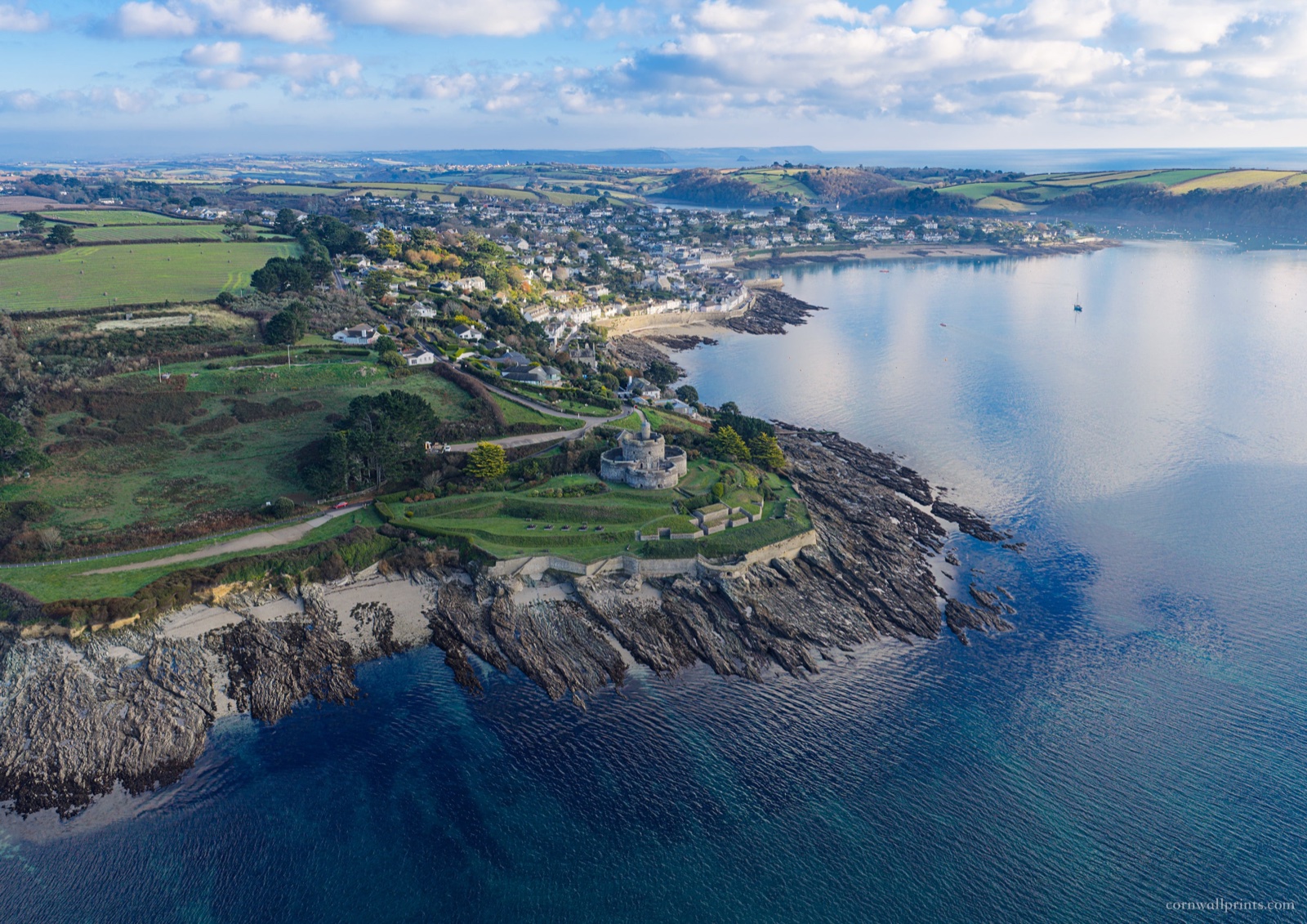
Harbour village at the tip of the Roseland Peninsula, facing Falmouth across the Carrick Roads. Henry VIII’s clover-leaf St Mawes Castle (English Heritage); a year-round passenger ferry to Falmouth and a summer ferry to Place for St Anthony Head; sheltered beaches at Summers Beach and Tavern Beach; harbourside cafés, galleries, hotels and the sailing club. On the South West Coast Path.
HOLIDAYS IN ST MAWES
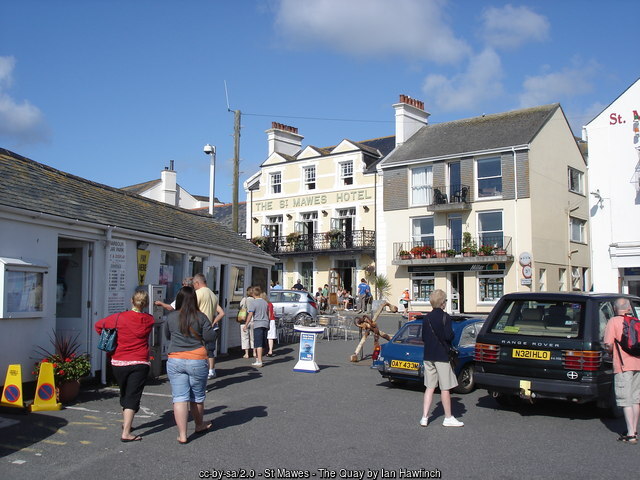
St Mawes is one of the prettiest harbour villages in Cornwall. It lies at the very tip of the Roseland Peninsula, on the eastern shore of the Carrick Roads, looking across the water to Falmouth and Pendennis Castle. White-painted houses and hotels climb the hillside above a small harbour, and the waterfront is busy with yachts, ferries and fishing boats for much of the year.
The village is gathered around the harbour and the Square, with cafés, a bakery, delis, galleries, gift shops and waterside pubs and hotels. From the harbour, Lower Castle Road follows the shore west to St Mawes Castle, Henry VIII’s clover-leaf fort, one of the best-preserved of all his coastal forts.
St Mawes is a village made for the water. The St Mawes Ferry crosses the Carrick Roads to Falmouth all year, and in summer the little Place Ferry crosses the Percuil River to Place for the walk to St Anthony Head and its lighthouse. The sheltered waters are perfect for sailing, kayaking and paddleboarding, and the St Mawes Sailing Club runs racing and courses through the summer.
For families, there are two small sandy beaches by the village, Summers Beach and Tavern Beach, with rock pools to explore, crabbing from the harbour wall, boat trips and the castle’s guns and battlements. The wider Roseland has quiet coves and long sandy beaches such as Towan, Porthcurnick and Pendower within a short drive.
St Mawes has a long history as a fishing port, and in the 19th century its pilchard fishery drew J.M.W. Turner, who painted the beach crowded with fishermen. Today the village and the Roseland lie within the Cornwall National Landscape, and the South West Coast Path runs through St Mawes on its way round the peninsula.
The village is small enough to explore on foot. Everything is within a few minutes’ walk of the harbour, though the lanes climb steeply up the hillside behind the waterfront, so comfortable shoes help. Wander up from the Square to find the old holy well of St Mawes, the Victorian church and quiet terraces of cottages with gardens full of palms, agapanthus and hydrangeas – the mild climate means something is in flower for much of the year.
St Mawes is a good place to eat and drink. Hotels, restaurants, pubs and cafés line the waterfront, many with terraces looking straight out over the harbour to Falmouth, and fresh local fish and shellfish feature on most menus. In summer it is worth booking ahead for dinner; out of season some places close or open fewer days, so check before you travel.
The rest of the Roseland is right on the doorstep. A short walk or drive away is St Just in Roseland, with its church set in a sub-tropical garden on the edge of a tidal creek. The fishing villages of Portscatho and Gerrans look out over Gerrans Bay, and the sandy beaches of Towan, Porthcurnick, Pendower and Carne line the coast to the east. The creeks of the Percuil River, best explored by kayak or small boat, are among the most peaceful corners of Cornwall.
Many visitors leave the car behind for a day and travel by water. The ferry gives easy days out in Falmouth, with the National Maritime Museum Cornwall, Pendennis Castle and the town’s shops and galleries. Over the King Harry Ferry, the National Trust gardens at Trelissick and the city of Truro are within easy reach. Each year in early August St Mawes holds its regatta and carnival week.
St Mawes makes a peaceful base for exploring the Roseland, the Fal and, by ferry, Falmouth. For somewhere to stay, see St Mawes holiday cottages and holidays and short breaks in St Mawes.
Best Time to Visit St Mawes
Spring brings the gardens into flower and quiet lanes and coast paths, and the Place Ferry starts its season. Summer is the busiest time, with the regatta and carnival week in early August and the harbour full of boats. Autumn is a lovely time for walking and boat trips, with the summer crowds gone. In winter the village is very peaceful and the ferry to Falmouth still runs.
The roads to St Mawes are narrow and the village car park fills quickly in high summer – arrive early, or come over from Falmouth by ferry.
↑ Back to top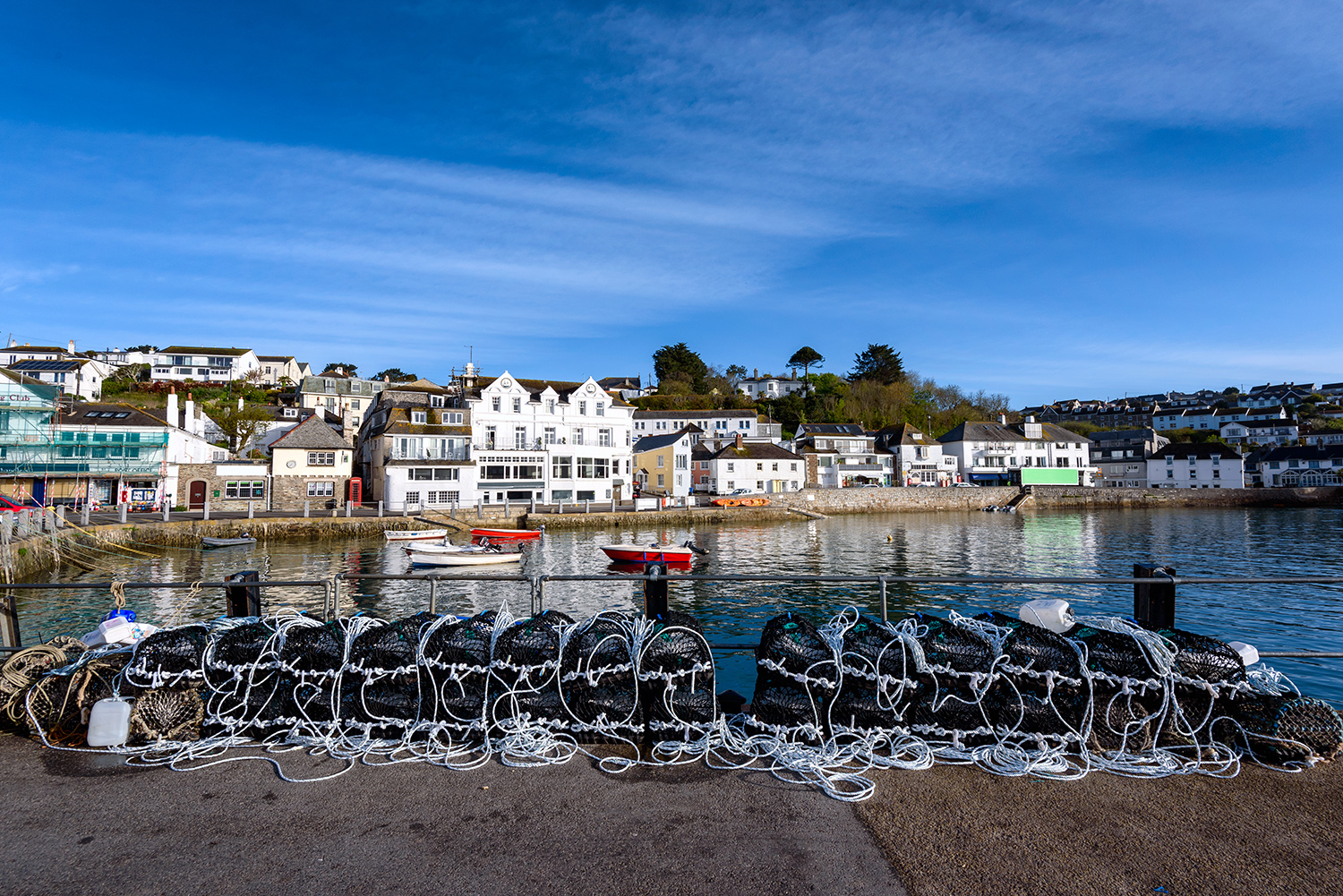
ST MAWES HARBOUR & THE FERRIES
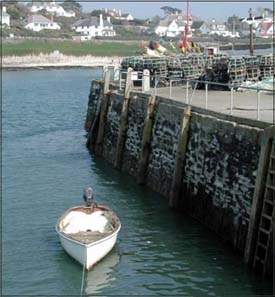
The harbour is the heart of St Mawes. Its stone pier dates from 1854, and the village grew up as a fishing port, sending its catch of pilchards far afield. Today the harbour is home to ferries, fishing boats and pleasure craft, and the moorings off the village fill with visiting yachts in summer. From the harbour wall you can watch the boats come and go across the Carrick Roads, with Falmouth, Pendennis Castle and St Anthony lighthouse all in view.
The sailing is some of the best in Cornwall. The St Mawes Sailing Club runs racing, training and social events through the summer, and you can hire kayaks, paddleboards and self-drive boats to explore the Percuil River and the creeks of the Roseland.
The harbour is still run by the St Mawes Pier and Harbour Company, set up by an Act of Parliament in 1854 to build and look after the pier and harbour. The company’s office is on the quay. There are visitor moorings just off the quay for yachts calling in, and the slipway is usable from around half tide. There was a quay here long before the present pier: records survive of an agreement for a new quay at St Mawes in the 1730s. Local tradition says the very first landing was built by St Mawes himself, so that pilgrims could reach his holy well.
The harbour wall is one of the best places in Cornwall to sit and watch the boats. Yachts, classic gaff-rigged boats, fishing boats and the ferries come and go across the Carrick Roads all day. In winter, you may see the Fal oyster fleet out on the oyster beds – the Fal oyster fishery is famous as one of the last in Europe still worked under sail or from rowing punts with hand-hauled dredges, a tradition kept up to protect the oyster beds. Seals are seen in the estuary, and dolphins sometimes come into the Carrick Roads.
Ferries
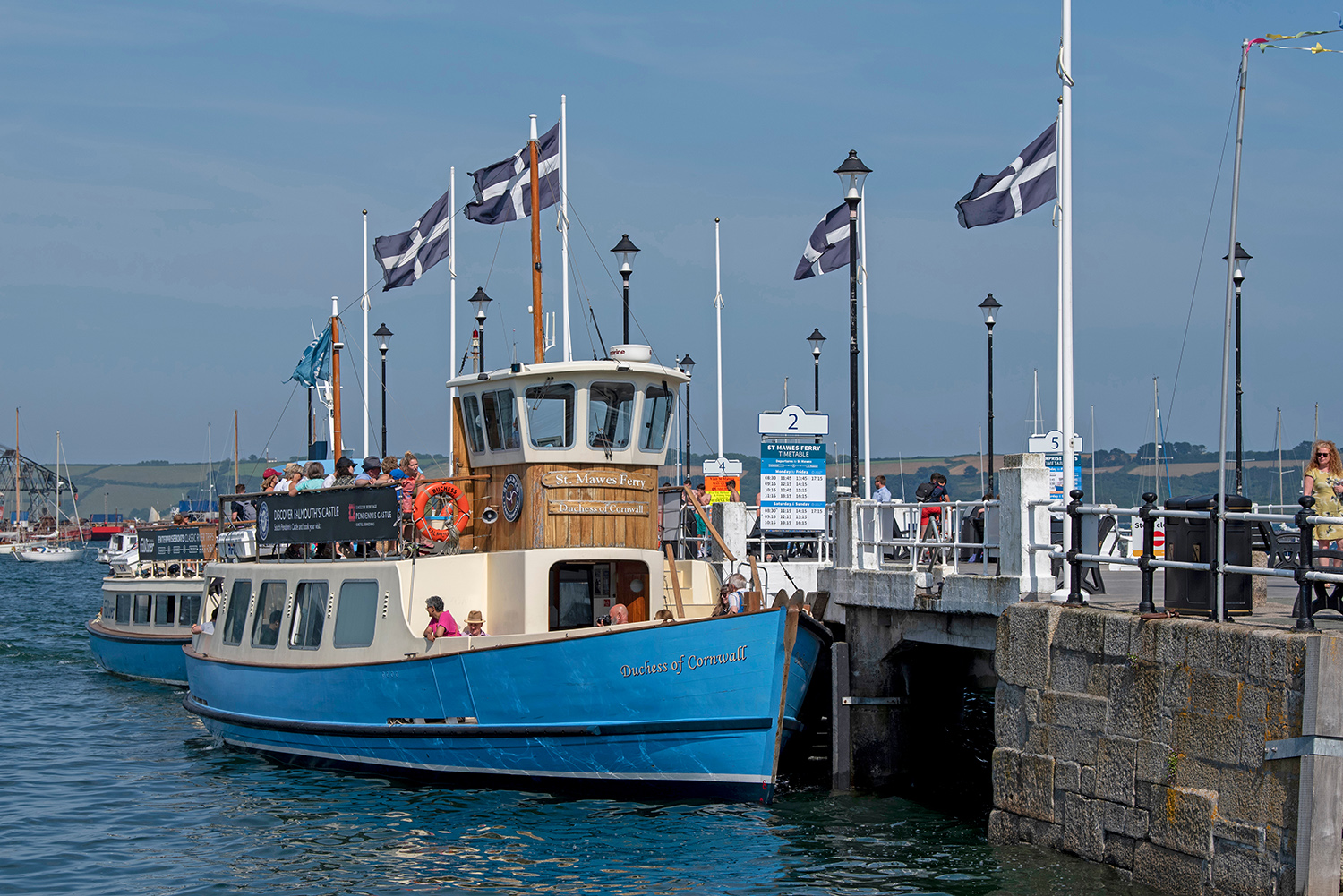
- St Mawes Ferry – a year-round passenger ferry from the harbour across the Carrick Roads to Falmouth’s Prince of Wales Pier, with sailings also to Custom House Quay in the summer season. The crossing gives fine views of both of Henry VIII’s castles.
- Place Ferry – a small seasonal ferry (usually April to October) across the mouth of the Percuil River to Place, for the coast path to St Anthony Head. It forms part of the South West Coast Path.
- King Harry Ferry – the chain ferry across the Fal near Trelissick, a short cut by car between the Roseland and Truro or Falmouth.
The ferry to Falmouth has a long history. For many years the link between Percuil, Place, St Mawes and Falmouth was an open sailing cutter known as the market boat, carrying people, produce and goods. In 1869 the steamer Wotton arrived and changed the crossing. For about a century from then the St Mawes Steam Tug & Passenger Company ran the service with a succession of steamers and motor launches, among them the Roseland, St Gerrans and St Mawes Castle. Today the crossing takes around 20 minutes. Three traditional wooden ferries share it: the May Queen (built in 1939), the Queen of Falmouth (1937) and the Duchess of Cornwall, built in 2008 for the route.
Check the Fal River ferries website for current timetables. All sailings depend on the weather and, at Place, on the tide.
↑ Back to top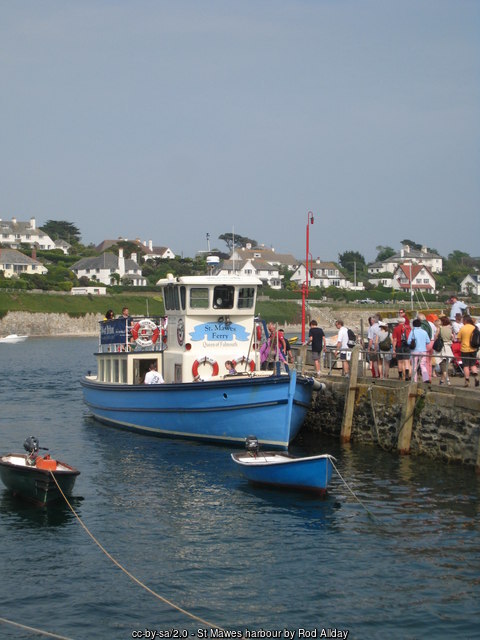
BEACHES IN AND AROUND ST MAWES
St Mawes has two small beaches of sand and shingle right by the village, both sheltered and facing the sun, with clear water and rock pools – ideal for paddling, swimming and a picnic. At low tide there is also a little beach in the harbour.
There are no lifeguards on the St Mawes beaches, so keep an eye on children in the water and watch the tide. For bigger sandy beaches, head out along the Roseland to Towan, Porthcurnick, Pendower and Carne.
- Summers Beach – the larger of the two, just east of the harbour and close to the main car park, with views across the estuary.
- Tavern Beach – a small cove between the village and the castle, below Lower Castle Road.
- Towan Beach and Porthcurnick – sandy beaches on the eastern side of the Roseland near Portscatho, a short drive away.
- Pendower and Carne – a long stretch of sand on Gerrans Bay, popular with families.
Seasonal dog restrictions apply on the St Mawes beaches – see Vets & Dogs below. See our guide to the beaches of the Roseland Peninsula and our St Mawes beach page.
↑ Back to top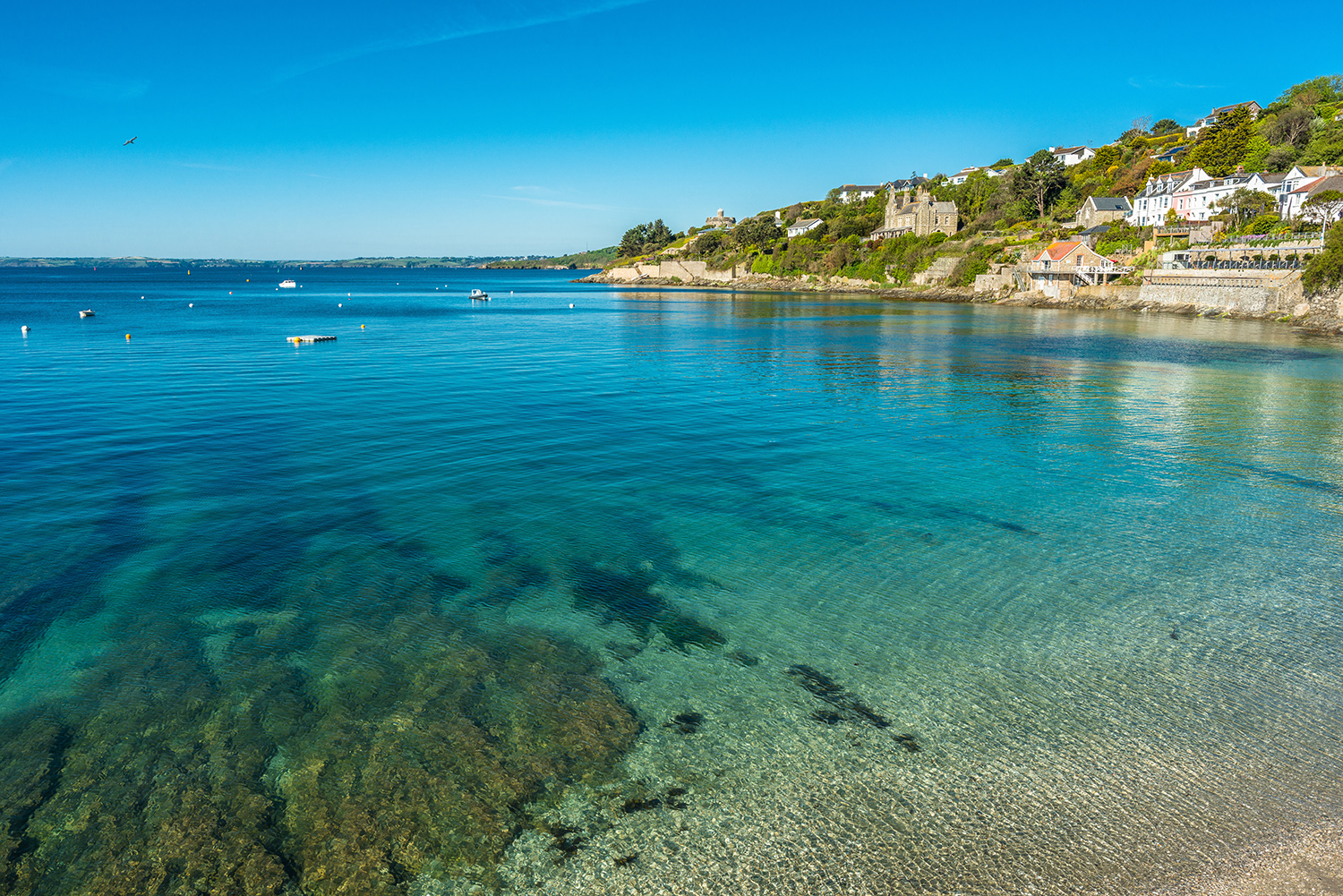
No lifeguards on the St Mawes beaches. Check the Met Office beach forecast and tide times before you go.
ST MAWES CASTLE
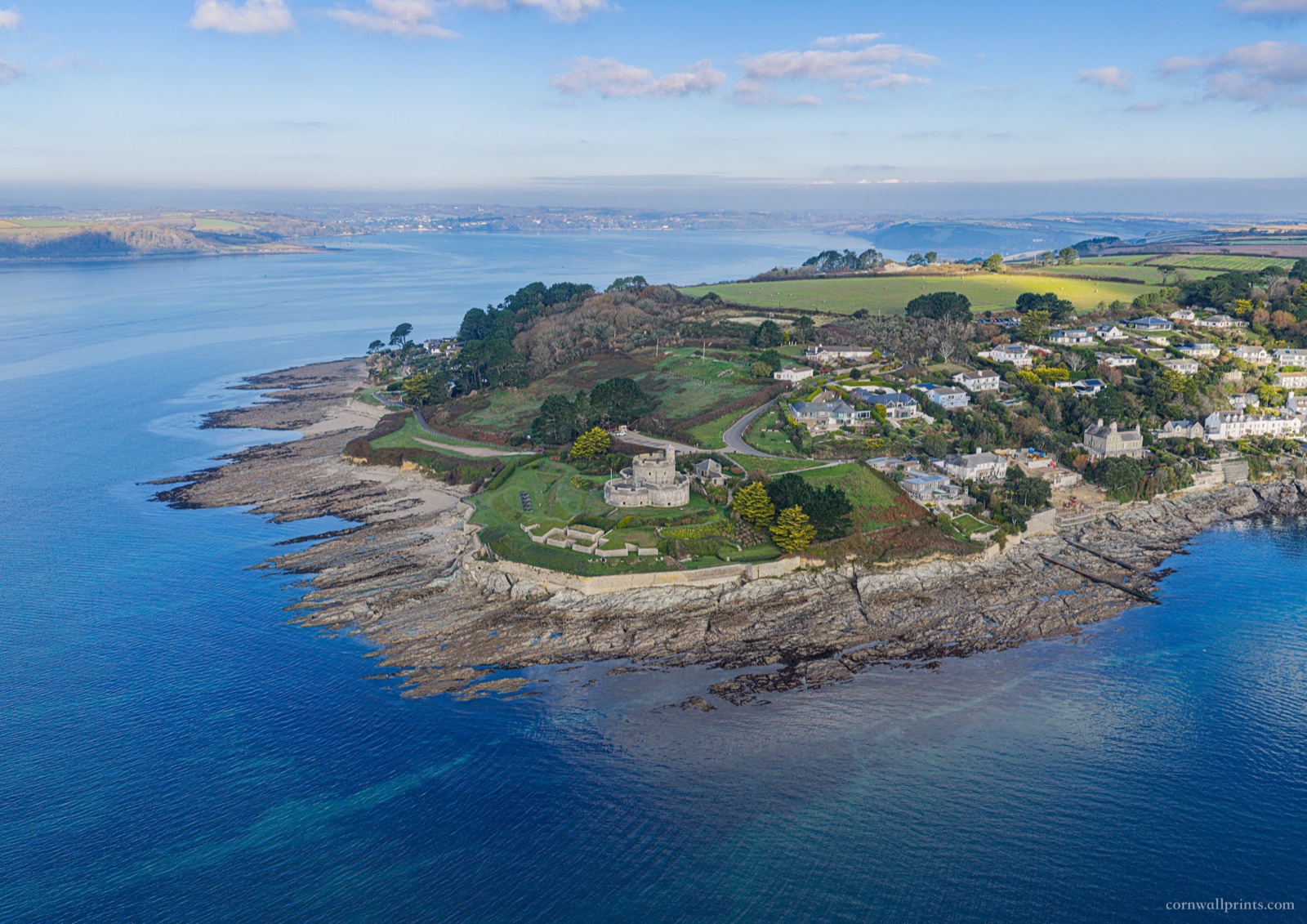
A short walk west of the harbour, St Mawes Castle is one of the best-preserved of Henry VIII’s coastal artillery forts. It was built between about 1539 and 1545 as the partner of Pendennis Castle across the water, so that their guns could cover the entrance to the Carrick Roads. Its unusual clover-leaf plan – a round central tower with three round bastions – gave its gunners a field of fire across the whole of the estuary mouth.
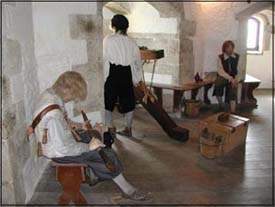
The castle is famous for its decoration. Look for the royal coat of arms over the entrance, Latin inscriptions praising Henry VIII and his son Edward VI, and carved gargoyles. You enter the four-storey tower by a bridge to the third level, and inside, original carvings of a cherub, a monk, Tudor roses and fleurs-de-lis survive. The forward gun room has a display of cannon, with the sockets in the walls that held the beams for the gun tackle.
St Mawes never fired a shot in anger against the French or Spanish. In the Civil War, unlike Pendennis, it was easily overlooked from the hill behind and was surrendered to the Parliamentarians in 1646 almost without a fight. The castle was re-armed in later wars and stayed in military use until the 20th century; it is now cared for by English Heritage, with lovely grounds and views across to Falmouth and St Anthony Head.
↑ Back to top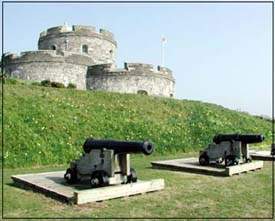
St Mawes Castle
Built: c.1539–45, for Henry VIII
Plan: clover-leaf – central tower and three bastions
Civil War: surrendered 1646
Cared for by: English Heritage
Where: Castle Drive, St Mawes, TR2 5DE
Twin: Pendennis Castle, Falmouth
ST ANTHONY HEAD & PLACE
Across the Percuil River from St Mawes, the southern tip of the Roseland ends at St Anthony Head, cared for by the National Trust. Take the Place Ferry to Place, where the church of St Anthony stands beside Place House, and follow the coast path round to the headland, with views back across to St Mawes, Falmouth and Pendennis.
St Anthony Lighthouse, built for Trinity House in 1835, guards the entrance to the Carrick Roads and warns ships away from the Manacles rocks. Many people know it as the lighthouse in the British version of the 1980s children’s television series Fraggle Rock. On the headland above are the remains of St Anthony Battery, built in the 1890s and manned in both World Wars, with a restored observation post.
See our full guide to St Anthony Head, and our Roseland Peninsula guide for Portscatho, Gerrans, Veryan and the other Roseland villages.
↑ Back to topHISTORY OF ST MAWES
St Mawes takes its name from Saint Maudez (Mawe), a Celtic saint who may have come from Ireland but is chiefly honoured in Brittany. The Cornish name, Lannvowsedh, means Mowsedh’s holy enclosure. A chapel dedicated to him once stood here, and his holy well still survives in the village.
In the Middle Ages St Mawes grew from two small port settlements into a fishing town. When the antiquary John Leland visited in the early 1540s he described it as a poor fishing village, but it was soon given a new importance: Henry VIII built St Mawes Castle on the shore in the 1540s, and in 1562 the little town became a parliamentary borough, sending two MPs to Westminster until it was abolished as a “rotten borough” by the Reform Act of 1832.
For centuries the village lived by the sea. The pilchard fishery was the main source of work, and in 1812 J.M.W. Turner exhibited his painting St Mawes at the Pilchard Season, showing the beach crowded with fishermen and their catch. A new pier was built in 1854, and by the late 19th century the fishery was in decline. The church of St Mawes was opened in 1884.
In the 20th century St Mawes became a popular resort and sailing centre, its fishermen’s cottages joined by hotels and holiday homes. Today it is one of the best-loved villages in Cornwall, and its regatta has been held each summer for well over a century.
↑ Back to topSt Mawes – key dates
c.1539–45 – St Mawes Castle built
1540s – John Leland visits
1562 – St Mawes becomes a parliamentary borough
1646 – castle surrendered to Parliament
1812 – Turner exhibits St Mawes at the Pilchard Season
1832 – borough abolished by the Reform Act
1835 – St Anthony Lighthouse built
1854 – harbour pier built
1884 – St Mawes church opened
1890s – St Anthony Battery built
Key Buildings
- St Mawes Castle – Henry VIII’s clover-leaf artillery fort of the 1540s, with its carved decoration and Latin inscriptions, cared for by English Heritage. See St Mawes Castle above.
- The harbour and pier – the stone pier of 1854 that shelters the harbour and the ferry landing.
- St Mawes Holy Well – the well associated with Saint Maudez, with a later arch over it, in the village.
- St Mawes Church, Church Hill – the village church, opened in 1884.
- St Anthony Lighthouse – the 1835 lighthouse on St Anthony Head, across the Percuil River. See St Anthony Head above.
NOTABLE PEOPLE
- Saint Maudez (Mawe) – the Celtic saint who gave the village its name, remembered by the holy well in the village.
- John Leland (c.1503–1552) – Henry VIII’s antiquary, who described St Mawes, its saint and its holy well on his travels through Cornwall in the 1540s.
- J.M.W. Turner (1775–1851) – the painter, who sketched St Mawes on his tour of the West Country in 1811 and exhibited St Mawes at the Pilchard Season in 1812. The painting is now at Tate Britain.
WALKS FROM ST MAWES
The easiest walk is along Lower Castle Road from the harbour to St Mawes Castle, a level stroll beside the water with views across to Falmouth. From the castle a footpath continues along the shore of the Carrick Roads towards St Just in Roseland, where the church stands in its famous subtropical churchyard beside a tidal creek – return the same way or by the lanes.
For a longer day, take the Place Ferry across to Place and follow the South West Coast Path round St Anthony Head and its lighthouse and along the coast to Porthbeor and Towan beaches, returning through the fields to Place. Check the ferry times before you set out.
- St Anthony Head walk – Cornwall Online
- South West Coast Path
- Walking in Cornwall – Cornwall Online walks
THINGS TO DO IN AND AROUND ST MAWES
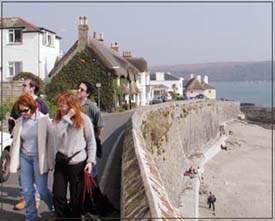
St Mawes is a place to slow down – watch the boats from the harbour wall, browse the galleries and shops around the Square, swim from Summers Beach and enjoy the views over the Carrick Roads from a waterside café or hotel terrace.
For families, there is crabbing from the harbour, rock pooling on the beaches, ferry rides and the castle. On rainy days, take the ferry to Falmouth for the National Maritime Museum Cornwall, or drive to Truro for the cathedral and the Royal Cornwall Museum.
On the water, hire a kayak, paddleboard or self-drive boat to explore the Percuil River, or take a boat trip up the Fal. Here are some of the best things to do in and around St Mawes.
- Visit St Mawes Castle – St Mawes Castle.
- Take the ferry to Falmouth for Pendennis Castle and the museum – Falmouth.
- Cross to Place and walk round St Anthony Head – St Anthony Head walk.
- Walk to St Just in Roseland and its churchyard garden – St Just in Roseland.
- Spend a day on the beach at Summers Beach or Towan.
- Paddle or kayak up the Percuil River.
- Visit Trelissick, reached by the King Harry Ferry or by boat – Trelissick.
- Explore the Roseland villages – Portscatho, Veryan and Portloe.
LOCAL EVENTS
- St Mawes Regatta & Carnival Week (late July to early August) – the village regatta, held for well over a century, followed by a week of harbour swims, paddleboard races, beach games and crabbing competitions.
- St Mawes Sailing Club racing (summer) – regular racing and events on the Carrick Roads and the Percuil River.
- Falmouth events – the Sea Shanty Festival (June), Falmouth Week (August) and the Oyster Festival (October) are a short ferry ride away. See our Falmouth guide.
Dates change from year to year – check local listings and the St Mawes and the Roseland website for this year’s events.
↑ Back to topPLACES NEAR ST MAWES
- Falmouth – across the Carrick Roads by ferry, with Pendennis Castle, the maritime museum and beaches.
- St Just in Roseland – the creekside church and garden, about two miles north.
- Portscatho and Gerrans – the fishing village and its neighbour on Gerrans Bay, on the other side of the peninsula.
- Veryan – the village famous for its round houses.
- Portloe – a tiny fishing cove on the Roseland’s south coast.
- The Roseland Peninsula – our guide to the whole peninsula.
- Truro – Cornwall’s only city, about 16 miles by road via the King Harry Ferry.
VISITOR INFORMATION
Parking & EV Charging
The main St Mawes car park, run by St Just in Roseland Parish Council, is in the centre of the village behind the Rising Sun, with over 200 spaces, disabled bays and public toilets; it is a short walk to the harbour and Summers Beach. There is also parking at St Mawes Castle for castle visitors. The streets are narrow, so avoid driving down to the harbour in summer.
Electric vehicle charging:
- There are no public chargers in the village – the nearest are in Falmouth (by ferry) and Truro. Some hotels have chargers for guests.
Bus & Train
There is no railway on the Roseland. The easiest way to arrive without a car is by train to Falmouth on the Maritime Line, then the St Mawes Ferry across the Carrick Roads. Go Cornwall Bus route 50 runs between Truro and St Mawes via Tregony and Portscatho, stopping at the main car park, but services are infrequent – check times before you travel.
Facilities & Supermarkets
St Mawes has a Co-op and a Spar for groceries, a pharmacy, a bakery, delis and gift shops, and the Roseland Visitor Centre in the main car park. Public toilets are in the car park. For larger supermarkets, go to Truro or Falmouth:
- Sainsbury’s – Treyew Road, Truro TR1 3XL
- Tesco – Killigrew Street, Falmouth TR11 3PQ (by ferry)
- Sainsbury’s – Ponsharden, Falmouth TR11 2RZ
Cafés & Restaurants
St Mawes has waterside hotels with restaurants and terraces, traditional pubs, cafés and a bakery around the harbour and the Square. Booking ahead is wise for dinner in summer and during regatta week; some places shorten their hours in winter. There is no café at the castle, but the shop sells drinks and snacks.
Health
St Mawes Surgery, Hillhead, St Mawes, TR2 5AL (01326 270241), is a branch of the Roseland Surgeries, whose main surgery is at Portscatho. The nearest Minor Injury Unit is at Falmouth Community Hospital, Trescobeas Road, TR11 2JA. Call NHS 111 for urgent advice and 999 in an emergency – ask for the Coastguard on the coast or the water. The nearest A&E is the Royal Cornwall Hospital, Truro.
Disabled Access
The harbour front, the Square and Lower Castle Road are fairly level, but the village climbs steeply behind. The main car park has disabled bays. Access to the beaches is by steps or slopes. At St Mawes Castle, wheelchair access is very limited – there are slopes and steep drops in the grounds, and the keep is reached by a spiral stair. The ferry to Falmouth is boarded from steps or a pontoon depending on the tide – ask the crew.
Vets & Dogs
Dogs are welcome on the ferries, on leads at St Mawes Castle, and in some pubs. Seasonal dog restrictions apply on the village beaches in summer – check the signs at each beach. There is no vet on the Roseland; the nearest are in Truro and Falmouth, such as Rosemullion Veterinary Hospital, Bickland Water Road, Falmouth, TR11 4SN (01326 313991).
National Trust & English Heritage
English Heritage cares for St Mawes Castle and, across the water, Pendennis Castle. The National Trust looks after St Anthony Head, much of the Roseland coast, and Trelissick on the Fal.
Attractions
The castle in the village, Falmouth’s museum and castle by ferry, and Trelissick and the Lost Gardens of Heligan a drive away.
STAY & EXPLORE NEAR ST MAWES
Local Attractions
Official Information
FAMILY HOLIDAYS & SHORT BREAKS IN ST MAWES
Family holidays in St Mawes are all about the water – crabbing from the harbour, rock pooling on Summers Beach, ferry rides to Falmouth and Place, and a real Tudor castle to explore. With the quiet beaches and coves of the Roseland all around, it makes a peaceful base for a family holiday on Cornwall’s south coast.
Choose a cottage in the village with views over the harbour, a house on the hill above, or somewhere quieter out on the Roseland. Browse St Mawes holiday cottages, or holidays and short breaks in St Mawes for every type of accommodation.
Short breaks are a treat out of season, when the village is quiet and the coast path is empty. Booking direct with the owner means no agency fees.
↑ Back to topFREQUENTLY ASKED QUESTIONS ABOUT ST MAWES
St Mawes is a harbour village at the tip of the Roseland Peninsula on the south coast of Cornwall, on the eastern shore of the Carrick Roads facing Falmouth. It is about 16 miles from Truro by road via the King Harry Ferry, or a short ferry crossing from Falmouth.
The St Mawes Ferry runs all year from the Prince of Wales Pier in Falmouth across the Carrick Roads to St Mawes harbour, with extra sailings from Custom House Quay in the summer season. Check the Fal River ferries website for current times, as sailings depend on the weather.
St Mawes Castle was built between about 1539 and 1545 for Henry VIII, as the partner of Pendennis Castle across the water. Its clover-leaf plan of a central tower and three round bastions is one of the most unusual of Henry’s forts. It is cared for by English Heritage.
Yes. Summers Beach, just east of the harbour near the main car park, and Tavern Beach, between the village and the castle, are small sheltered beaches of sand and shingle with rock pools. There are no lifeguards. Larger sandy beaches such as Towan, Porthcurnick and Pendower are a short drive away on the Roseland.
The main St Mawes car park, run by the parish council, is in the centre of the village behind the Rising Sun, with over 200 spaces, disabled bays and public toilets. There is also parking at St Mawes Castle for castle visitors. The harbour streets are narrow, so it is best to use the main car park.
Take the seasonal Place Ferry from St Mawes across the Percuil River to Place, usually from April to October, then follow the South West Coast Path round to St Anthony Head and its lighthouse. You can also drive there; the National Trust has a car park on the headland.
Yes. St Anthony Lighthouse, built in 1835 at the entrance to the Carrick Roads, appeared in the British version of the 1980s children’s television series Fraggle Rock. It is still a working lighthouse, run by Trinity House.
There is no railway on the Roseland. The easiest way is by train to Falmouth on the Maritime Line from Truro, then the St Mawes Ferry across the water. Go Cornwall Bus route 50 runs between Truro and St Mawes via Tregony and Portscatho, but services are infrequent.
Cornwall Online | Mid Cornwall Towns and Villages | Truro | Falmouth | The Roseland Peninsula | St Mawes | St Anthony Head | St Just in Roseland | Portscatho | Gerrans | Philleigh | Ruan Lanihorne | Tregony | Veryan | Portloe | Portholland | Gorran Haven | Mevagissey | The Lost Gardens of Heligan | St Austell | Charlestown | Fowey | Golant | Lostwithiel | The Lizard Peninsula