The Roseland Peninsula, Cornwall – Villages, Beaches & Creeks
The Roseland Peninsula
Cornwall Online | Mid Cornwall Towns and Villages | Truro | Falmouth | The Roseland Peninsula | St Mawes | St Anthony Head | St Just in Roseland | Portscatho | Gerrans | Philleigh | Ruan Lanihorne | Tregony | Veryan | Portloe | Portholland | Gorran Haven | Mevagissey | The Lost Gardens of Heligan | St Austell | Charlestown | Fowey | Golant | Lostwithiel | The Lizard Peninsula
On This Page
Roseland Peninsula at a Glance
A quiet peninsula of farmland, creeks and coves between the Fal estuary and Veryan Bay, within the Cornwall National Landscape. Harbour villages at St Mawes, Portscatho and Portloe; creekside churches at St Just and St Anthony; Veryan’s round houses; long sandy beaches at Pendower, Carne and Towan; and St Anthony Head at the tip. Reached by the King Harry Ferry, the St Mawes Ferry from Falmouth, or by road through Tregony.
HOLIDAYS ON THE ROSELAND PENINSULA
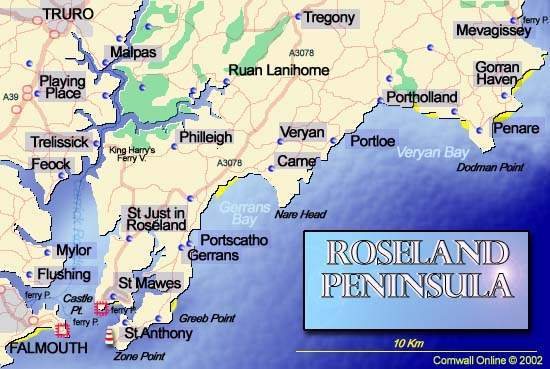
Few places in Cornwall can compare with the Roseland – one of the most picturesque and unspoilt corners of the British Isles. The peninsula lies on Cornwall’s south coast between the Fal estuary and the Carrick Roads to the west and Gerrans Bay and Veryan Bay to the east, and it reaches out to St Anthony Head at the entrance to Falmouth harbour.
Despite the name, the Roseland has nothing to do with roses. It comes from the Cornish word ros, which can mean a promontory or a heath – in 1584 the map-maker John Norden explained the “pretty name of Roseland” as coming from the Celtic word for heath or gorse. Today the whole peninsula lies within the Cornwall National Landscape, protected for its farmland, creeks and coast.
This is a landscape of small fields and high hedges, wooded creeks running down to the Fal, and a coast of sandy beaches and quiet coves. Lovely beaches and cliffs, delightful rivers and countryside and pretty villages and hamlets all make the Roseland the perfect setting for a peaceful holiday. You can walk the cliffs or the creekside paths, swim from the beaches, sail, kayak and paddleboard, fish, snorkel and watch the birds on the estuaries.
The villages each have their own character: the harbour village of St Mawes with its Tudor castle; the fishing villages of Portscatho and Portloe; the hilltop church of Gerrans; Veryan and its thatched round houses; the creekside church of St Just in Roseland; quiet Philleigh and Ruan Lanihorne on the upper Fal; and Tregony, the old river port known as the gateway to the Roseland.
During the warmer months there are regattas and gig racing, village carnivals and fetes, and gardens open to visitors. There is a wide choice of places to stay – traditional hotels, farmhouse bed and breakfast, holiday cottages, caravans and camp sites – and flower-covered pubs, cream teas and restaurants of real quality to round off the day.
For somewhere to stay, see Roseland Peninsula holiday cottages and holidays and short breaks on the Roseland.
Best Time to Visit the Roseland
Spring is a wonderful time on the Roseland, with primroses, bluebells and wild flowers in the hedges and the gardens in bloom. Summer brings regattas, gig racing and carnival weeks, and the beaches at their best. Autumn is quieter, with warm seas and empty coast paths, and winter is very peaceful – the St Mawes ferry and the King Harry Ferry run all year.
The lanes are narrow and the car parks at the beaches and in St Mawes fill quickly in high summer, so arrive early or use the ferries and buses where you can.
↑ Back to topVILLAGES ON THE ROSELAND PENINSULA
The Roseland is made up of the parishes of St Just in Roseland (which includes St Mawes), Gerrans (with Portscatho and St Anthony), Philleigh, Ruan Lanihorne and Veryan (with Portloe), with Tregony at its northern gateway. Each village has its own guide on Cornwall Online:
- St Mawes – the harbour village at the tip of the peninsula, with Henry VIII’s clover-leaf castle and ferries to Falmouth and Place.
- Portscatho – an unspoilt former pilchard-fishing village with a little harbour in the corner of Gerrans Bay.
- Gerrans – the village at the top of the hill above Portscatho, with the spired church of St Gerran, a landmark for sailors.
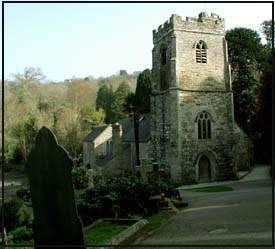
- St Just in Roseland – famous for its 13th-century church in sub-tropical gardens beside a tidal creek.
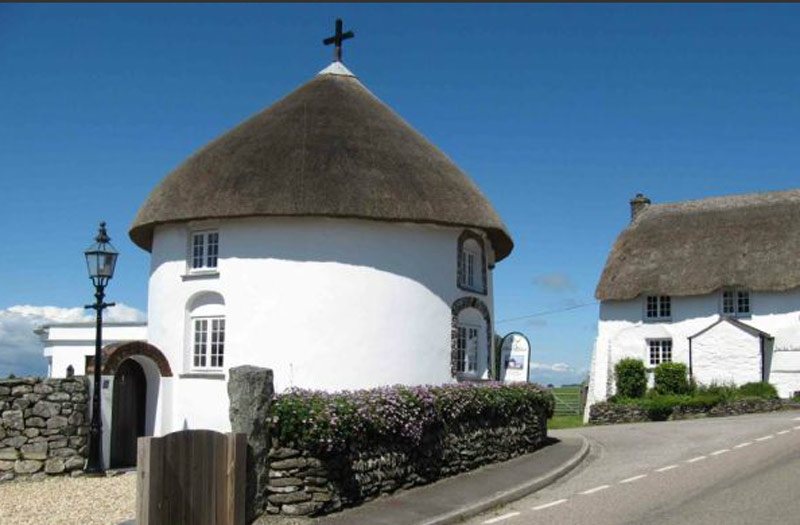
- Veryan – the inland village with five thatched round houses, close to Carne and Pendower beaches.
- Portloe – a working fishing cove tucked into the cliffs of Veryan Bay.
- Portholland – the twin coves of East and West Portholland on Veryan Bay.
- Philleigh – a quiet hamlet near the King Harry Ferry, with the Roseland Inn and the D-Day hards at Tolverne and Turnaware.
- Ruan Lanihorne – a creekside village on the upper Fal, once home to a medieval castle, and a haven for wading birds.
- Tregony – the gateway to the Roseland, a former river port and borough with a clock tower and 17th-century almshouses.
- St Anthony Head – the headland at the tip of the peninsula, with its lighthouse, gun battery and beaches.
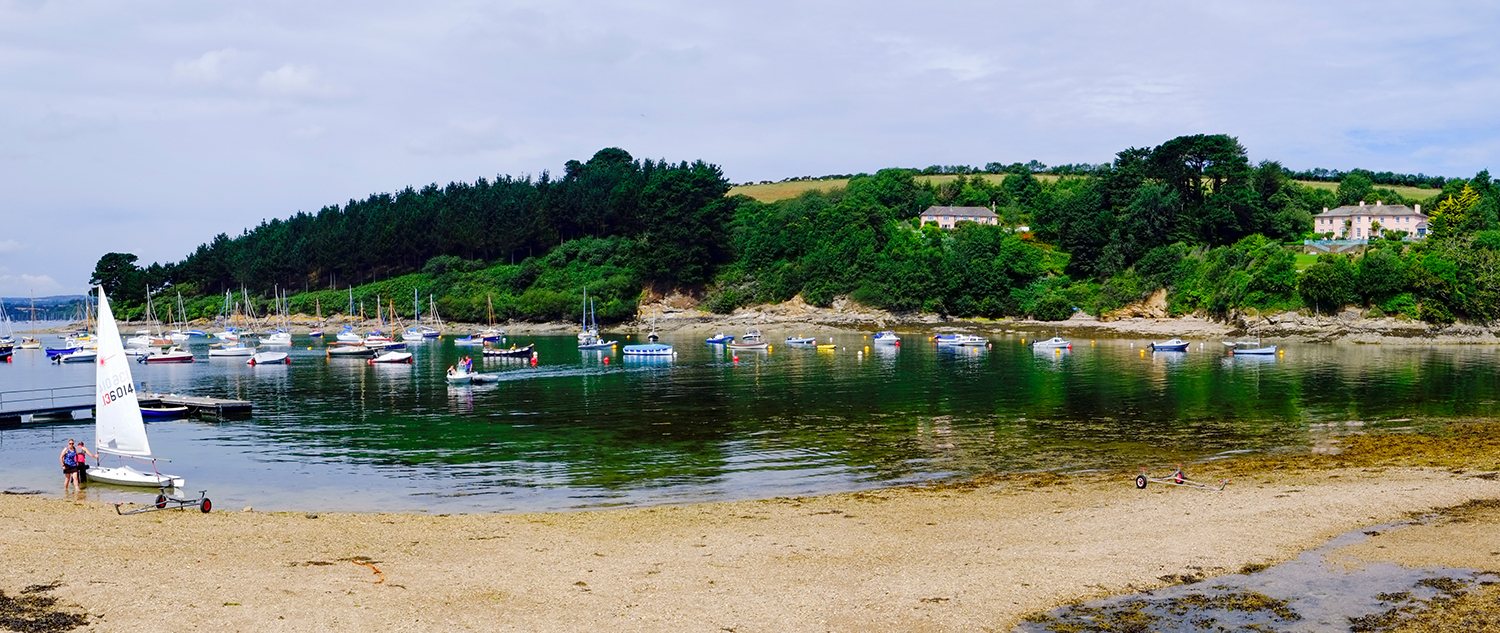
ROSELAND BEACHES
The Roseland has some of the finest and quietest beaches on Cornwall’s south coast. Most face east or south-east into Gerrans Bay and Veryan Bay, sheltered from the prevailing south-westerly winds, and many are owned by the National Trust. None has lifeguards, so take care in the water and check the tides.
- Towan Beach – a long sandy beach a short walk from the National Trust car park at Porth Farm.
- Porthcurnick Beach – a sheltered sandy beach just north of Portscatho, with the Hidden Hut café above.
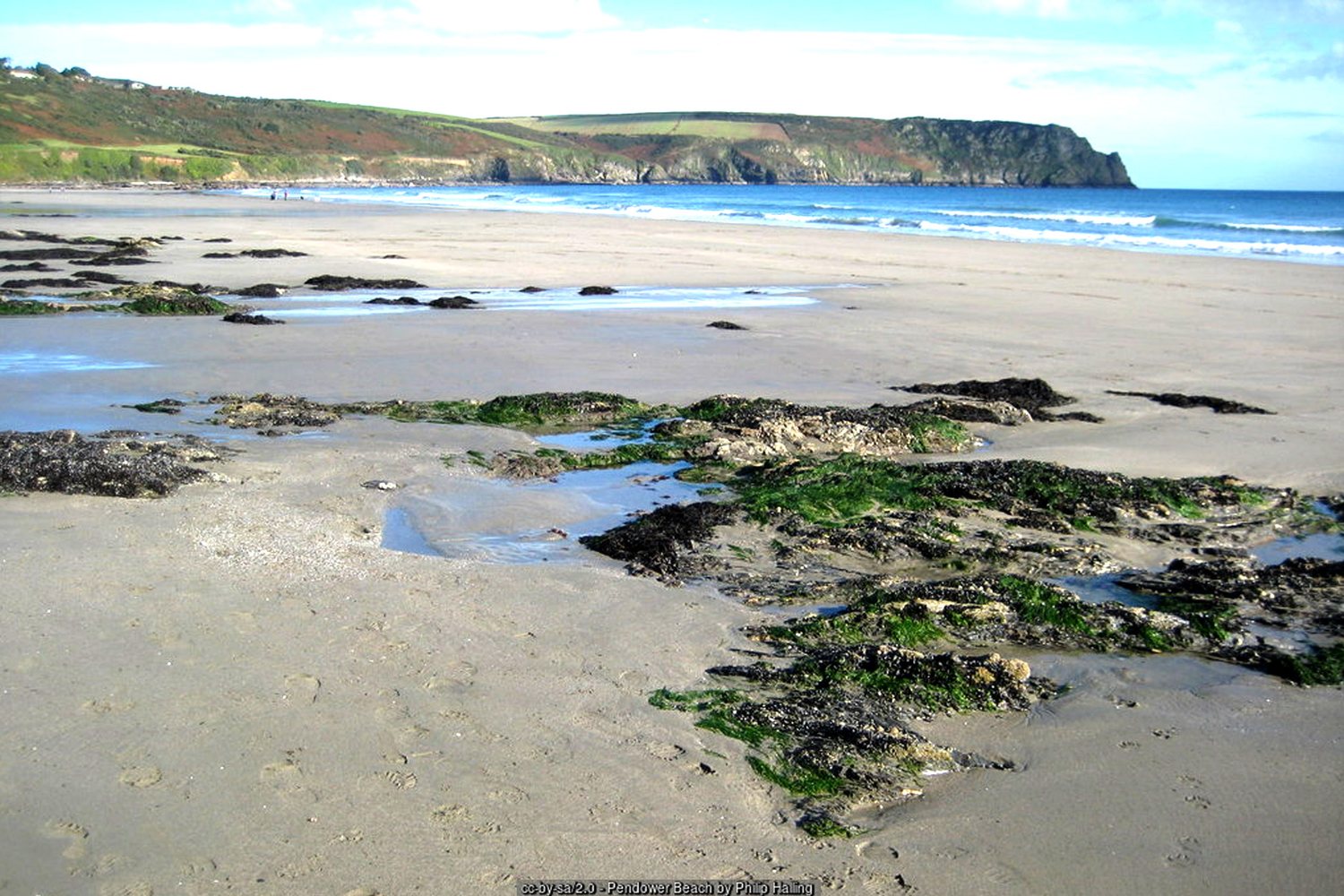
- Pendower Beach and Carne Beach – a mile of sand on Gerrans Bay, joined at low tide.
- Porthbeor and Great & Little Molunan – secluded coves near St Anthony Head, reached on foot.
- St Mawes – Summers Beach and Tavern Beach beside the village.
- Portholland and Porthluney Cove – on Veryan Bay, towards Caerhays.
See our full guide to beaches on the Roseland Peninsula.
↑ Back to top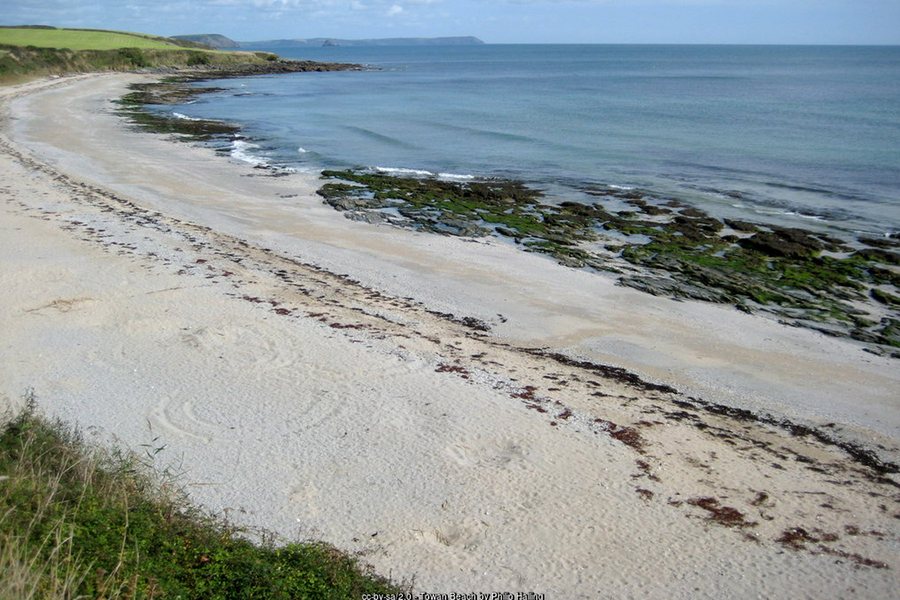
FERRIES & GETTING TO THE ROSELAND
The peninsula shape of the Roseland makes the ferries the most convenient and quickest way of visiting from many parts of Cornwall, saving many miles on the round trip by car.
- King Harry Ferry – the chain ferry across the River Fal between Feock (near Trelissick) and Philleigh. It has run since 1888, saving a long drive round through Truro and Tresillian, and crosses every 20 minutes or so all year.
- St Mawes Ferry – a passenger ferry across the Carrick Roads between Falmouth and St Mawes, all year round. The crossing takes about 20 minutes and gives fine views of Pendennis and St Mawes castles.
- Place Ferry – a small seasonal ferry from St Mawes across the Percuil River to Place, for St Anthony Head and the coast path.
By road, the Roseland is reached on the A3078 from Tresillian (on the A39 near Truro) through Tregony, or over the King Harry Ferry. The nearest railway stations are Truro and St Austell on the main line, and Falmouth on the branch line from Truro – from Falmouth you can take the ferry to St Mawes. Go Cornwall Bus route 50 runs from Truro to St Mawes via Probus, Tregony, Gerrans and Portscatho, and route 51 from St Austell to Veryan via Tregony.
Check current times on the Fal River ferries and Transport for Cornwall websites.
↑ Back to top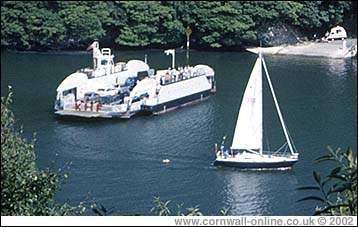
PLACES TO VISIT ON THE ROSELAND
- St Mawes Castle – Henry VIII’s clover-leaf artillery fort, built in the 1540s to guard the Carrick Roads with Pendennis Castle opposite. Cared for by English Heritage. See St Mawes.
- St Just in Roseland Church – described as one of the most beautiful churchyards in England, set on the water’s edge among sub-tropical trees and shrubs. See St Just in Roseland.
- The Veryan round houses – five thatched round cottages built for the Reverend Jeremiah Trist around 1820. Private houses, but easily seen from the road. See Veryan.
- St Anthony Head – the National Trust headland with its 1835 lighthouse and the restored gun battery, looking across to Falmouth. See St Anthony Head.
- Turnaware Point and Tolverne – shingle hards on the Fal used to embark American troops for the D-Day landings in 1944; parts of the concrete “mattresses” can still be seen. See Philleigh.
- Trelissick – the National Trust house, garden and woodland across the Fal from the Roseland, reached on the King Harry Ferry.
- Caerhays Castle Garden – the woodland garden above Porthluney Cove, famous for camellias, magnolias and rhododendrons, open in spring.
- The Lost Gardens of Heligan – near Mevagissey, a short drive east of the Roseland, one of Britain’s most celebrated garden restorations.
HISTORY OF THE ROSELAND
The Roseland has been settled for thousands of years. Bronze Age burial mounds stand on the high ground, the largest of them at Carne Beacon near Veryan, said in legend to be the grave of King Geraint – an 8th-century ruler of Cornwall remembered in the name of Gerrans – buried with a golden boat and silver oars.
In the Middle Ages the Roseland was a land of small parishes and churches, many with Celtic dedications: St Just, St Gerran, St Felix at Philleigh, St Rumon at Ruan Lanihorne and St Symphorian at Veryan. The Augustinian priory of Plympton founded a small priory at St Anthony, and Tregony grew into a busy river port and borough at the head of the navigable Fal, until tin streaming upriver silted the river.
Henry VIII built St Mawes Castle in the 1540s, and the fishing villages of St Mawes, Portscatho and Portloe prospered on the pilchard fishery through the 18th and 19th centuries. In the 20th century the Fal was a great naval anchorage, and in 1944 thousands of American troops embarked from the hards at Turnaware and Tolverne for D-Day. Today the Roseland is loved for its peace and its unspoilt farmland, creeks and coast.
↑ Back to topThe Roseland – key dates
Bronze Age – barrow at Carne Beacon
1259–61 – churches at St Anthony and St Just dedicated
c.1539–45 – St Mawes Castle built
1584 – John Norden describes “the pretty name of Roseland”
1696 – Tregony almshouses built
c.1820 – Veryan round houses built
1835 – St Anthony Lighthouse built
1888 – King Harry Ferry begins
1895–97 – St Anthony Battery built
1944 – D-Day embarkations from Turnaware and Tolverne
1959 – National Trust buys St Anthony Head
WALKS ON THE ROSELAND
The South West Coast Path follows the whole Roseland coast, from Place round St Anthony Head and along Gerrans Bay through Portscatho, past Pendower and Carne to Nare Head, Portloe and Portholland. Inland, quiet lanes and footpaths link the villages and creeks.
Favourite walks include the creekside path from St Mawes to St Just in Roseland (about 2 miles), the circuit of St Anthony Head from Place (with the Place Ferry from St Mawes), the coast from Portscatho to Towan, and the cliffs from Carne to Nare Head for some of the finest views on the south coast. In spring the hedges and cliffs are full of wild flowers.
↑ Back to topVISITOR INFORMATION
Parking & EV Charging
The main car parks are at St Mawes, Portscatho and the National Trust car parks at Porth Farm (for Towan), Trewince (for Porthcurnick), Pendower, Carne and St Anthony Head. The lanes are narrow, with passing places – take care, and park considerately in the villages. There are very few public EV chargers on the Roseland; the nearest are in Truro, St Austell and Falmouth.
Bus & Train
Go Cornwall Bus route 50 runs Truro – Probus – Tregony – Gerrans – Portscatho – St Mawes, and route 51 St Austell – Tregony – Portloe – Veryan. The nearest stations are Truro and St Austell, or Falmouth with the ferry to St Mawes.
Facilities & Supermarkets
St Mawes, Portscatho, Tregony and Veryan have village shops, and St Mawes has a Co-op, pharmacy and bakery. For large supermarkets go to Truro or St Austell:
- Sainsbury’s – Treyew Road, Truro TR1 3XL
- Other large supermarkets in Truro and St Austell
Pubs, Cafés & Restaurants
Every Roseland village has its pub – among them the Plume of Feathers at Portscatho, the Roseland Inn at Philleigh, the King’s Head at Ruan Lanihorne and the New Inn at Veryan – and there is the Hidden Hut café at Porthcurnick, a seasonal tea room at Porth Farm for Towan, and hotels and restaurants in St Mawes. Some places shorten their hours in winter.
Health
The Roseland Surgeries have their main surgery at Portscatho, Gerrans Hill, TR2 5EE (01872 580345), with branch surgeries at Tregony (Well Street, TR2 5RT) and St Mawes (Hillhead, TR2 5AL). The nearest A&E is the Royal Cornwall Hospital, Truro (Treliske). Call NHS 111 for urgent advice and 999 in an emergency – ask for the Coastguard on the coast or the water.
Disabled Access
The Roseland is hilly and the coast path is steep in places. Level access is easiest at St Mawes harbour, at Pendower and Carne (short paths from the car parks) and at the viewpoints on St Anthony Head near the car park. St Just churchyard is steep. The ferries can usually take wheelchairs with help from the crew – ask before you travel.
Vets & Dogs
There is no vet on the Roseland – the nearest are in Truro, St Austell and Falmouth. Seasonal dog restrictions apply on some Roseland beaches in summer, so check the signs at each beach. Many of the village pubs welcome dogs.
National Trust & English Heritage
The National Trust looks after much of the Roseland coast, including St Anthony Head, Towan and Porth Farm, Porthcurnick, Pendower and Carne, Nare Head and Turnaware Point, and Trelissick across the Fal. English Heritage cares for St Mawes Castle.
Attractions
St Mawes Castle, St Just church, the Veryan round houses and St Anthony Head on the Roseland, with Trelissick, Caerhays and the Lost Gardens of Heligan a short drive away.
STAY & EXPLORE ON THE ROSELAND
Nearby Towns & Villages
FAMILY HOLIDAYS & SHORT BREAKS ON THE ROSELAND
Family holidays on the Roseland are about simple pleasures – sandy beaches and rock pools, crabbing from the harbour walls, ferry rides across the Fal, and long walks on the coast path. It is one of the quietest and most unspoilt parts of Cornwall, ideal for families and anyone looking to slow down.
Choose a cottage in a harbour village, a farmhouse among the fields, or a campsite near the beaches. Browse Roseland holiday cottages, or holidays and short breaks on the Roseland for every type of accommodation.
Short breaks out of season are a real treat, when the lanes and beaches are quiet. Booking direct with the owner means no agency fees.
↑ Back to topFREQUENTLY ASKED QUESTIONS ABOUT THE ROSELAND PENINSULA
The Roseland Peninsula is on the south coast of Cornwall, between the Fal estuary and the Carrick Roads to the west and Gerrans Bay and Veryan Bay to the east. It runs south from Tregony to St Anthony Head, opposite Falmouth, and lies within the Cornwall National Landscape.
The name has nothing to do with roses. It comes from the Cornish word ros, which can mean a promontory or a heath. In 1584 the map-maker John Norden explained the “pretty name of Roseland” as coming from the Celtic word for heath or gorse.
By road on the A3078 from Tresillian, near Truro, through Tregony; or across the River Fal on the King Harry Ferry from Feock; or as a foot passenger on the St Mawes Ferry from Falmouth. Go Cornwall Bus route 50 runs from Truro to St Mawes via Tregony and Portscatho.
The main villages are St Mawes, Portscatho, Gerrans, St Just in Roseland, Veryan, Portloe, Portholland, Philleigh and Ruan Lanihorne, with Tregony at the northern gateway and the hamlet of St Anthony near St Anthony Head.
Popular sandy beaches include Towan, Porthcurnick, Pendower and Carne on Gerrans Bay, Summers Beach at St Mawes, and the secluded coves of Porthbeor and Great and Little Molunan near St Anthony Head. None has lifeguards.
Yes, the King Harry chain ferry crosses the Fal between Feock and Philleigh all year round, usually every 20 minutes, apart from short closures for maintenance. Check the King Harry Ferry website before you travel.
Cornwall Online | Mid Cornwall Towns and Villages | Truro | Falmouth | The Roseland Peninsula | St Mawes | St Anthony Head | St Just in Roseland | Portscatho | Gerrans | Philleigh | Ruan Lanihorne | Tregony | Veryan | Portloe | Portholland | Gorran Haven | Mevagissey | The Lost Gardens of Heligan | St Austell | Charlestown | Fowey | Golant | Lostwithiel | The Lizard Peninsula