Veryan, Cornwall – the Village of the Round Houses
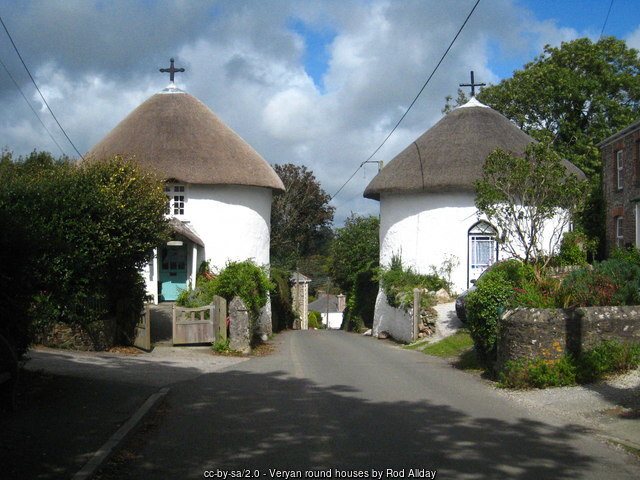
Veryan & the Round Houses
Cornwall Online | Mid Cornwall Towns and Villages | Truro | Falmouth | The Roseland Peninsula | St Mawes | St Anthony Head | St Just in Roseland | Portscatho | Gerrans | Philleigh | Ruan Lanihorne | Tregony | Veryan | Portloe | Portholland | Gorran Haven | Mevagissey | The Lost Gardens of Heligan | St Austell | Charlestown | Fowey | Golant | Lostwithiel | The Lizard Peninsula
Roseland Peninsula guide | Mid Cornwall index
On This Page
Veryan at a Glance
A pretty inland village on the Roseland Peninsula, best known for its five thatched round houses, built around 1820 for the vicar, Jeremiah Trist. The church of St Symphorian, the New Inn, a village shop and post office, sports pavilion and indoor bowls; Carne and Pendower beaches, Nare Head and Portloe close by.
HOLIDAYS IN VERYAN
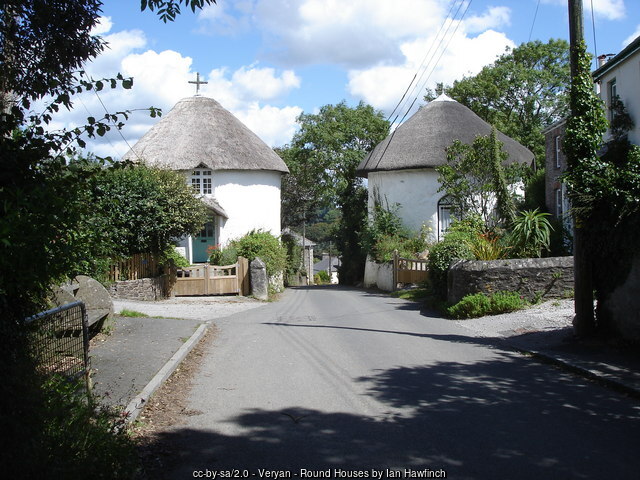
Veryan is a historic and picturesque village on the Roseland Peninsula, a little way inland from Gerrans Bay and Veryan Bay. It is a popular stop for visitors, who come to see the five thatched round houses that mark the entrances to the village.
The village has a particular charm, and the people of Veryan take great pride in it. There is a sports pavilion with tennis, cricket and bowls, a children’s playground and an indoor bowling green, built by the community. The New Inn provides a warm welcome and good food and drink, and the village shop and post office serves Veryan and Portloe.
Veryan is close to some of the best beaches on the south coast: Carne and Pendower on Gerrans Bay, and East and West Portholland on Veryan Bay, with the fishing cove of Portloe and the headland of Nare Head nearby. It makes a great base for a holiday in Cornwall, with easy access to St Mawes and Falmouth (by ferry), Mevagissey and Truro.
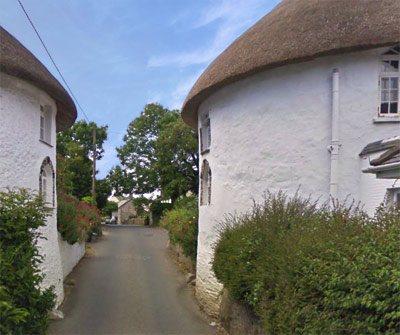
The village is in two parts: Veryan Churchtown, gathered around the church, the pond and the New Inn, and Veryan Green, a little to the north, where a pair of round houses guards the entrance to the village. Its name is a worn-down form of St Symphorian, the patron saint of the church, and its Cornish name is Elerghi. Sheltered in a fold of the hills, with palms and flowering shrubs in its gardens, Veryan was described by John Betjeman as “a mild tropic garden”.
Veryan is a lovely starting point for walks. A favourite four-mile circuit heads down through the fields to the Nare Hotel and Carne Beach, with a detour up to Nare Head for some of the finest views on the south coast, then follows the stream inland past Lower Mill to Melinsey Mill and back along the lane to the village.
Melinsey Mill, in the valley below the village, is a restored 16th-century watermill on a site where there has been a mill since the early 13th century; it has been a popular spot for a cream tea, so check its opening times before you go. In Veryan Green there is a small gallery, and the woodland gardens of Caerhays Castle, famous for their magnolias and camellias, are only a few miles away above Porthluney Cove.
The New Inn, a traditional 16th-century Cornish inn in the centre of the village, serves food and real ale and has rooms for bed and breakfast. Down at Carne, the Nare Hotel overlooks the beach and is well known for its afternoon teas. Around the parish there are holiday cottages, farmhouse bed and breakfast and camp sites, many of them within walking distance of the sea.
For somewhere to stay, see Veryan holiday cottages and holidays and short breaks in Veryan.
Best Time to Visit Veryan
Spring is lovely, with the gardens in flower and the lanes full of primroses. Summer is the time for the beaches at Carne and Pendower. Autumn and winter are quiet, ideal for walks to Nare Head.
↑ Back to top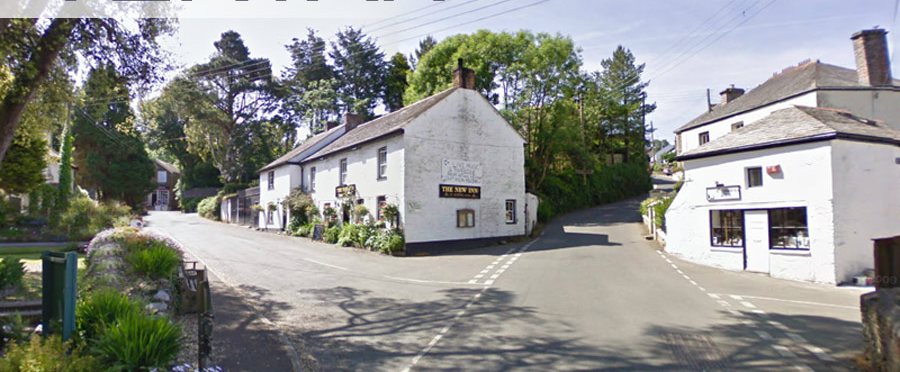
THE VERYAN ROUND HOUSES
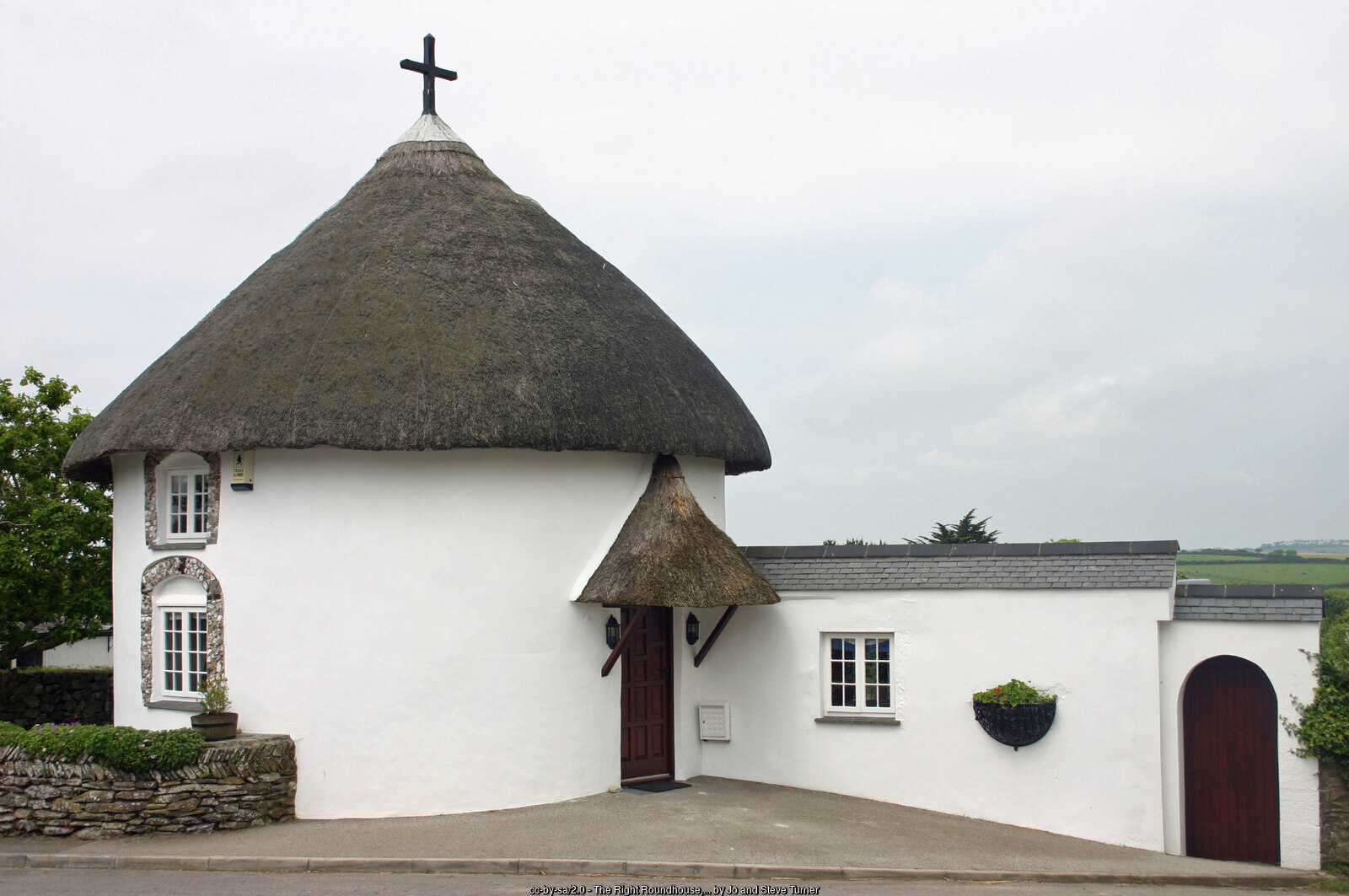
Veryan’s famous round houses stand in pairs and singly at the entrances to the village. There are five in all, probably built between 1815 and 1818 by Hugh Rowe, a builder from Lostwithiel, for the Reverend Jeremiah Trist (1755–1829), the vicar and local landowner – reputedly inspired by a round house at St Winnow, and costing about £42 each. They are round cottages of whitewashed cob and stone, with conical thatched roofs topped by crosses.
Local tradition says Parson Trist built one for each of his five daughters, and that the houses were made round so that there would be no corners in which the Devil could hide – the crosses on the roofs keeping him out of the village. The more likely reason for the round plan is simply that it was economical, and the houses seem to have been lived in by Trist’s tenants and village labourers. Trist had five daughters and two sons. He was vicar of Veryan for over fifty years until his death in 1829, and also built two schools and his house, Parc Behan, and added the church clock tower.
The round houses are listed buildings and are private homes, so please view them from the road.
↑ Back to top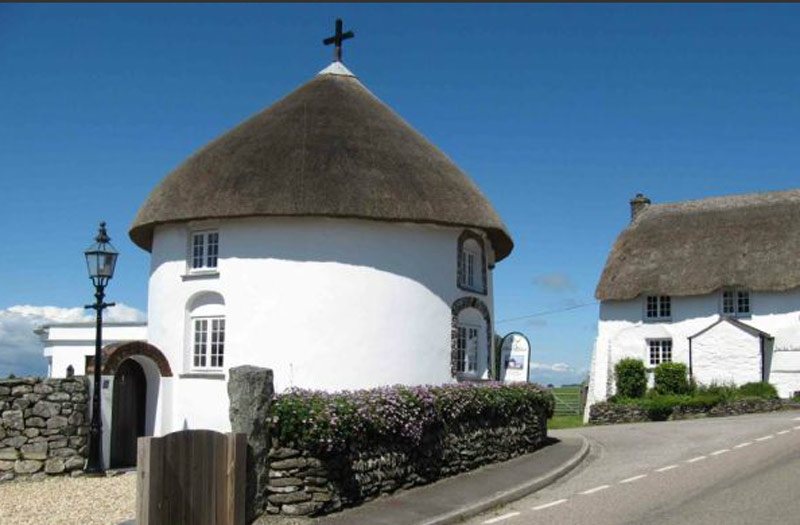
ST SYMPHORIAN’S CHURCH
The parish church of St Symphorian stands in the heart of the village. Since the 13th century it has been dedicated to Symphorian, a little-known French martyr executed at Autun in about AD 178 – and the village takes its name from him: over the centuries “St Symphorian” was worn down to “St Verian”, as it was written by 1679, and so to Veryan. In 1110 a church here was given to an order of Cluniac monks, who are thought to have brought the French dedication with them.
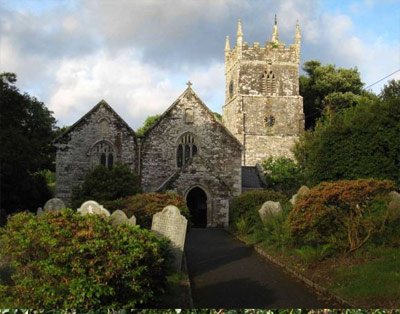
The present church dates from around 1300 – its first recorded vicar was instituted in 1309 – with 15th-century additions, and it was greatly restored in 1847, when the west front was largely rebuilt. Its plan is most unusual: the nave and chancel share one roof, with a full-length north aisle, and the tower stands on the south side, beyond the south transept, rather than at the western end or over a crossing. The path through the churchyard climbs to the higher, southern part of the graveyard, with fine views of the tower. The church is listed Grade I.
Look out for the carved heads on the porch, thought to be Norman and some 200 years older than the main fabric of the church. Older still are the remains of at least one Celtic cross: a round cross-head set over the south porch, and part of a cross shaft by the war memorial outside the lychgate. Inside are memorials to local families, among them a tablet to John Trevanion, the young son of the Governor of Pendennis Castle, who died in 1712, and in the churchyard is the vault of the Trist family.
The churchyard holds one of Veryan’s most moving memorials. In 1914 the German four-masted barque Hera was wrecked on the Gull Rock off Nare Head, and nineteen of her crew were drowned. They were buried together in a single grave along the churchyard wall – reputedly the longest grave in the country. A guidebook and a short illustrated history of the wreck are usually on sale in the church.
↑ Back to top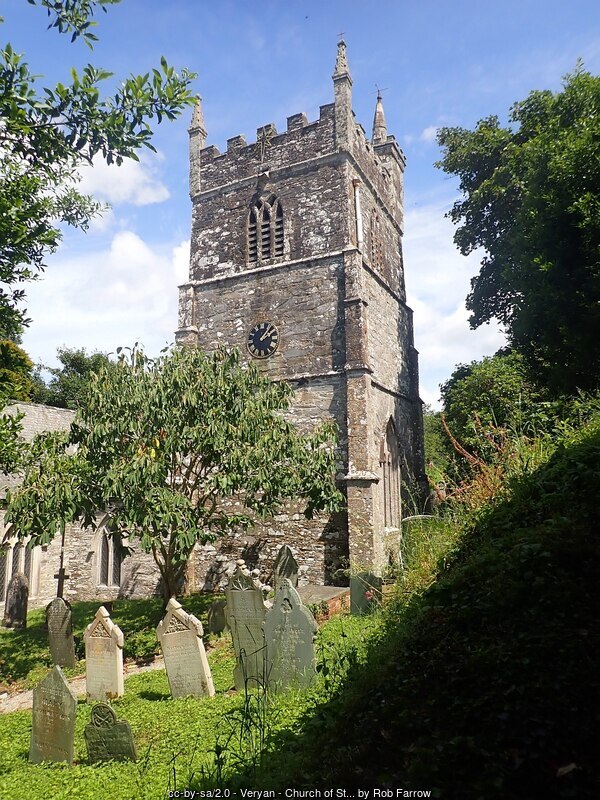
Veryan – at a glance
Round houses: 5, built c.1815–18 for Rev Jeremiah Trist
Church: St Symphorian
Pub: the New Inn
Beaches: Carne, Pendower, Portholland
Bus: route 51 to Tregony and St Austell
BEACHES NEAR VERYAN
- Carne Beach – gently sloping sand and rock pools below the Nare Hotel, with a National Trust car park and a seasonal refreshment van.
- Pendower Beach – a vast National Trust beach backed by dunes, joined to Carne at low tide.
- East and West Portholland – twin coves on Veryan Bay.
- Portloe – a tiny working fishing cove.
None has a lifeguard. See our guide to beaches on the Roseland Peninsula.
↑ Back to top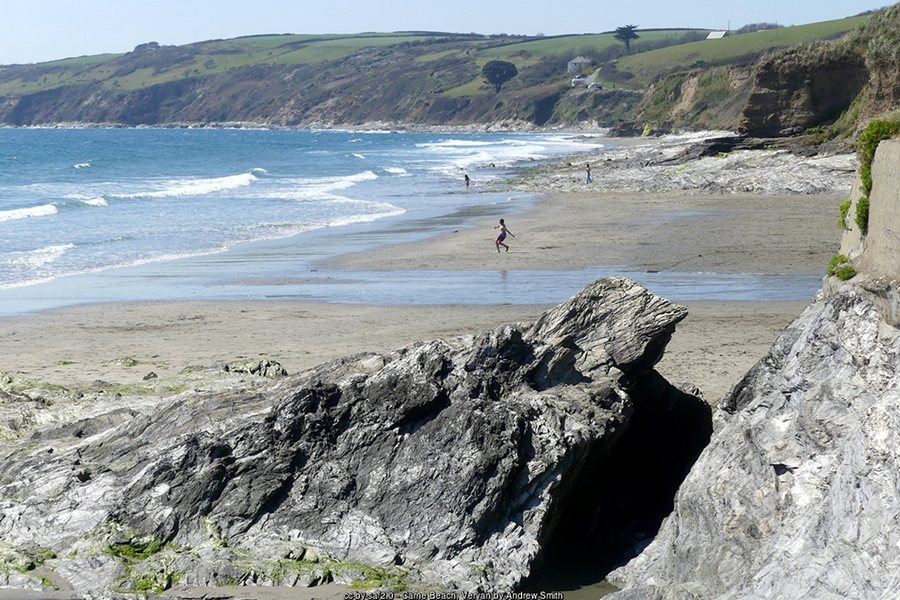
HISTORY OF VERYAN & CARNE BEACON
Veryan’s parish includes Veryan Churchtown, Veryan Green, Portloe and the hamlets of Carne, Camels, Trewartha and Treviskey. Just outside the village, on the highest ground on the Roseland, is Carne Beacon, a huge Bronze Age burial mound. Legend says it is the grave of King Geraint, buried with his golden boat and silver oars after his body was rowed across Gerrans Bay.
During the Second World War an aircraft reporting post was set up on Carne Beacon. In the 19th century the Reverend Jeremiah Trist reshaped the village, building the round houses, the schools and his own house, Parc Behan, above the church.
Parts of the 1992 television drama The Camomile Lawn were filmed at Broom Parc, on the coast near Veryan and Portloe.
↑ Back to topVeryan – key dates
Bronze Age – Carne Beacon barrow
1110 – church given to Cluniac monks
c.1300 – present church built
1309 – first recorded vicar
1679 – name written as St Verian
c.1815–18 – round houses built for Rev Jeremiah Trist
1829 – death of Jeremiah Trist
1847 – church greatly restored
1914 – wreck of the Hera on the Gull Rock off Nare Head
1992 – The Camomile Lawn filmed nearby
WALKS FROM VERYAN
Footpaths lead from Veryan down to Carne and Pendower beaches and the South West Coast Path. From Carne the coast path climbs to Nare Head, a National Trust headland with some of the finest views on the south coast, and continues along the cliffs to Portloe. A circular walk from Veryan to Carne, Nare Head, Portloe and back by the lanes makes a memorable day out.
↑ Back to topWalking links
PLACES NEAR VERYAN
- Portloe – about 2 miles.
- Portholland – about 3 miles.
- Tregony – about 4 miles.
- Gerrans and Portscatho – about 5 miles.
- St Mawes – about 9 miles.
- The Roseland Peninsula – our guide to the whole peninsula.
VISITOR INFORMATION
Parking & EV Charging
There is limited roadside parking in the village; please park considerately. The National Trust car parks at Carne and Pendower serve the beaches. There are no public EV chargers in the village.
Bus & Train
Go Cornwall Bus route 51 runs from Veryan via Portloe and Tregony to St Austell, Monday to Saturday; change at Tregony for route 50 to Truro or St Mawes. The nearest railway stations are St Austell and Truro.
Facilities & Supermarkets
Veryan has a village shop and post office, a pub, a sports pavilion and indoor bowling green. For larger supermarkets go to Truro or St Austell:
- Sainsbury’s – Treyew Road, Truro TR1 3XL
- Other large supermarkets in Truro and St Austell
Pubs & Restaurants
The New Inn is the village pub. The Nare Hotel overlooks Carne Beach, and there are pubs and restaurants in nearby Portloe.
Health
The Roseland Surgeries have their main surgery at Portscatho, Gerrans Hill, TR2 5EE (01872 580345), with branch surgeries at Tregony (Well Street, TR2 5RT) and St Mawes (Hillhead, TR2 5AL). The nearest A&E is the Royal Cornwall Hospital, Truro (Treliske). Call NHS 111 for urgent advice and 999 in an emergency – ask for the Coastguard on the coast or the water.
Disabled Access
The village centre is fairly level. Carne Beach has parking close to the sand, and Pendower has a short path from the car park, making them two of the easier Roseland beaches to reach.
Vets & Dogs
There is no vet on the Roseland – the nearest are in Truro, St Austell and Falmouth. Seasonal dog restrictions apply on some Roseland beaches in summer, so check the signs at each beach. Many of the village pubs welcome dogs.
National Trust
The National Trust looks after Carne and Pendower beaches, the dunes and farmland behind them, and Nare Head.
Attractions
Caerhays Castle Garden, the Lost Gardens of Heligan, St Mawes Castle and Trelissick are all within a short drive.
STAY & EXPLORE NEAR VERYAN
Nearby Towns & Villages
FAMILY HOLIDAYS & SHORT BREAKS IN VERYAN
Family holidays in Veryan mean a peaceful village base with the sands of Carne and Pendower a short drive or walk away, rock pools, coast path walks to Nare Head and the fishing cove of Portloe.
Browse Veryan holiday cottages, or holidays and short breaks in Veryan. Booking direct with the owner means no agency fees.
↑ Back to topFREQUENTLY ASKED QUESTIONS ABOUT VERYAN
Veryan is a village on the Roseland Peninsula in south Cornwall, a little inland from Gerrans Bay and Veryan Bay, about 2 miles from Portloe and 4 miles from Tregony.
The five round houses were built around 1815–18 for the vicar, Jeremiah Trist. Tradition says they were made round so the Devil had no corners to hide in, and that there was one for each of Trist’s five daughters. The more likely reason is that the round plan was economical.
No. The round houses are private homes, but they can easily be seen from the road at the entrances to the village.
Carne Beach and Pendower Beach on Gerrans Bay are the nearest, joined at low tide. Portholland and Portloe are also close.
Carne Beacon is a large Bronze Age burial mound on high ground near Veryan. Legend says it is the burial place of King Geraint, with his golden boat.
Go Cornwall Bus route 51 runs between Veryan and St Austell via Tregony, Monday to Saturday. Change at Tregony for route 50 to Truro.
Cornwall Online | Mid Cornwall Towns and Villages | Truro | Falmouth | The Roseland Peninsula | St Mawes | St Anthony Head | St Just in Roseland | Portscatho | Gerrans | Philleigh | Ruan Lanihorne | Tregony | Veryan | Portloe | Portholland | Gorran Haven | Mevagissey | The Lost Gardens of Heligan | St Austell | Charlestown | Fowey | Golant | Lostwithiel | The Lizard Peninsula