Holidays at Trebarwith Strand, North Cornwall – Beach, Surf & Gull Rock
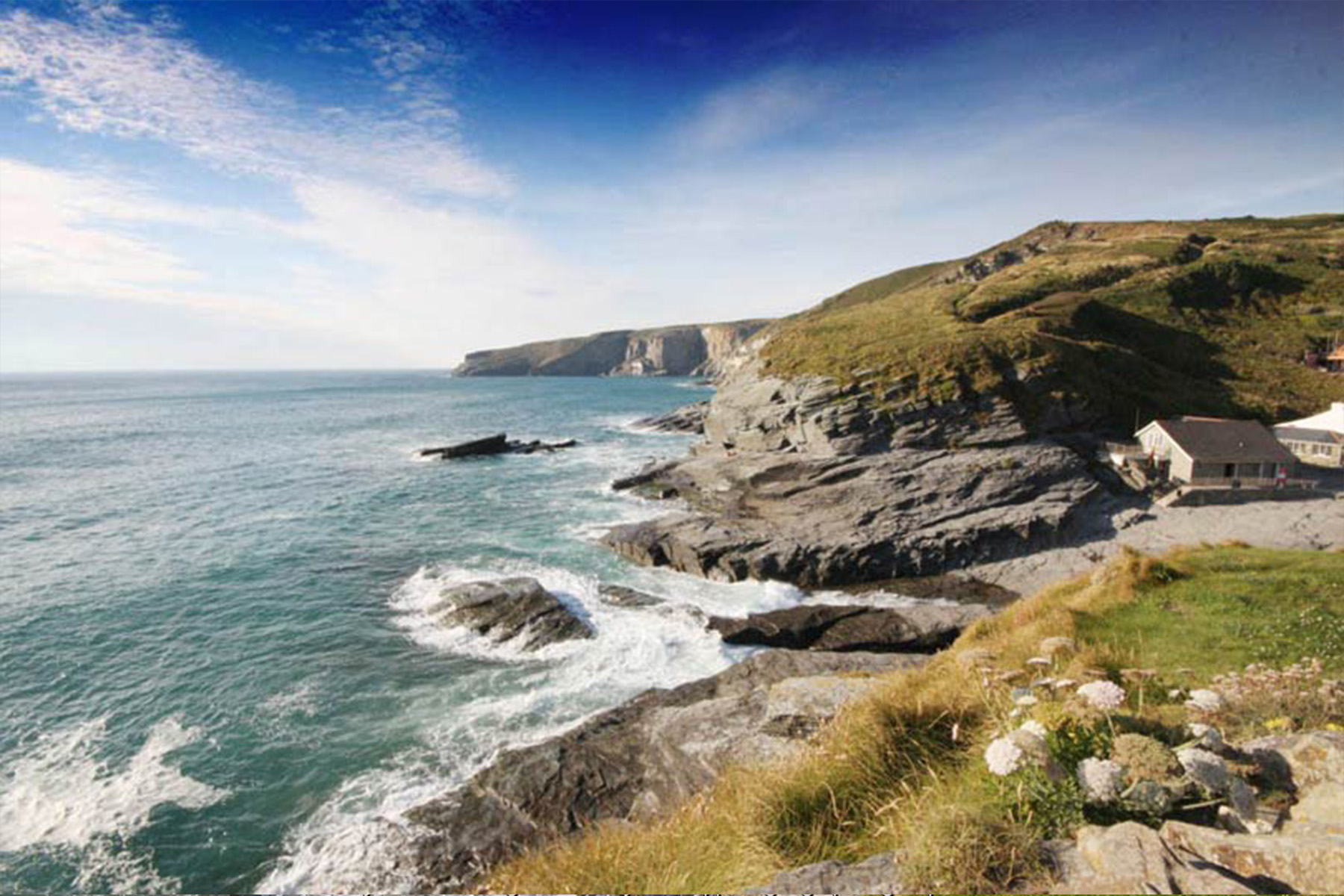
Trebarwith Strand, below the Port William (photo M. Frost)
Trebarwith Strand in North Cornwall
North Cornwall Towns and Villages | Padstow | Wadebridge | The Camel Estuary | Rock | Daymer Bay | Polzeath | Port Isaac | Trebarwith Strand | Tintagel | Bossiney Cove | Rocky Valley | Boscastle | Crackington Haven | Bude | Launceston | Camelford | Altarnum | Bodmin |
On This Page
Trebarwith Strand at a Glance
A small hamlet and one of North Cornwall’s finest beaches, about 2½ miles south of Tintagel. Golden sand and rock pools at low tide, no beach at high tide, RNLI lifeguards in summer, Gull Rock offshore, the Port William pub and the coast path to Tintagel. Sat-nav: PL34 0HB (car park).
HOLIDAYS IN TREBARWITH STRAND
Trebarwith Strand is one of the most beautiful beaches on the North Cornwall coast. Tucked into the mouth of a steep, narrow valley about 2½ miles south of Tintagel, it is a place of dark slate cliffs, golden sand and Atlantic surf, watched over by the great island of Gull Rock just offshore.
What makes Trebarwith special is the tide. At high water the sea fills the cove right up to the cliffs and there is no beach at all, but as the tide falls a long stretch of firm sand is revealed, linking a string of coves and rock pools beneath the cliffs. Arriving as the sand appears, and watching the beach grow by the minute, is one of the great pleasures of a holiday on this coast.
The hamlet itself is tiny – a lane winding down the valley past cottages and holiday homes to a slipway, a café, a surf shop and the Port William pub perched on the hillside above the beach. A large car park sits in the valley a short walk from the sand, and the South West Coast Path climbs out in both directions, north to Tintagel and south towards Tregardock and Port Isaac.
Families love Trebarwith for its rock pools and caves at low tide, surfers for its powerful Atlantic waves, and walkers for the spectacular clifftop paths along the old slate quarries. Photographers come for the sunsets behind Gull Rock, which are among the finest in Cornwall, and the beach has been chosen as a location for several films.
This is also the heart of North Cornwall’s slate country. For centuries quarrymen worked the cliffs between Trebarwith and Tintagel, lowering slate down to ships waiting below, and the scars of their work still line the coast path today. Inland, the villages of Treknow and Trewarmett and the great Delabole slate quarry tell the same story.
This guide covers everything you need for a holiday at Trebarwith Strand: the beach, tides and safety, surfing, the Port William and the valley, the slate quarries, film locations, things to do, walks, nearby towns and events, plus practical visitor information on parking, buses, shops and health services.
↑ Back to top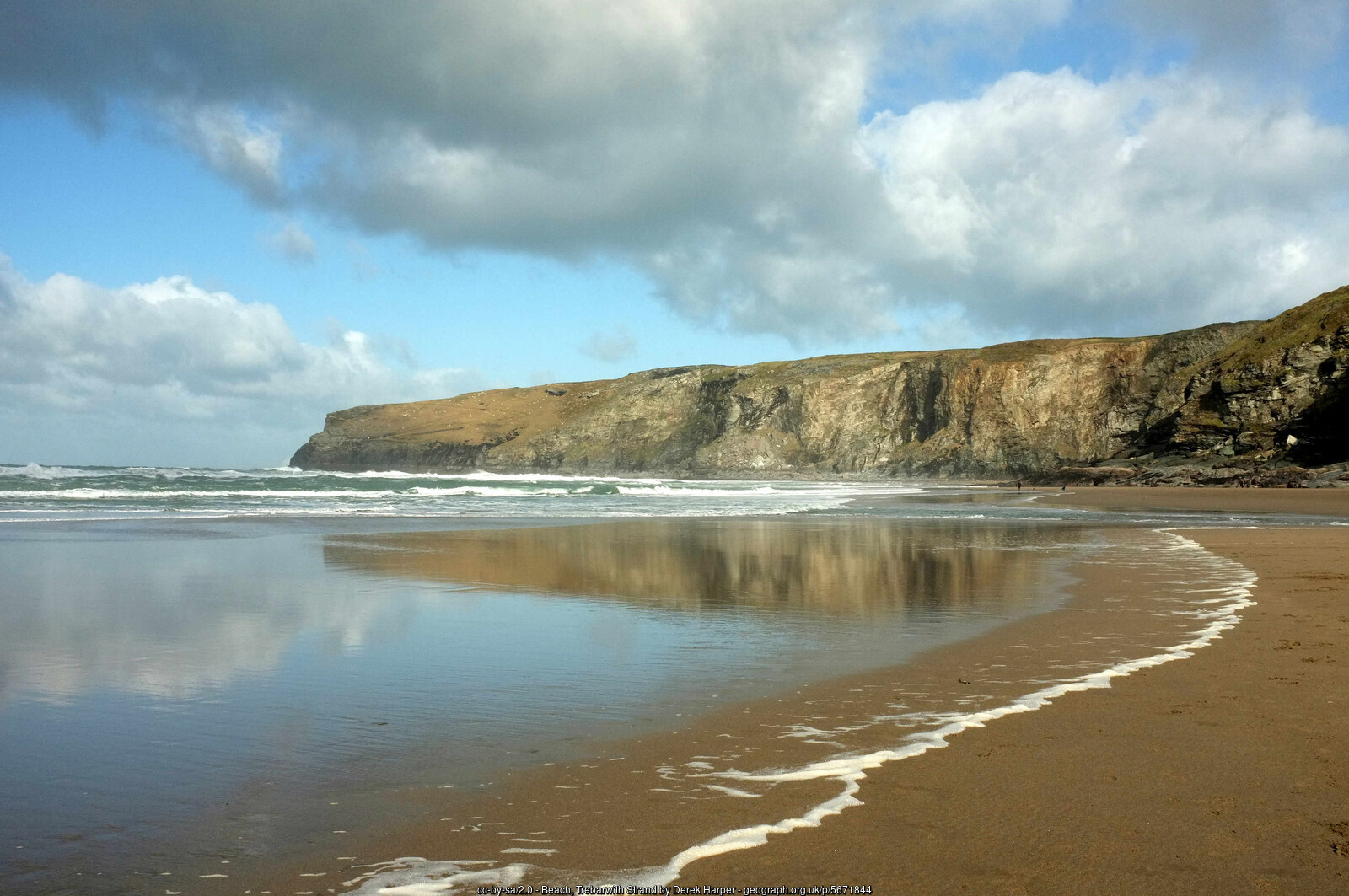
THE BEACH AT TREBARWITH STRAND
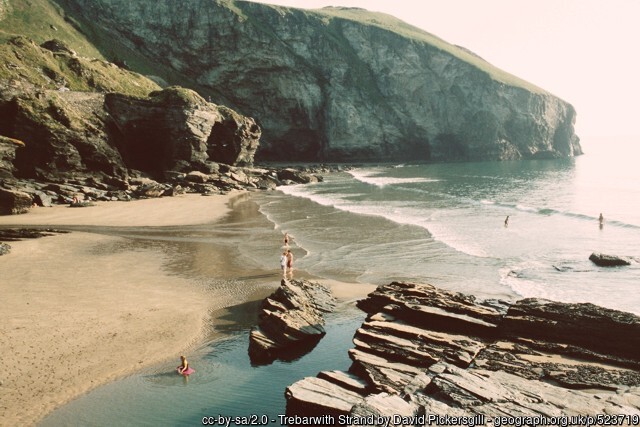
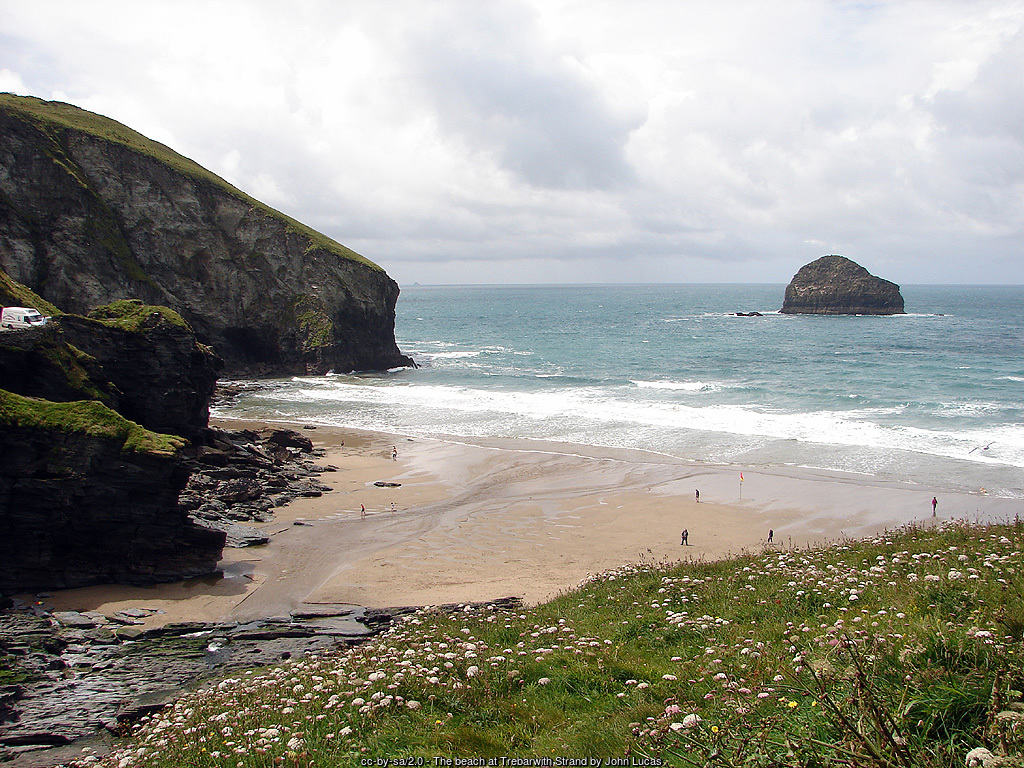
At low tide Trebarwith Strand is a genuinely big beach. The main sweep of sand below the slipway joins with the smaller coves beneath the cliffs to the north – Lill Cove, Vean Hole and Hole Beach – creating a long strip of firm golden sand, broken by reefs of dark slate and deep rock pools. It is one of the most photogenic beaches in Cornwall, with Gull Rock framing every view out to sea.
The main beach, directly below the end of the lane, is the best place for families. When the tide is out it is mostly flat and sandy, with rocks and pools along its edges to explore. The western end below the Port William is a rocky platform with only a little sand at the lowest tides, and with strong currents it is better left to experienced local surfers.
To the north, Lill Cove sits below old cliff-face quarry workings and the collapsed remains of a small 19th-century copper mine. It can be reached along the beach at low tide, but the sea cuts off the route as the tide rises. Beyond it, Hole Beach – named after a cave cut by the quarrymen – is only reachable at low tide and is popular for fishing and snorkelling.
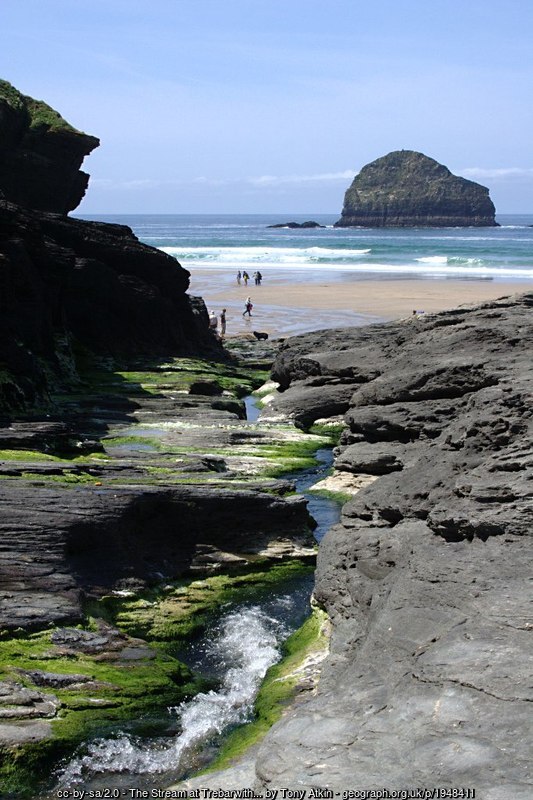
Gull Rock, also known as Otterham Rocks, rises from the sea just a short distance from the shore. It is home to nesting seabirds and is the focal point of almost every photograph of Trebarwith. On summer evenings the sun sets behind it, turning the wet sand gold, and many visitors time their beach walk to catch it.
Facilities are clustered at the top of the beach. There are public toilets just above the sand, including accessible facilities, with more opposite the nearer car park, and a café, surf shop and hire services in the hamlet, although many close out of season. The Port William serves food and drink with a view over the whole bay.
Dogs are welcome on Trebarwith Strand all year round, with no restrictions. The rocks and pools are rich in marine life, from limpets, periwinkles and mussels to small crabs and anemones – remember to put rocks back as you found them, and take your litter home.
↑ Back to top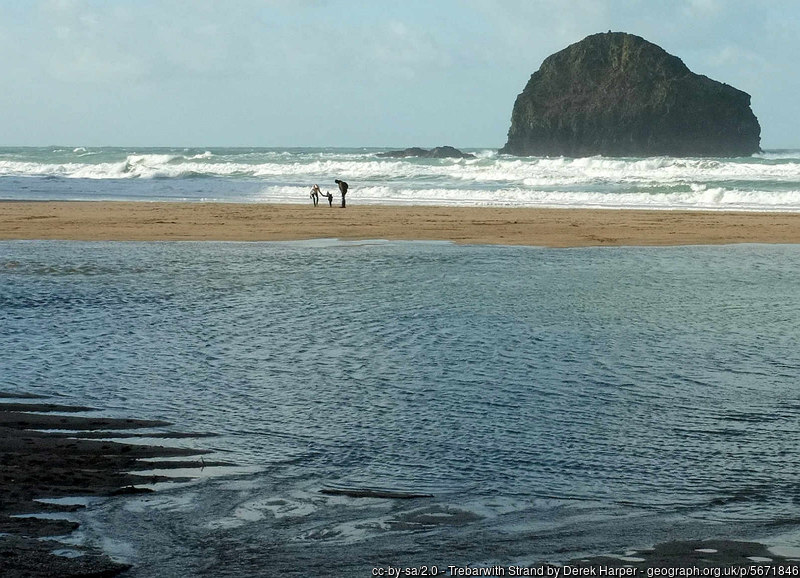
TIDES & BEACH SAFETY
Trebarwith Strand changes more with the tide than almost any other beach in Cornwall. At high water the sea comes right up to the cliffs and there is no sand at all, and the RNLI closes the beach for around two hours either side of high tide. Every year people are cut off by the rising sea below the cliffs, so always check the tide times before you go and keep an eye on the water throughout your visit.
The best time to visit is in the two or three hours either side of low tide, when the beach is at its biggest and the rock pools are uncovered. Arriving on a rising tide is when most people get caught out, as the sea can cover sections of sand and rock much faster than it looks from the cliffs above. In big swells waves can even surge up the rocky gully at the beach entrance, and the beach is occasionally closed in rough conditions.
RNLI lifeguards patrol the beach daily through the summer – in 2026 from 16 May to 27 September, 10am to 6pm. Swim and bodyboard only between the red and yellow flags, and keep surfboards between the black and white chequered flags. Rip currents are a constant danger at low water. If you get into trouble, raise your hand and shout for help, and if you see someone else in difficulty, call 999 or 112 and ask for the Coastguard.
↑ Back to topBeach Safety
Check tide times before every visit. No flags means no lifeguards. Never swim alone, and keep a close watch on children on the rocks and in the pools. Access to the beach is through a rocky gully which can be uneven and slippery.
SURFING AT TREBARWITH STRAND
Trebarwith Strand has a reputation as one of North Cornwall’s more serious surf beaches. Facing the Atlantic, it picks up plenty of swell and produces fast, powerful beach-break waves, usually at their best from mid to low tide, when there is enough sand exposed for the swell to break cleanly. At high tide there is often no beach to surf from at all.
Conditions here suit competent surfers more than complete beginners, and they can change quickly as the tide turns. A surf school above the beach runs lessons through the season, and boards and wetsuits can be hired in the hamlet, so it is still possible to learn here with expert help on a suitable day.
If you are new to surfing, or the swell is big, the gentler beaches at Polzeath and around Bude are good alternatives within a short drive. Wherever you surf, check the forecast and the tide, respect the lifeguards’ flags and never paddle out alone.
↑ Back to topSurf School & Hire
Lessons, board and wetsuit hire are available above the beach in season. Book ahead in the school holidays, and check with the instructors about the best tide for your level – at Trebarwith, timing is everything.
THE PORT WILLIAM & THE VALLEY
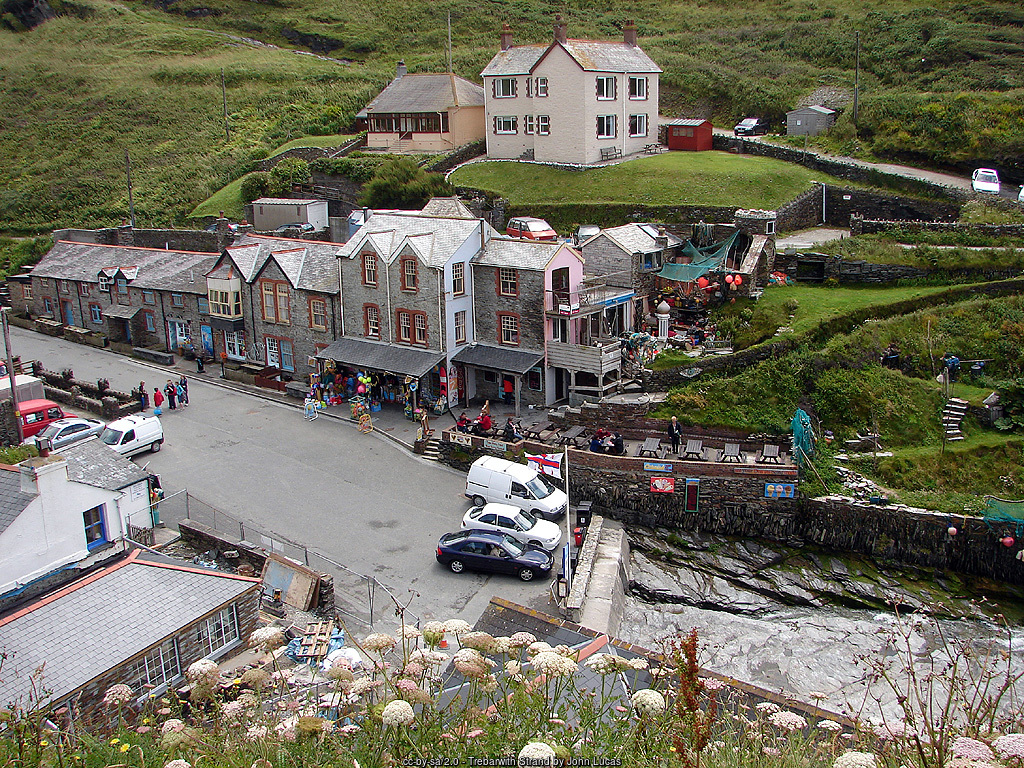
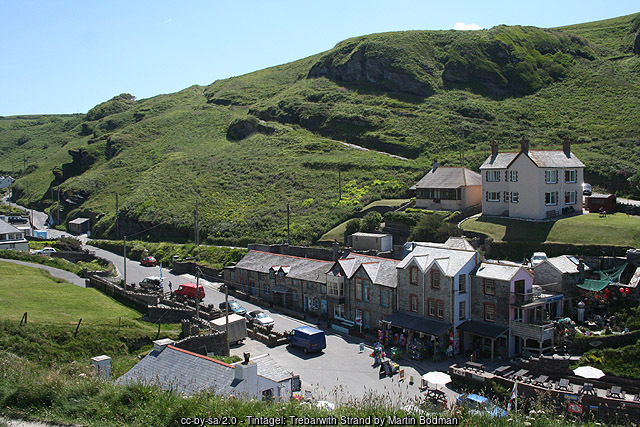
The lane to Trebarwith Strand leaves the B3263 between Tintagel and Camelford and drops steeply down a narrow wooded valley, past the Mill House Inn, built on the site of an old corn mill, to the hamlet at the bottom. It is single track in places, so take care and use the passing places, especially in summer.
At the foot of the valley the Port William stands on the hillside above the southern end of the beach. Ships once landed coal and loaded slate here, and the pub, created in the 1970s from the stable block of a former hotel, is named after the old landing place. Today it is a favourite stop for surfers and coast path walkers, with food, Cornish ales and some of the best sea views of any pub in Cornwall.
Around the slipway you will find a café, a surf shop selling buckets, spades and beach gear, and surf hire. Opening hours vary with the seasons, so check ahead outside the main holiday period. For a wider choice of shops, cafés and restaurants, Tintagel is just a few minutes’ drive away.
Above the valley lie the small villages of Treknow and Trewarmett, many of whose cottages were once home to quarry workers, and the old settlement of Trebarwith itself, first recorded in 1284, which gave its name to the beach. A shortcut path from Treknow joins the old Sanding Road down to the shore.
The Trebarwith stream runs the length of the valley beside the lane, tumbling over the slate through a rocky gully on to the beach, where children love to follow it down to the sea. The wooded slopes above are alive with birdsong in spring and summer, and in late spring the cliffs and banks around the hamlet are bright with thrift, sea campion and gorse. After very heavy rain, water quality where the stream crosses the beach can occasionally be affected, so check the Surfers Against Sewage Safer Seas & Rivers service before swimming.
The history of the valley goes back a long way. Land at Trebarwith was first recorded in 1284, and from 1329 until the early 16th century it was held by the Lercedekne family. Today the old quarries and farms around the valley are home to holiday cottages, campsites and glamping, including a former quarry above the coast, and on summer evenings the terrace of the Port William fills with visitors watching the sun sink into the sea behind Gull Rock.
↑ Back to top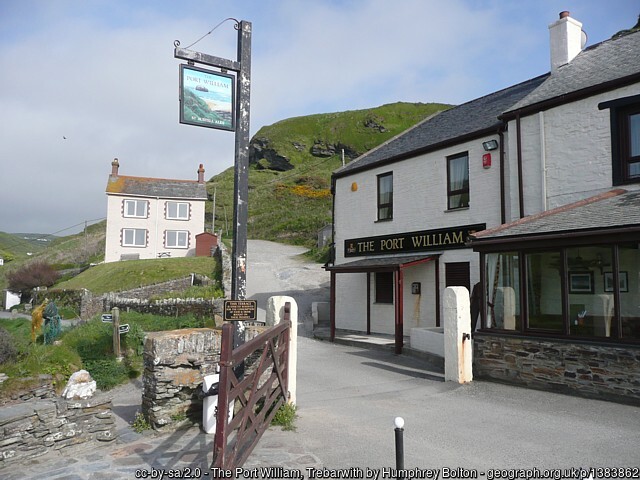
MAP OF TREBARWITH STRAND
SLATE QUARRIES & HISTORY
For centuries Trebarwith Strand was as much a working shore as a holiday beach. Slate has been quarried from the cliffs here since at least the 15th century, and around eight quarries were cut into the coast between Trebarwith and Tintagel Castle, producing the blue-grey and olive-green slate that roofed buildings across Cornwall and beyond. The last of the cliff workings closed in 1937.
The oldest was Lanterdan Quarry, just north of the beach. Its most striking feature is a tall slate pinnacle left standing in the middle of the workings, where the quarrymen cut away the good rock around it and left the poorer stone behind. Today the area is cared for by the National Trust, and the coast path passes right beside it.
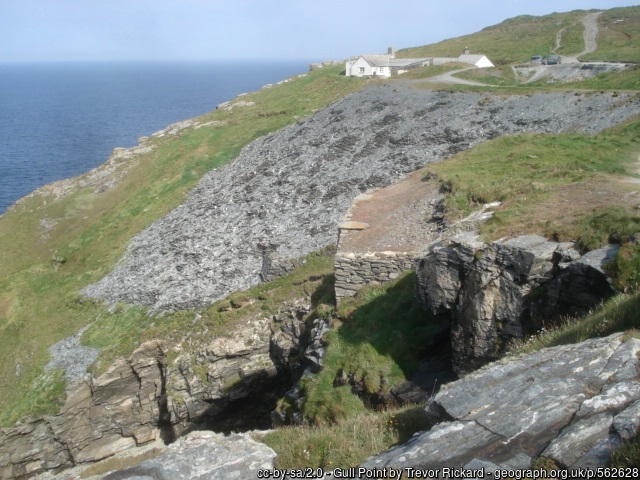
Getting the slate away from such a remote, cliff-bound coast was always the problem. Cranes and derricks lowered it down the cliffs to small ships that could only come in close enough to load at high water, and coal was landed in return at Port William. A zigzag track on the slopes of Penhallic Point, used by donkeys and carts to carry slate down to the boats, can still be traced from the coast path.
Working the cliff quarries was dangerous and exhausting. On the clifftop the quarrymen built a whim, a wooden pulley frame turned by a donkey or horse – often blindfolded so it would not be distracted – which winched men down the cliff face on ropes and hauled buckets of slate back up. The rock was cut by hand drilling and blasting, and the working faces reached around 60 metres (200 feet) high in the north and as much as 100 metres (330 feet) in the south.
Up on the clifftop, the slate was split and dressed in sheds by skilled splitters, who worked from 7.30 in the morning until 5.30 in the evening with just a half-hour break. A good workman could split a hundred dozen roofing slates in a day. The slates were sold by size under names such as Queens, Duchesses, Countesses, Ladies and Doubles, and the smallest pieces, called scantles, were cut by boys. As well as roofing slate, the quarries produced cisterns, troughs, lintels, headstones and many other items.
Ships were loaded at small wharves cut into the cliffs. At Penhallick Wharf, on Penhallic Point between Trebarwith and Tintagel, the cliff was trimmed into a sheer face where a natural deep-water berth let vessels moor right alongside, and cranes lowered the slate straight down into their holds from a platform some 35 metres (115 feet) above the sea.
The coming of the railway to Camelford and Delabole in the 1890s took much of the trade away from the sea. Penhallick Wharf was already out of use by 1907, and the projecting wharf has since been lost to the waves, although the zigzag track down to it can still be seen from the coast path above Dria Cove. Long Grass, the last of the coastal quarries, closed in 1937, and its old offices, powerhouse and smithy are now Tintagel Youth Hostel.
Walking the coast path today, you pass the ruins of dressing sheds, powder stores and clifftop whims, with well-preserved whims still standing at Lambshouse and Caroline quarries; Caroline’s great quarried cave gave Hole Beach its name. Inland, the story continues at the vast Delabole slate quarry, a few miles away, which has been worked for centuries and still produces slate today.
Sand was also a valuable cargo. Around 1825 the Sanding Road was built down the valley so that sand could be carried up from the beach to improve the farmland, with donkeys and ponies carrying it in panniers. The sea brought tragedy too: in October 1886 the barque Sarah Anderson was wrecked off Gull Rock with the loss of all on board.
With the decline of quarrying in the 20th century, Trebarwith turned to tourism, and the old quarries, tracks and spoil tips have slowly softened into the landscape. One former quarry is now a glamping site, and the cliffs that once rang to the sound of the quarrymen are now enjoyed by walkers, climbers and birdwatchers.
↑ Back to top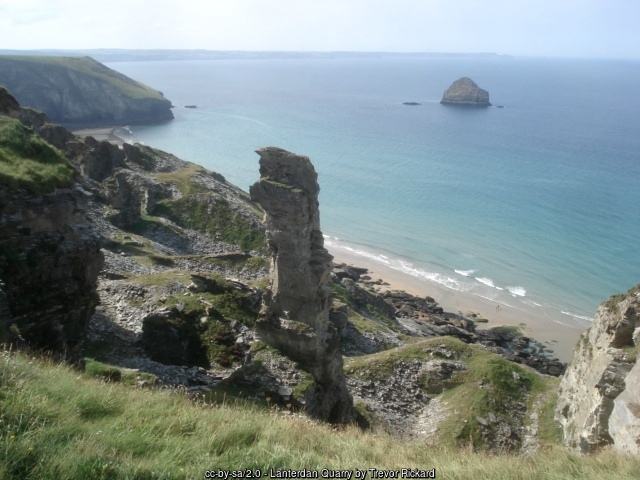
TREBARWITH STRAND ON SCREEN
With its golden sand, dark cliffs and the dramatic silhouette of Gull Rock, Trebarwith Strand has long attracted film-makers looking for a wild and romantic stretch of coast. It has stood in for distant shores in several films over the past fifty years.
- Malachi’s Cove (1974, also known as The Seaweed Children) – filmed largely at Trebarwith, based on a story by Anthony Trollope set on this coast.
- Twelfth Night (1996) – Trevor Nunn’s film of Shakespeare’s comedy used the beach as the coast of Illyria.
- Oscar and Lucinda (1997) – Gull Rock appears as a backdrop.
- Saving Grace (2000) – the Cornish comedy also used Gull Rock and the coast here as a backdrop.
Visiting the locations is easy: almost all of them can be seen from the beach at low tide or from the coast path on the cliffs above.
↑ Back to top
THINGS TO DO AT TREBARWITH STRAND
Days at Trebarwith are shaped by the tide. When the sand is uncovered, the beach is the place to be; when the sea is in, there is the coast path, the Port William and a wealth of attractions nearby.
Families can spend hours rock pooling and exploring the coves, while surfers, walkers and photographers each have their own reasons to come back again and again. Tintagel, Port Isaac, Boscastle and Delabole are all within a short drive.
Here are some of the best things to do in and around Trebarwith Strand:
- Explore the beach at low tide – walk out to Lill Cove and Vean Hole, and discover the rock pools and caves below the cliffs.
- Surf the Atlantic waves – book a lesson or hire a board, and surf between the flags when the lifeguards are on duty.
- Watch the sunset behind Gull Rock – one of the most photographed sunsets in Cornwall.
- Walk to Tintagel – follow the coast path past Lanterdan Quarry and St Materiana’s Church to Tintagel Castle.
- Visit Tintagel Castle – the legendary birthplace of King Arthur, cared for by English Heritage, with its footbridge to the island.
- See the Old Post Office – the National Trust’s 14th-century house in the heart of Tintagel village.
- Discover St Materiana’s Church – the ancient clifftop church on Glebe Cliff, above the quarries.
- Enjoy a drink at the Port William – with views over the whole bay from the terrace.
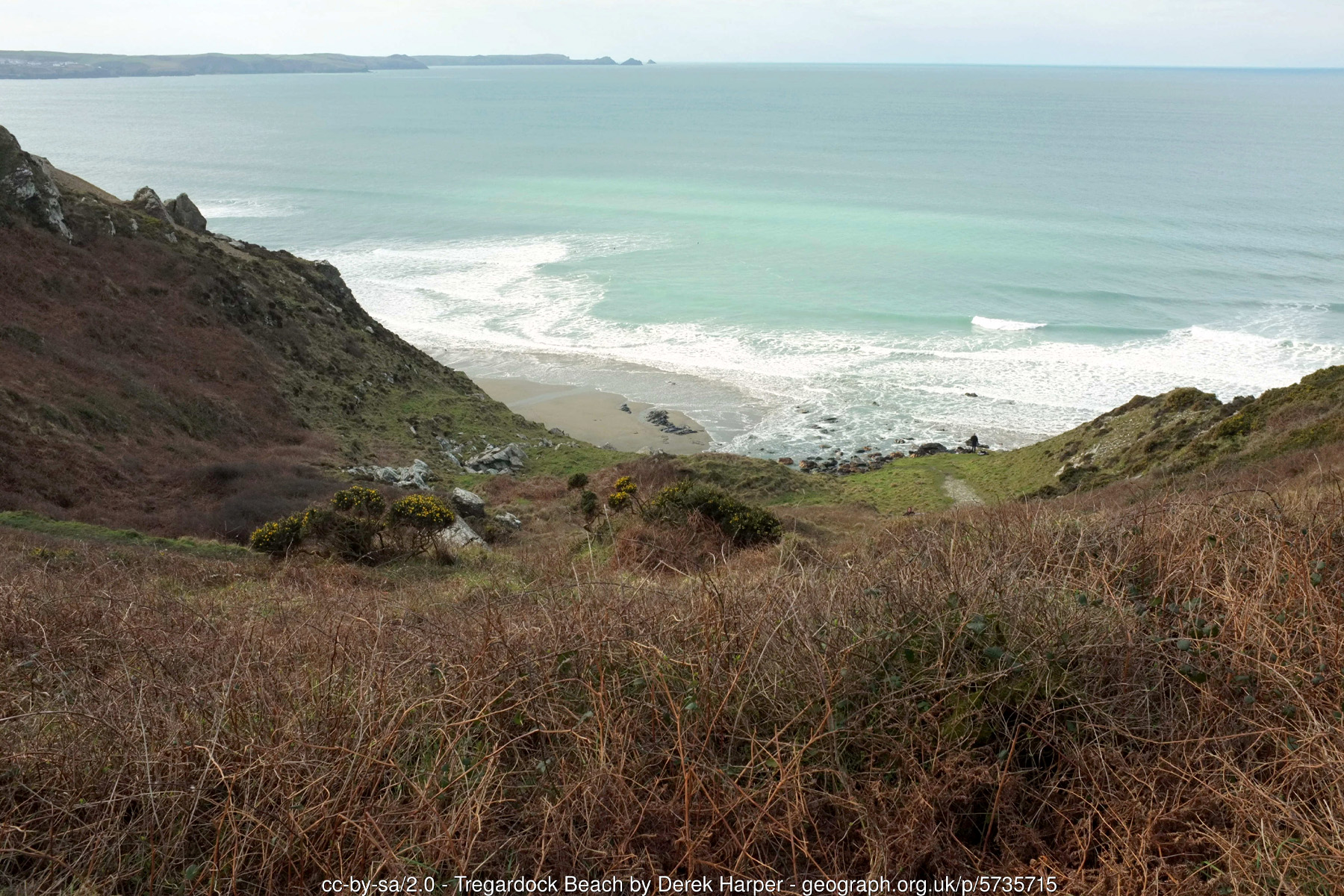
- Find Tregardock – walk south along the coast path to the wild, secluded beach at Tregardock.
- Explore further afield – visit Port Isaac, Boscastle, Camelford and Bodmin Moor, all within a short drive.
Tintagel Castle
Just 2½ miles away, Tintagel Castle (English Heritage) stands on its dramatic headland and island, linked by a footbridge opened in 2019. Booking ahead is advised in summer. The paths involve steep slopes and many steps.
Tintagel Old Post Office
The National Trust’s Old Post Office is a rare 14th-century yeoman’s house with a wavy slate roof, in the centre of Tintagel village.
COAST PATH WALKS FROM TREBARWITH STRAND
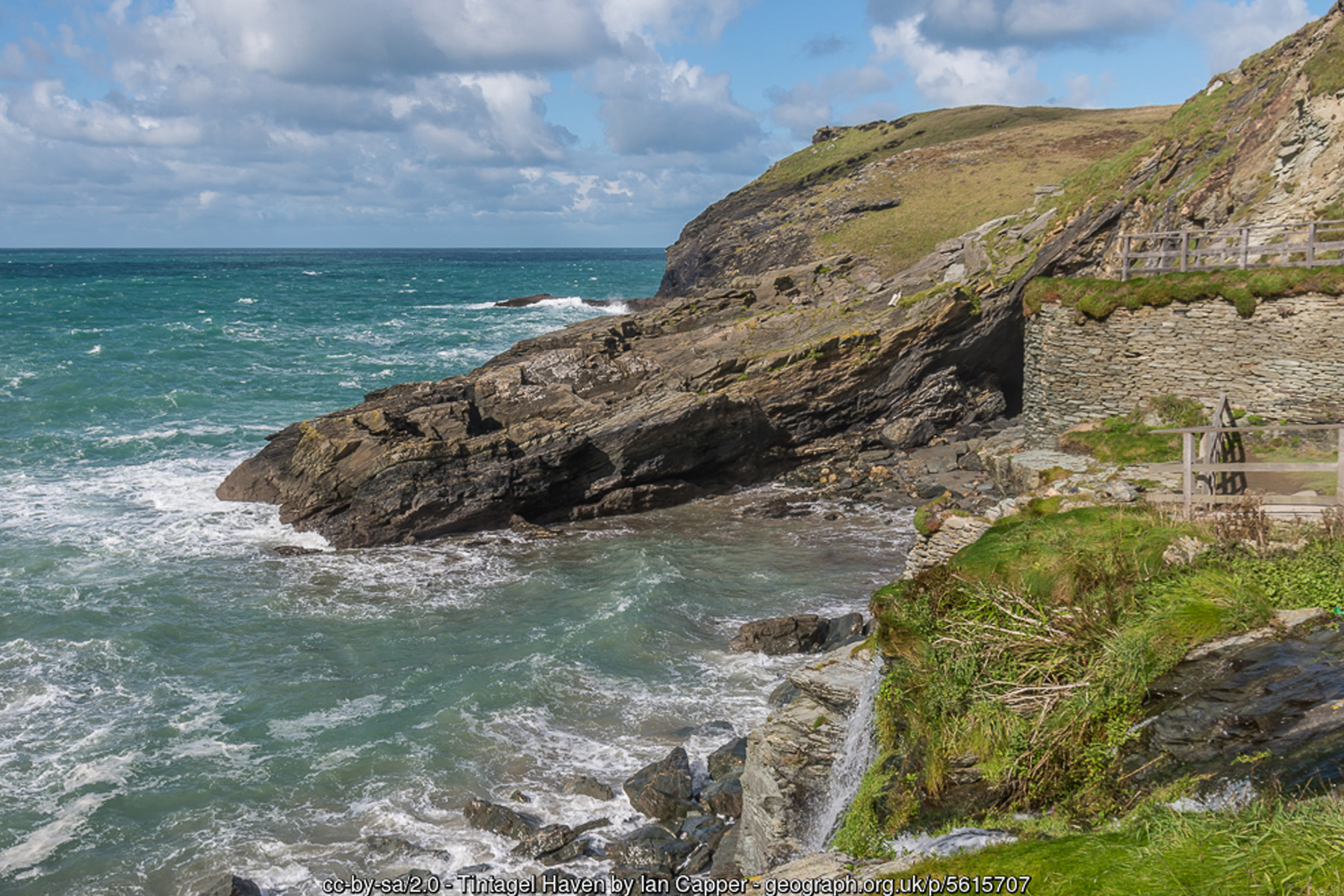
The South West Coast Path runs right through Trebarwith Strand, and both directions rank among the finest walks in North Cornwall. Heading north, the path climbs steeply out of the valley and follows the ledges and tracks cut by the slate quarrymen past Lanterdan Quarry, Bagalow Cliff and Penhallic Point to Tintagel Youth Hostel and St Materiana’s Church on Glebe Cliff.
From the church you can continue down to Tintagel Castle and the village, then return inland across the fields via Treknow – a circuit of about 3½ miles, or nearer 5 miles including the castle and village. It is a moderate walk, with a steep climb out of Trebarwith and some stiles on the inland paths.
Heading south, the coast path climbs to the high cliffs above Backways Cove and continues towards the remote beach at Tregardock and on to Port Isaac. This is one of the toughest stretches of the coast path in Cornwall, with steep descents and climbs, so allow plenty of time, carry water and wear good boots.
Wherever you walk, keep to the path, stay well back from the unfenced cliff edges and old quarry workings, and keep dogs and children close. The views of Gull Rock and the coast from the clifftops are unforgettable.
↑ Back to topTrebarwith & Tintagel Walk
Our Trebarwith Strand & Tintagel circular walk has full route directions, a map and waypoints – about 3½ miles, starting from the Trebarwith Strand car park.
TINTAGEL, PORT ISAAC & BOSCASTLE
- Tintagel – about 2½ miles north, with its legendary castle, the Old Post Office and a village full of shops, pubs and cafés.
- Bossiney & Rocky Valley – Bossiney Cove and the wooded Rocky Valley, just beyond Tintagel.
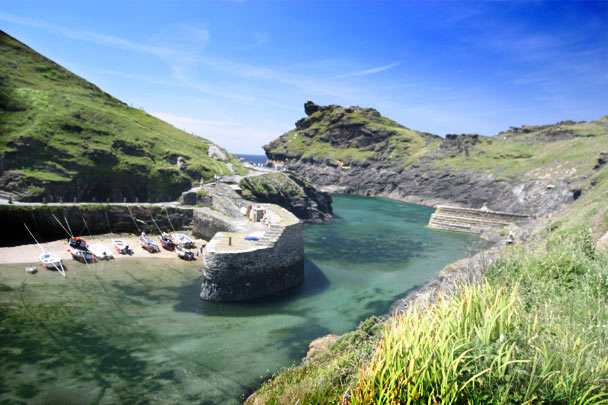
- Boscastle – the National Trust harbour village in its deep valley, about 6 miles north.
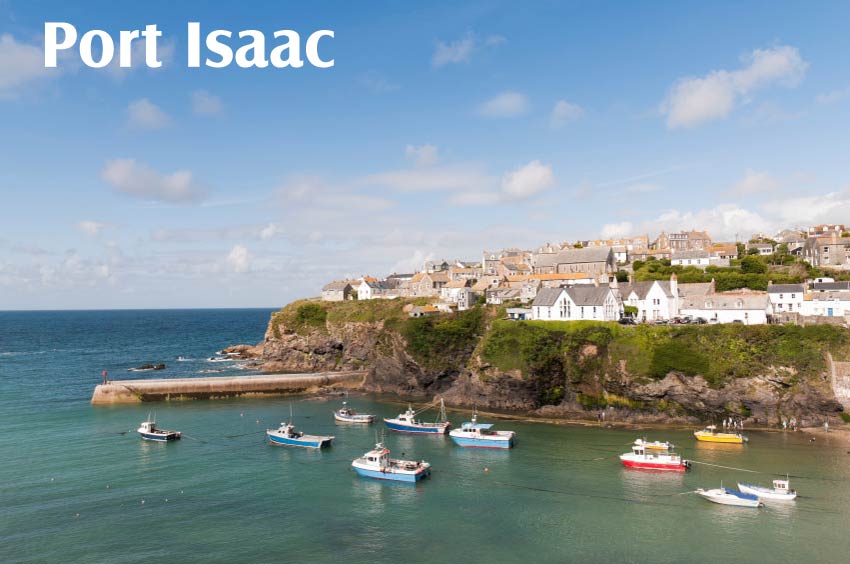
- Port Isaac – the fishing village famous as Portwenn in Doc Martin, about 8 miles south by road.
- Camelford – the small market town on the River Camel, gateway to Rough Tor and Bodmin Moor.
- Wadebridge – the market town on the Camel Trail, with supermarkets and the Royal Cornwall Show.


LOCAL EVENTS
Trebarwith Strand is a quiet hamlet without big events of its own, but there is plenty going on within easy reach through the year. The RNLI lifeguard season begins in mid-May, and summer brings regattas, festivals and agricultural shows to the towns and villages around North Cornwall.
- Padstow May Day (1 May) – the ’Obby ’Oss celebrations in Padstow.
- Royal Cornwall Show (June) – three days at the Royal Cornwall Showground near Wadebridge.
- Rock Oyster Festival (late July) – food, music and family fun near Rock.
- Cornwall Folk Festival (August bank holiday weekend) – music and dance across Wadebridge.
Dates change from year to year, so check before you travel.
↑ Back to topCheck Before You Go
Dates change from year to year – check our Cornwall events guide and the organisers’ own websites before you travel.
VISITOR INFORMATION
Parking & EV Charging
The main car park is the Cornwall Council long-stay car park in the valley (PL34 0HB, about 270 spaces), a short walk down the lane to the beach – pay and display at the machine (no mobile payment), charged 9am to 4pm from 1 April to 31 October and free from November to March. A smaller car park is nearer the beach, with very limited roadside parking. The lane is narrow – use the passing places.
Electric vehicle charging:
- Tintagel Visitor Centre car park, Bossiney Road – 2 slow chargers with 4 connectors (Evolt Network), PL34 0AJ
- Wadebridge – rapid chargers at the Jubilee Road old railway site, Piggy Lane car park and West Hill, about 12 miles away
Bus & Train
There is no regular bus to the beach itself. Go Cornwall Bus route 95 links Tintagel and Camelford with Bude, Boscastle and Wadebridge; from Tintagel it is about 2½ miles to the beach on foot via Treknow or the coast path. The nearest main line station is Bodmin Parkway. Check timetables before you travel.
Facilities & Supermarkets
Public toilets above the beach (including accessible facilities), a café, surf shop and hire services in the hamlet, many seasonal. Tintagel has a wider range of shops, and the nearest large supermarkets are in Wadebridge. Supermarkets include:
- SPAR – Fore Street, Tintagel PL34 0DB
- Co-op – High Street, Camelford PL32 9PQ
- Aldi – 8 Dunveth Business Park, West Hill, Wadebridge PL27 7FE
- Co-op – Jubilee Road, Wadebridge PL27 7DA
- Lidl – Eddystone Road, Wadebridge PL27 7AL
- Tesco Superstore – West Hill, Wadebridge PL27 7HW
Cafés & Restaurants
A café by the slipway, the Port William pub above the beach and the Mill House Inn up the valley, with many more cafés, pubs and restaurants in Tintagel. Opening hours vary out of season, and booking ahead is wise for evening meals in summer.
Health
The nearest GP is Tintagel Medical Centre, Bossiney Road, Tintagel PL34 0AE. The nearest Minor Injury Units are at Launceston and Bodmin Community Hospitals – check opening hours before travelling. Call NHS 111 for urgent advice and 999 in an emergency – ask for the Coastguard for incidents at sea or on the cliffs. The nearest major A&E is the Royal Cornwall Hospital, Truro.
Disabled Access
Access to the beach is down the lane and through a rocky gully, which can be uneven and difficult for visitors with limited mobility, and at high tide there is no beach. Accessible toilets are above the beach. The views of Gull Rock can be enjoyed from the Port William and the lane. The coast path is steep and not suitable for wheelchairs.
Vets & Dogs
Penbode Vets, Inns Park, Camelford PL32 9RX, about 5 miles away. Dogs are welcome on Trebarwith Strand all year round with no restrictions.
National Trust & English Heritage
The National Trust cares for much of the coast between Trebarwith and Tintagel, including Lanterdan Quarry, as well as the Old Post Office in Tintagel and Boscastle harbour. Tintagel Castle (English Heritage) is just 2½ miles away.
Beaches
Trebarwith Strand itself; Tregardock to the south; and Tintagel Haven, Bossiney Cove and Port Isaac a short drive away.
STAY & EXPLORE NEAR TREBARWITH STRAND
Surf & Watersports
FAMILY HOLIDAYS & SHORT BREAKS IN TREBARWITH STRAND
Family holidays at Trebarwith Strand are all about the tide. When the sea draws back, children can spend hours exploring the rock pools, caves and coves below the slate cliffs, building sandcastles on the golden sand and watching the surfers ride the waves, with RNLI lifeguards on patrol through the summer and Gull Rock always in view.
Trebarwith Strand holiday cottages let you plan your days around the tides: holiday cottages in the valley a short walk from the beach, homes in Treknow and Trewarmett with views over the coast, and family houses with space for boards, wetsuits and muddy boots. Many holiday cottages near Trebarwith welcome dogs too.
Trebarwith is also perfect for a short break or weekend away. Out of season the beach is quiet, the sunsets behind Gull Rock are spectacular and the coast path to Tintagel is at its best, so a few nights in a B&B, inn, holiday park or campsite nearby is the perfect escape. Booking direct with the owner means no agency fees.
Browse Trebarwith Strand holiday cottages and apartments, or holidays and short breaks at Trebarwith Strand for every type of accommodation – B&Bs, inns, holiday parks, camping and glamping – all listed on Cornwall Online by their owners.
↑ Back to topFREQUENTLY ASKED QUESTIONS ABOUT TREBARWITH STRAND
Yes. Trebarwith Strand is one of the most tidal beaches in Cornwall. At low tide it opens out into a long stretch of golden sand and rock pools, but at high water the sea reaches the foot of the cliffs and there is no beach at all – the RNLI closes the beach for around two hours either side of high water. Always check the tide times before you visit.
RNLI lifeguards patrol Trebarwith Strand daily through the summer season – in 2026 from 16 May to 27 September, 10am to 6pm. Swim and bodyboard only between the red and yellow flags, and remember that no flags means no lifeguards. Rip currents are common at low water.
The main car park is the Cornwall Council long-stay car park in the valley (PL34 0HB), with around 270 spaces, a short walk down the lane from the beach. It is pay and display (coins or card at the machine – there is no mobile payment) from 9am to 4pm between April and October, and free from November to March. There is also a smaller car park nearer the beach and very limited roadside parking.
Yes. There are no dog restrictions at Trebarwith Strand, so dogs are welcome on the beach all year round. Keep them under control near other beach users and on the coast path, where there are unfenced cliff edges and old quarry workings.
Yes – Trebarwith Strand is one of North Cornwall’s best-known surf beaches, picking up plenty of Atlantic swell and producing fast, powerful waves that usually work best from mid to low tide. Conditions suit experienced surfers more than complete beginners; a surf school above the beach runs lessons, and boards and wetsuits can be hired in season.
Trebarwith Strand is about 2½ miles south of Tintagel by road. On foot, the South West Coast Path links the two along the old slate-quarry cliffs past Lanterdan and St Materiana’s Church on Glebe Cliff – a classic walk of around 3½ miles as a circuit.
Gull Rock, also called Otterham Rocks, is the large island of rock just off the beach, home to nesting seabirds. It has appeared as a backdrop in several films, including Oscar and Lucinda (1997) and Saving Grace (2000), and the barque Sarah Anderson was wrecked off the rock in October 1886 with the loss of all on board.
Yes – the Port William stands on the hillside above the southern end of the beach, with food, Cornish ales and wonderful sea views. It was created from the stable block of a former hotel, on the site where ships once landed coal and loaded slate. The Mill House Inn is about a mile up the valley. Check opening times out of season.
North Cornwall Towns and Villages | Padstow | Wadebridge | The Camel Estuary | Rock | Daymer Bay | Polzeath | Port Isaac | Trebarwith Strand | Tintagel | Bossiney Cove | Rocky Valley | Boscastle | Crackington Haven | Bude | Launceston | Camelford | Altarnum | Bodmin |