Holidays in Porthtowan, Cornwall – Blue Flag Surf Beach & the Mining Coast
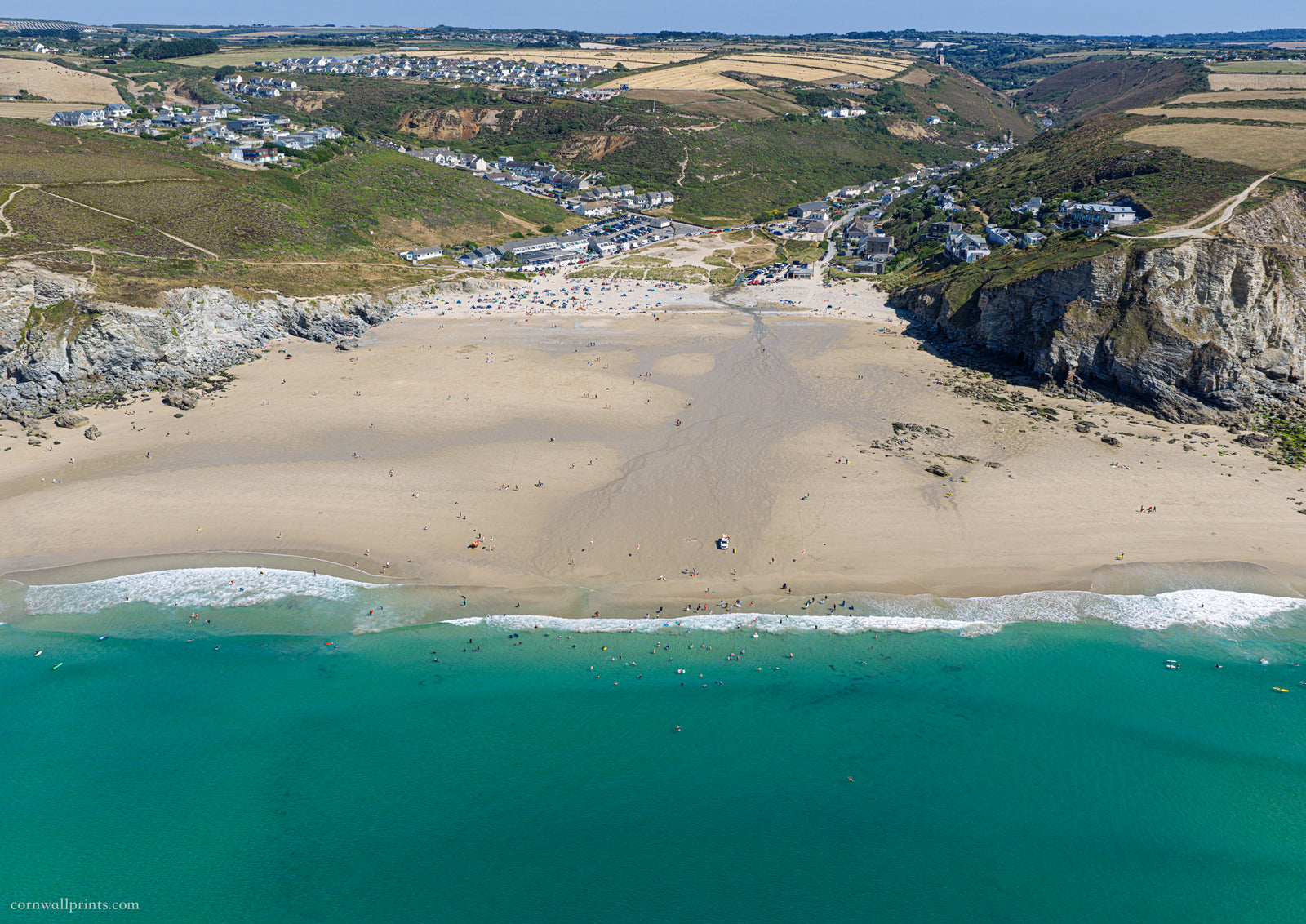
Porthtowan, near St Agnes
On This Page
- Holidays in Porthtowan
- Best Time to Visit
- Porthtowan Beach
- Mining Heritage
- Chapel Porth, Wheal Coates & the Coast Path
- Things to Do in Porthtowan
- History of Porthtowan
- Key Buildings & Landmarks
- Notable People
- Local Events
- Places near Porthtowan
- Visitor Information
- Stay & Explore near Porthtowan
- Family Holidays & Short Breaks
- Frequently Asked Questions
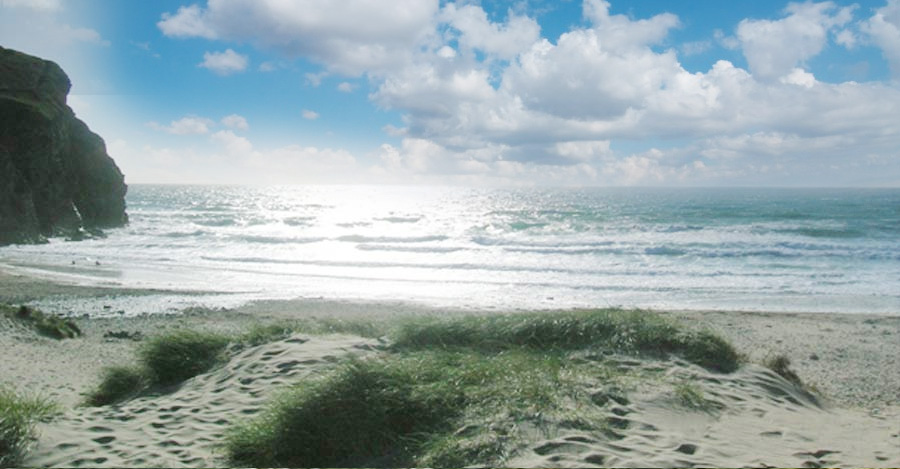
HOLIDAYS IN PORTHTOWAN
Porthtowan is a small village on the North Cornwall coast, tucked into a steep valley that opens onto one of the best surf and family beaches in the county. It lies about two miles south-west of St Agnes and four miles north of Redruth, and its Cornish name, from porth and tewyn, means “the landing place at the sand dunes” – a fitting description of the beach today.
The beach holds a Blue Flag award for 2026. It is a wide, west-facing sweep of golden sand between dramatic cliffs, with rock pools at low tide, reliable Atlantic surf and RNLI lifeguards in season. Unusually for this coast, the main car park sits right behind the sand, and the famous Blue Bar looks straight out over the waves.
For all its holiday atmosphere, Porthtowan has deep roots in Cornwall’s mining history. The valley and cliffs around it were once busy with copper mines, and the ruined engine houses and chimneys that still stand on the hills are part of the Cornwall and West Devon Mining Landscape World Heritage Site. The coast here is also part of the Godrevy Head to St Agnes Heritage Coast.
The village grew up as a seaside resort in Victorian and Edwardian times, when families from Redruth and the mining towns flocked here on bank holidays. Today it has a relaxed, unpretentious surf-village feel, with beach cafés, surf hire and schools, a beachside pub and a lively community – the charity Surfers Against Sewage was founded by surfers from Porthtowan and St Agnes in 1990.
Walkers are spoilt for choice. The South West Coast Path climbs out of the valley in both directions – north-east to Chapel Porth and the famous engine houses of Wheal Coates below St Agnes Beacon, and south-west towards Portreath. At low tide you can even walk along the beach to Chapel Porth, returning over the clifftops.
Holiday accommodation in and around the village includes cottages, apartments and holiday parks – see Porthtowan holiday cottages and holidays and short breaks in Porthtowan.
Best Time to Visit Porthtowan
Spring and early summer bring heather and gorse to the clifftops and quieter sands before the school holidays. July and August are the busiest months, with lifeguards on duty, surf schools in full swing and the Blue Bar at its liveliest. Remember that dogs are not allowed on the beach between 10am and 6pm from 15 May to 30 September.
September and October are favourites with surfers, with warm seas and good swells. In winter Porthtowan is wild and beautiful, with dramatic seas, empty sands and cosy evenings in the village; the beach is open to dogs all day outside the summer restriction.
↑ Back to top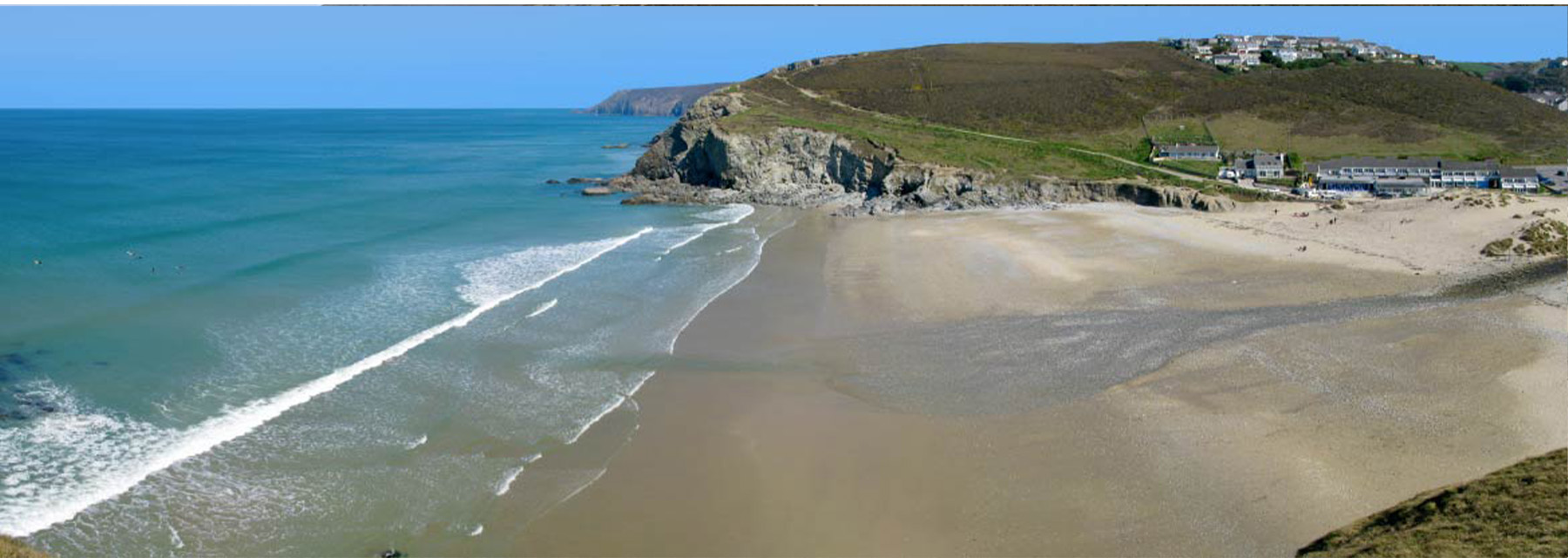
PORTHTOWAN BEACH
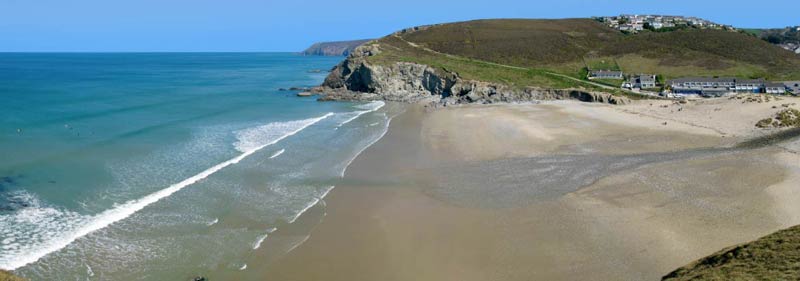
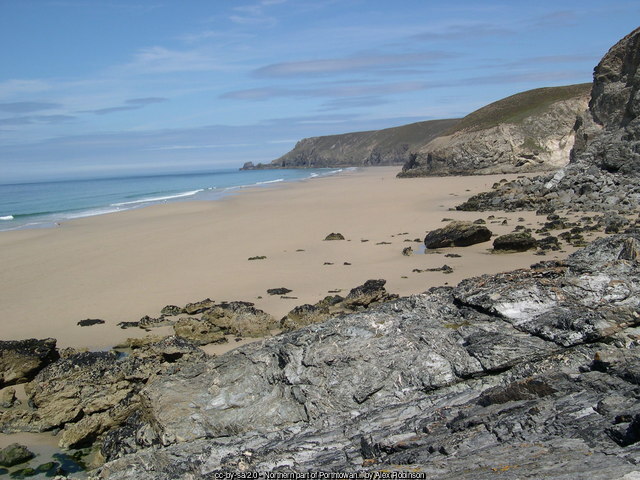
Porthtowan beach fills the mouth of the valley, a broad expanse of sand at low tide that narrows to a steeper strip against the dunes at high water. A stream runs down the valley and across the sand, rock ledges and gullies at both ends are full of rock pools, and as the tide drops it becomes possible to walk along the shore towards Chapel Porth – but only on a falling tide, as the way back can be cut off.
It is one of North Cornwall’s best all-round surf beaches, picking up consistent Atlantic swell, with surf hire and lessons available in season. It hosts surf events, including longboard championships, and RNLI lifeguards patrol in the main season: swim and bodyboard between the red and yellow flags, and surf between the black and white chequered flags.
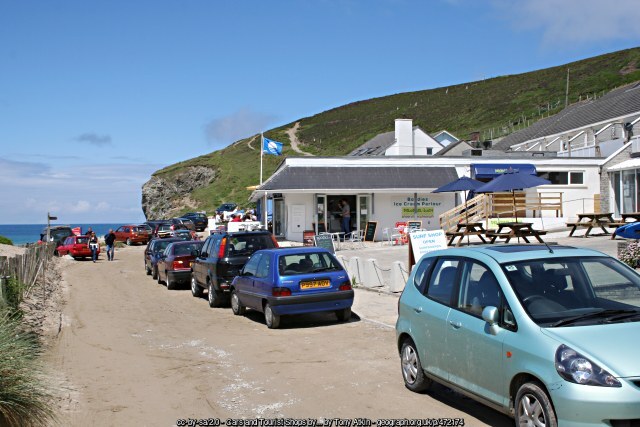
Beside the beach are the Blue Bar, a well-known beach bar and restaurant, the Unicorn on the Beach pub, a beach café, surf and beach shops, an ice-cream parlour, toilets and a children’s play area. Out on the rocks stands the Tobban Horse, a rock formation that has long been one of Porthtowan’s landmarks, though its landward side collapsed in the 1960s.
Dogs and safety. Dogs are banned from Porthtowan beach between 10am and 6pm from 15 May to 30 September. The cliffs here are made of soft, eroding slate – keep away from the cliff base and edges, check the tide times before walking to Chapel Porth, and always follow the lifeguards’ advice.
For full beach details, see our Porthtowan beach guide.
↑ Back to top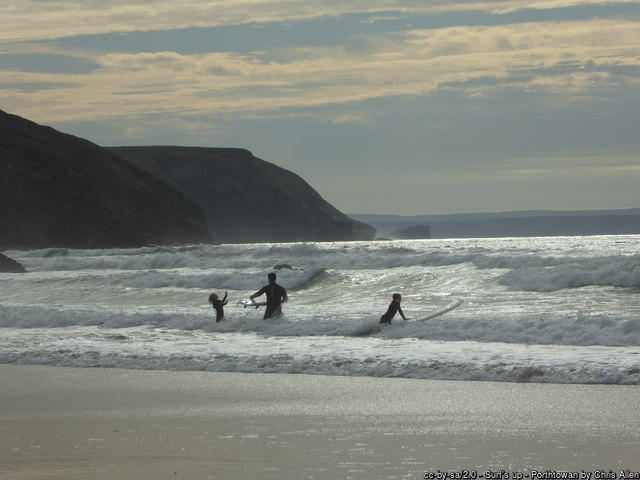
Porthtowan beach at a glance
Award: Blue Flag 2026
Lifeguards: RNLI, in season
Dogs: banned 10am–6pm, 15 May–30 Sept
Parking: Beach Road car park, TR4 8AA
Facilities: toilets, cafés, bar, surf hire, play area
Surf: consistent Atlantic waves
PORTHTOWAN’S MINING HERITAGE
Before it was a resort, Porthtowan was a mining community. Above the village, Wheal Towan was one of the most productive copper mines in 18th-century Cornwall. Its owner, the Truro merchant Thomas Daniell, was said to earn “a guinea a minute” from it, and his son Ralph Allen Daniell went on to own the Trelissick estate near Falmouth. Before it closed in the 1820s the mine is reported to have made profits of around £130,000; it was later reworked under other names, finally as West Wheal Lucy in 1872.
Other mines dotted the valley and cliffs. Tywarnhayle produced copper from 1826 to about 1860, and in 1830 a boiler explosion at the nearby United Hills mine killed nine people. Intensive mining stripped the hills between Porthtowan and Chapel Porth of trees and vegetation, and you can still see the ruined engine houses, chimneys and spoil heaps on the walk along the coast.
Today the whole coast from Porthtowan through Chapel Porth to St Agnes is part of the Cornwall and West Devon Mining Landscape World Heritage Site, recognising the worldwide importance of Cornish mining. The most famous survivor is Wheal Coates, whose clifftop engine houses above Chapel Porth, cared for by the National Trust, are among the most photographed sights in Cornwall.
↑ Back to top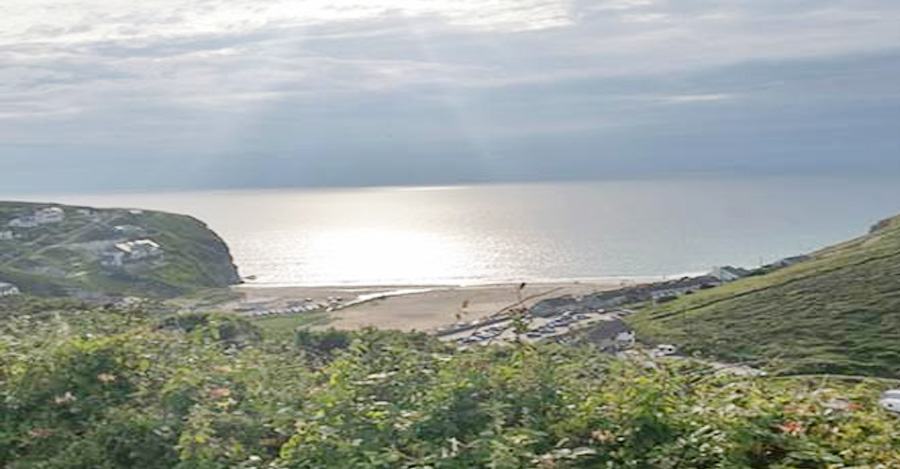
CHAPEL PORTH, WHEAL COATES & THE COAST PATH
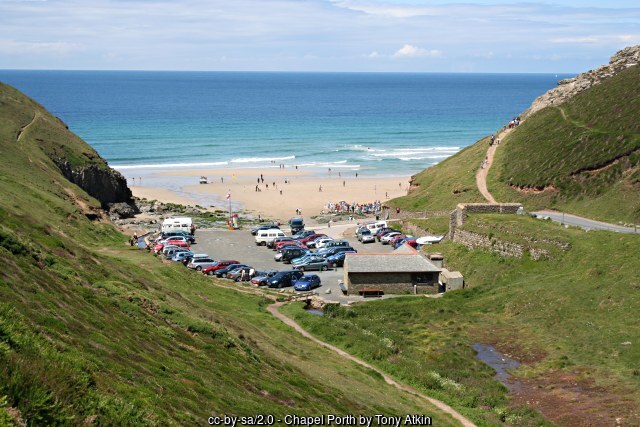
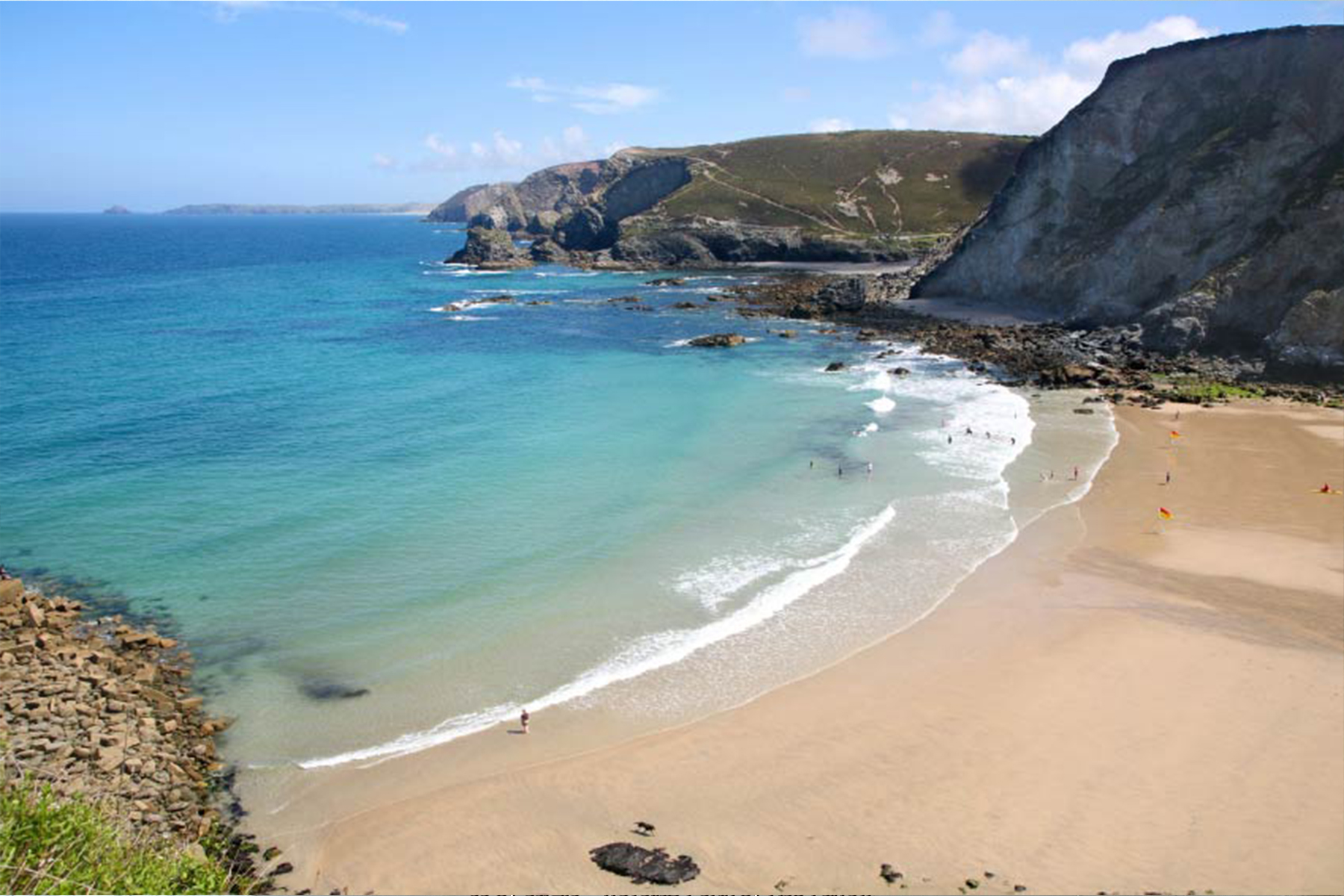
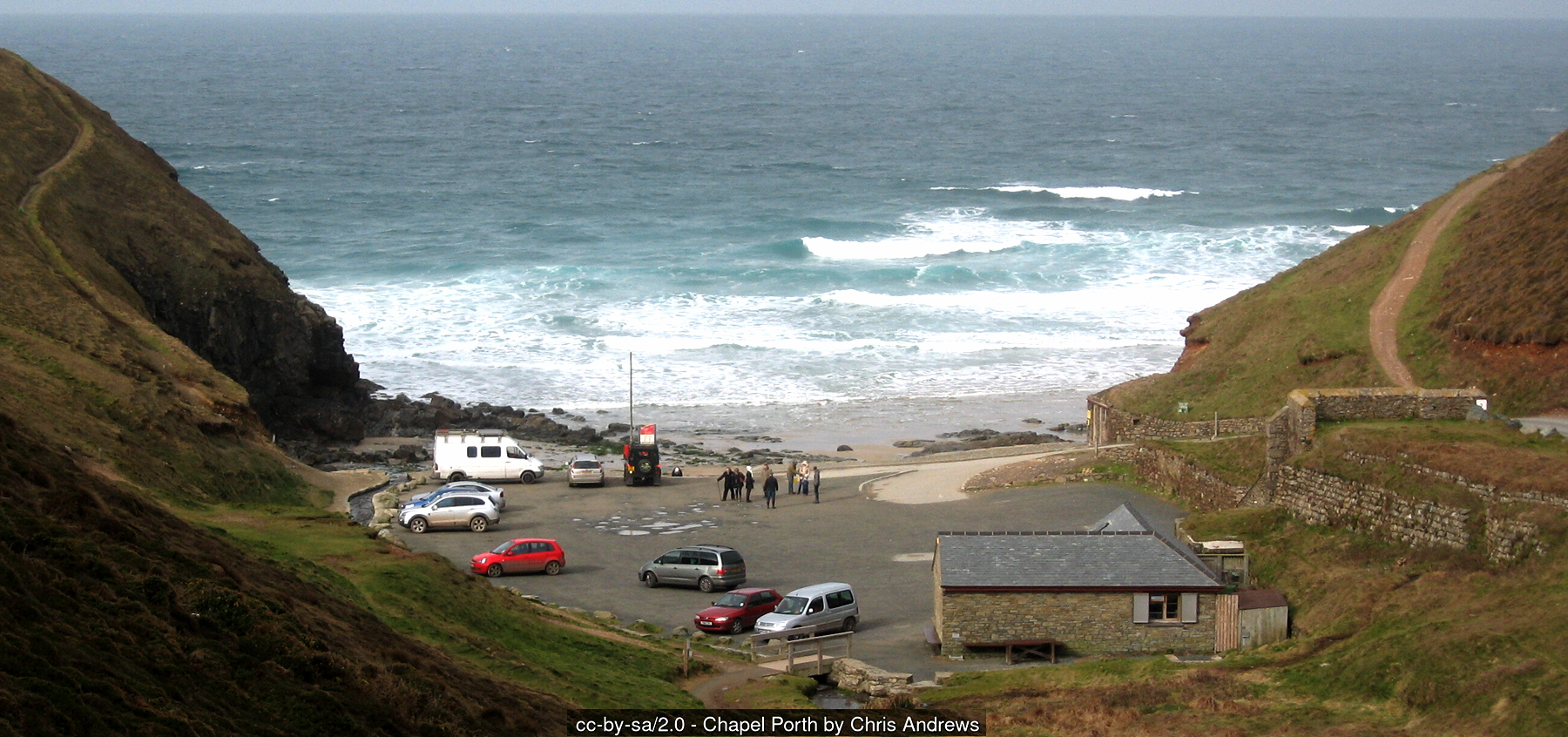
The South West Coast Path runs along the clifftops above Porthtowan in both directions. Heading north-east, it climbs past old mine workings to Chapel Porth, a small National Trust cove at the foot of a valley, and on to the engine houses of Wheal Coates and the open heath of St Agnes Head and St Agnes Beacon, with huge views along the coast.
At low tide, an alternative is to walk along the sand from Porthtowan to Chapel Porth and return over the clifftops – a classic short circuit, but only to be attempted on a falling tide, as the beach route is cut off when the tide comes in. Check the tide times before you go.
Heading south-west, the path follows the cliffs past the former RAF Portreath site at Nancekuke towards Portreath, a walk of a few miles with fine cliff scenery and seabirds. Inland, the village of Mount Hawke, about a mile and a half away, has its own church, where the crew of the wrecked Rose of Devon were buried in 1897.
↑ Back to top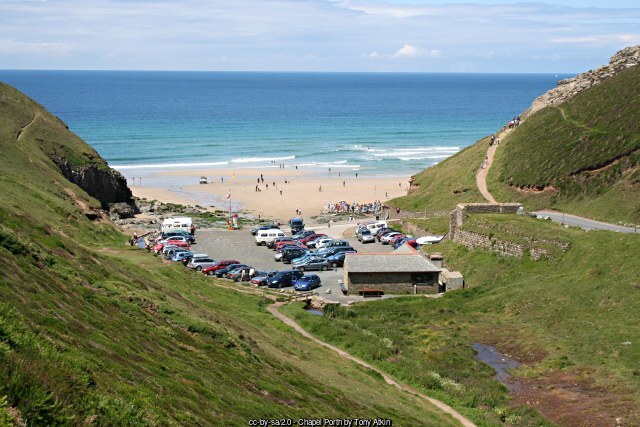
THINGS TO DO IN PORTHTOWAN
Porthtowan is all about the beach and the coast, but the villages and attractions of the St Agnes coast and Mid Cornwall are close by when you want a change.
For families, the rock pools, the stream across the sand, the play area and surf lessons make for easy, happy days. On rainy days, head to St Agnes, Truro, Redruth or the attractions of Newquay and Falmouth, all within easy driving distance.
For walkers, the mining coast between Porthtowan and St Agnes is one of the most dramatic stretches of the South West Coast Path. Here are some of the best things to do in and around Porthtowan.
- Spend a day on Porthtowan’s Blue Flag beach – Porthtowan beach guide.
- Learn to surf with one of the surf schools on the beach.
- Watch the sunset from the Blue Bar on the edge of the sand.
- Walk to Chapel Porth at low tide, or over the clifftops on the coast path.
- See the engine houses of Wheal Coates on the cliffs above Chapel Porth.
- Climb St Agnes Beacon for views along the coast and inland to Carn Brea.
- Explore St Agnes, the old mining village, and Trevaunance Cove – see our St Agnes tin mines walk.
- Walk to Portreath along the cliffs to the south-west.
- Go rock pooling on the ledges at either end of the beach at low tide.
- Visit Truro, Cornwall’s cathedral city, about ten miles away.
HISTORY OF PORTHTOWAN
For centuries the valley at Porthtowan was farmland and moorland, with a corn mill and a scattering of cottages. In the 18th and early 19th centuries it was transformed by copper mining, and miners’ cottages, engine houses and spoil heaps spread across the hills. When the mines declined in the 19th century, the beach became the village’s fortune: in Victorian and Edwardian times people from Redruth and the mining districts came here on bank holidays, a few bathing machines appeared on the sand, and tea rooms served walkers on the cliffs.
The coast here has seen its share of wrecks. In 1816 the brig Harriet ran ashore, and soldiers had to drive off local miners who tried to board her. In the early hours of 29 November 1897 the barque Rose of Devon was driven onto the rocks in a gale; six bodies were found on the beach the next morning, and the crew were buried at Mount Hawke church. Local legend tells of a voice heard from the waves – “The hour is come, but not the man” – and of a dark figure who then ran down from the cliff and vanished into the sea.
In the 20th century Porthtowan became a surfing village. In 1990 surfers from Porthtowan and St Agnes founded Surfers Against Sewage to campaign against sewage pollution on Cornwall’s beaches; the charity, now based in St Agnes, has grown into one of Britain’s best-known marine conservation organisations. The village’s amateur theatre group, the Porthtowan Players, has performed in the village hall since 1968.
↑ Back to topPorthtowan – key dates
1700s – Wheal Towan, a leading copper mine
1816 – wreck of the brig Harriet
1826–c.1860 – Tywarnhayle copper mine
1830 – boiler explosion at United Hills kills nine
1897 – wreck of the Rose of Devon
1968 – Porthtowan Players founded
1990 – Surfers Against Sewage founded
2006 – Mining Landscape World Heritage Site
KEY BUILDINGS & LANDMARKS
- Wheal Coates engine houses – the 19th-century engine houses on the cliffs above Chapel Porth, cared for by the National Trust and part of the World Heritage Site.
- Mine engine houses and stacks around Porthtowan – ruins of the copper mines that once filled the valley and clifftops.
- The Tobban Horse – the rock formation on the shore that has long been a Porthtowan landmark.
- The Blue Bar – the beach bar and restaurant on the edge of the sand, a focus of village life and of Porthtowan’s surf scene.
- Mount Hawke church – the inland church where the crew of the Rose of Devon were buried in 1897.
NOTABLE PEOPLE CONNECTED WITH PORTHTOWAN
- Thomas Daniell (1715–1793) – the Truro merchant and mine owner whose income from Wheal Towan was said to be “a guinea a minute”.
- Ralph Allen Daniell – his son, who inherited the family’s mining fortune and acquired the Trelissick estate on the Fal.
- The founders of Surfers Against Sewage – the group of surfers from Porthtowan and St Agnes who set up the campaign in 1990.
LOCAL EVENTS
Porthtowan’s events revolve around the beach and the surf, with village and coast events nearby through the year.
- Surf competitions (various dates) – including longboard championships on the beach.
- Porthtowan Players productions (through the year) – amateur theatre in the village hall.
- Boardmasters (early August) – the surf, skate and music festival in Newquay.
- Royal Cornwall Show (June) – the county’s great agricultural show at Wadebridge.
Dates change from year to year – check our Cornwall events guide for current dates.
↑ Back to top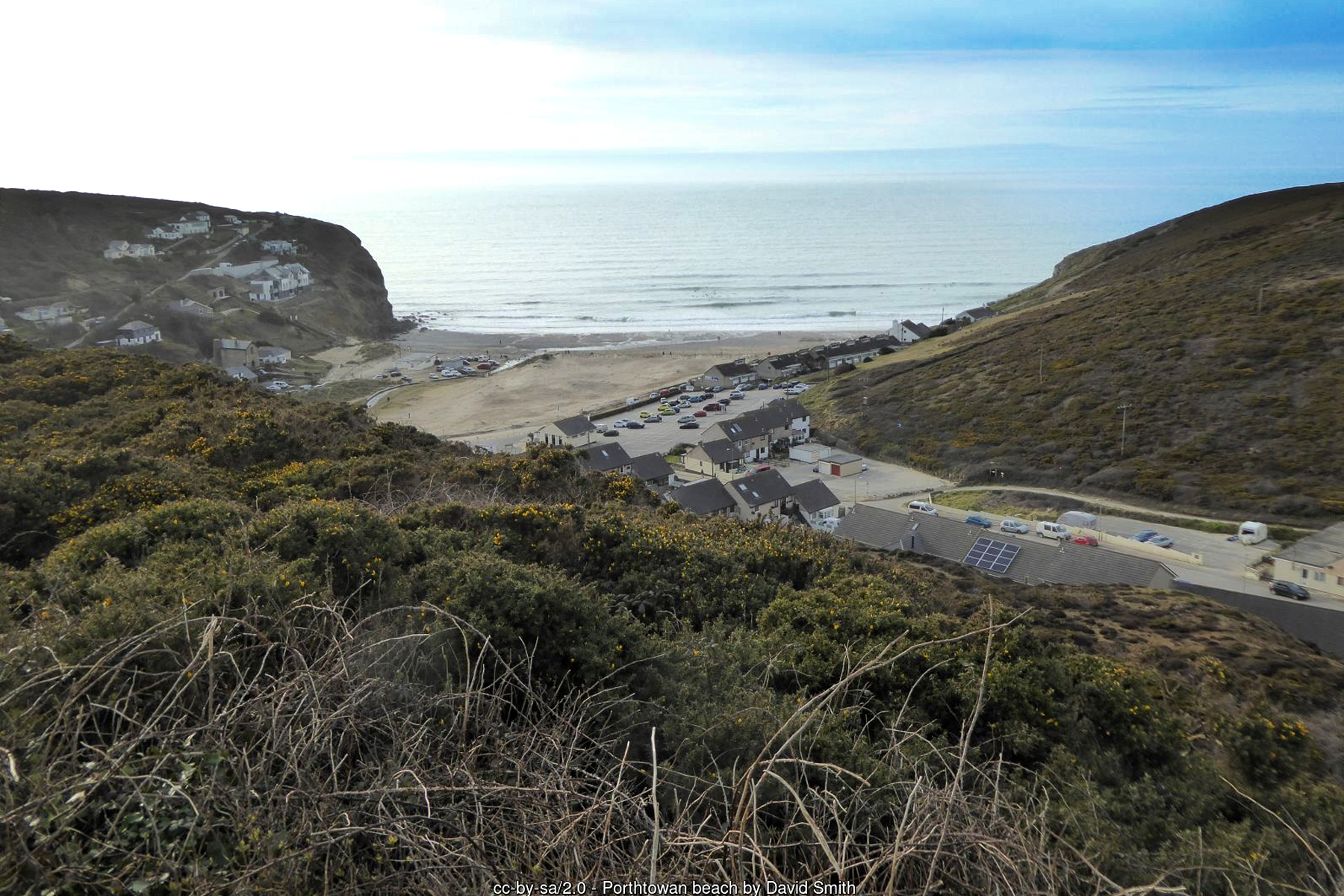
PLACES NEAR PORTHTOWAN
- Chapel Porth – the National Trust cove below Wheal Coates, a mile along the coast.
- St Agnes – the old mining village, with Trevaunance Cove and St Agnes Beacon, about 2 miles north-east.
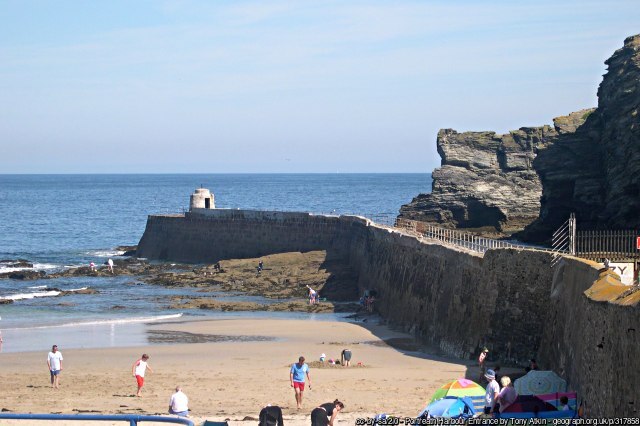
- Portreath – the old harbour village and beach to the south-west.
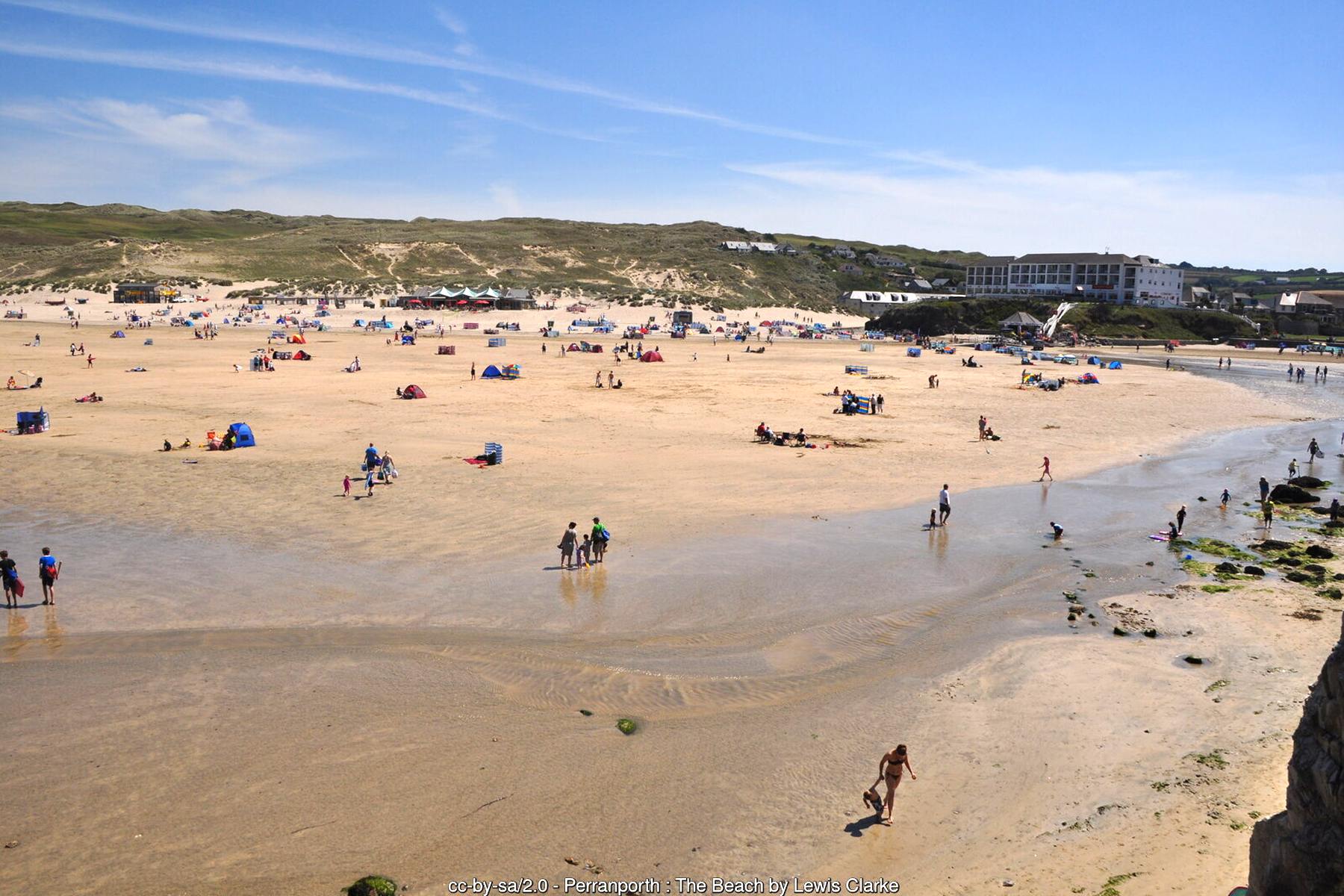
- Perranporth – three miles of sand beyond St Agnes.
- Holywell Bay and Crantock – further up the coast towards Newquay.
- Truro – Cornwall’s cathedral city, about 10 miles east.
VISITOR INFORMATION
Parking & EV Charging
The Cornwall Council Beach Road car park (TR4 8AA) sits right behind the beach, with Blue Badge bays. Pay-and-display applies in the main season, and the car park fills quickly on summer days – check current charges and Blue Badge rules on the council’s parking pages.
Electric vehicle charging:
- Tesco Superstore, Tolgus Hill, Redruth – fast chargers (7kW, Pod Point), TR15 1AX
- Use Zapmap to find the nearest available charger, including in St Agnes and on the A30.
Bus & Train
Transport for Cornwall bus route 304 links Porthtowan with Mount Hawke, Blackwater and Truro, roughly hourly during the day. The nearest railway stations are Redruth and Truro, on the main line between Penzance and Plymouth. Check timetables before you travel.
Facilities & Supermarkets
Public toilets, beach and surf shops and cafés by the beach, with free public Wi-Fi from the parish council at the toilets. There is no supermarket in Porthtowan; the nearest large stores are in Redruth:
- Tesco Superstore – Tolgus Hill, Redruth TR15 1AX
- Morrisons – Pool, Redruth TR15 3NH
Cafés & Restaurants
The Blue Bar beside the beach serves food all day; the Unicorn on the Beach pub (Beach Road) has a conservatory with sea views; and there is a beach café and an ice-cream parlour. More pubs and restaurants are in St Agnes and Mount Hawke.
Health
The nearest GP is St Agnes Surgery, Pengarth Road, St Agnes TR5 0TN. The nearest Minor Injury Unit is at Camborne Redruth Community Hospital. Call NHS 111 for urgent advice and 999 in an emergency – ask for the Coastguard at sea or on the cliffs. The nearest A&E is the Royal Cornwall Hospital, Truro.
Disabled Access
Porthtowan is one of the more accessible beaches on this coast: the car park is right behind the beach, with Blue Badge bays and an accessible toilet, and access onto the sand is mostly level via ramps and paths, though the sand is soft and can be steep near high tide. The coast path out of the valley is steep in both directions.
Vets & Dogs
There are veterinary practices in Redruth, Truro and the surrounding towns – use the RCVS directory to find the nearest and out-of-hours care. Dogs are banned from Porthtowan beach from 10am to 6pm between 15 May and 30 September; nearby Chapel Porth and Portreath have shorter summer restrictions.
National Trust & English Heritage
The National Trust cares for Chapel Porth, Wheal Coates and St Agnes Head, and much of the coast around St Agnes. Further afield are Trelissick, once the home of Ralph Allen Daniell, and Trerice near Newquay. English Heritage cares for Pendennis Castle at Falmouth.
Attractions
The beach, the coast path and the mining heritage of Wheal Coates and St Agnes on the doorstep, with Truro, the Eden Project and the attractions of Newquay and Falmouth within easy reach.
STAY & EXPLORE NEAR PORTHTOWAN
Local Attractions
Official Information
FAMILY HOLIDAYS & SHORT BREAKS IN PORTHTOWAN
Family holidays in Porthtowan are made for beach lovers – a Blue Flag beach with RNLI lifeguards in season, rock pools and a stream to paddle in, surf lessons for older children and a play area by the sand. With the car park right behind the beach, it is one of the easiest beaches on the coast for families with small children and all the gear.
Porthtowan holiday cottages and apartments put the beach and the Blue Bar within walking distance, and holiday parks in and around the village suit every budget. Many cottages have sea views, and most have parking.
Porthtowan is also a great choice for a short break or weekend away, especially in spring and autumn, when the surf is good and the coast path is at its best. Booking direct with the owner means no agency fees.
Browse Porthtowan holiday cottages, or holidays and short breaks in Porthtowan for every type of accommodation – all listed on Cornwall Online by their owners.
↑ Back to topFREQUENTLY ASKED QUESTIONS ABOUT PORTHTOWAN
Porthtowan is a small village on the North Cornwall coast, about two miles south-west of St Agnes and four miles north of Redruth, in the parish of St Agnes. The beach lies at the mouth of a steep valley between Chapel Porth and Portreath.
Yes. Porthtowan holds a Blue Flag award for 2026, recognising high standards of water quality, safety and environmental management. RNLI lifeguards patrol the beach in the main season.
Dogs are banned from Porthtowan beach between 10am and 6pm from 15 May to 30 September. Outside those hours and dates, dogs are welcome. Nearby Chapel Porth and Portreath have restrictions only from 1 July to 31 August.
Yes. Porthtowan is a west-facing beach that picks up consistent Atlantic swell and is one of the best all-round surf beaches on this coast. Surf hire and lessons are available in season; always surf between the black and white chequered flags when the lifeguards are on duty.
The Cornwall Council Beach Road car park (postcode TR4 8AA) is right behind the beach, with Blue Badge bays. Pay-and-display applies in the main season, and it fills quickly on summer days, so arrive early.
Yes. The South West Coast Path climbs over the cliffs from Porthtowan to Chapel Porth, about a mile to the north-east. At low tide you can also walk along the beach, but only on a falling tide, as the route is cut off when the tide comes in.
The Blue Bar is a well-known beach bar and restaurant on the edge of the sand at Porthtowan, serving food through the day and popular for sunset drinks. Next to it is the Unicorn on the Beach pub.
Porthtowan was once surrounded by copper mines. Wheal Towan was one of the most productive copper mines in 18th-century Cornwall, said to have earned its owner Thomas Daniell a guinea a minute. The coast is now part of the Cornwall and West Devon Mining Landscape World Heritage Site.
Yes. Transport for Cornwall bus route 304 links Porthtowan with Mount Hawke, Blackwater and Truro, roughly hourly during the day. The nearest railway stations are at Redruth and Truro.