Holidays in Holywell Bay, Cornwall – Beach, Dunes & the Gull Rocks
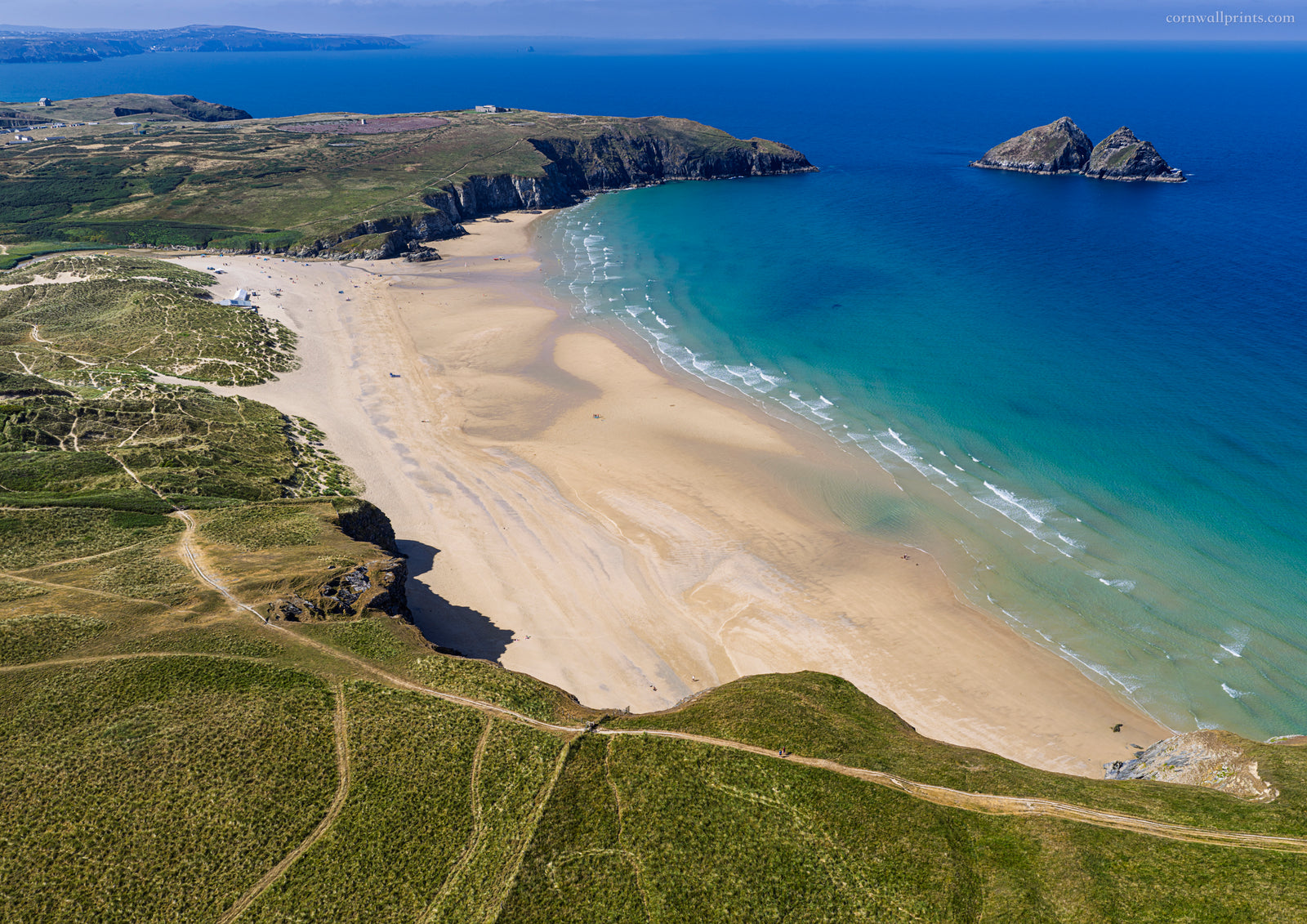
Holywell Bay, near Newquay
On This Page
- Holidays in Holywell Bay
- Best Time to Visit
- The Beach & the Gull Rocks
- The Dunes, Kelsey Head & Cubert Common
- The Holy Wells
- Holywell Bay Filming Guide
- Things to Do in Holywell Bay
- History of Holywell Bay
- Key Buildings & Landmarks
- Notable People
- Local Events
- Places near Holywell Bay
- Visitor Information
- Stay & Explore near Holywell Bay
- Family Holidays & Short Breaks
- Frequently Asked Questions
HOLIDAYS IN HOLYWELL BAY
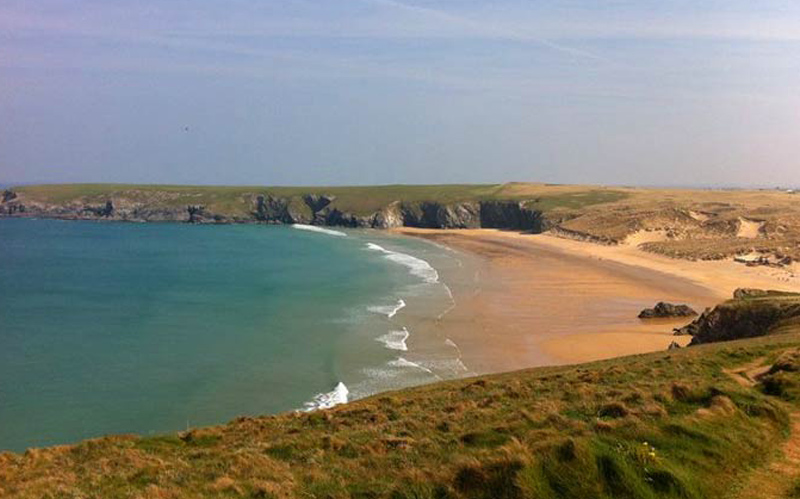
Holywell Bay is one of the great beaches of the North Cornwall coast – a broad sweep of golden sand between the headlands of Kelsey Head to the north and Penhale Point to the south, backed by towering sand dunes and looking out to the twin Gull Rocks just offshore. The small village of Holywell sits at the head of the valley behind the beach, about five miles south-west of Newquay and five miles north of Perranporth, in the parish of Cubert.
Most of the coast here belongs to the National Trust, and it feels wonderfully unspoilt. At low tide the sand stretches for the best part of a mile, a shallow stream winds across the beach – a favourite paddling spot for small children – and rock pools appear beneath the cliffs. The beach faces the open Atlantic, so the surf is reliable, and RNLI lifeguards patrol in season.
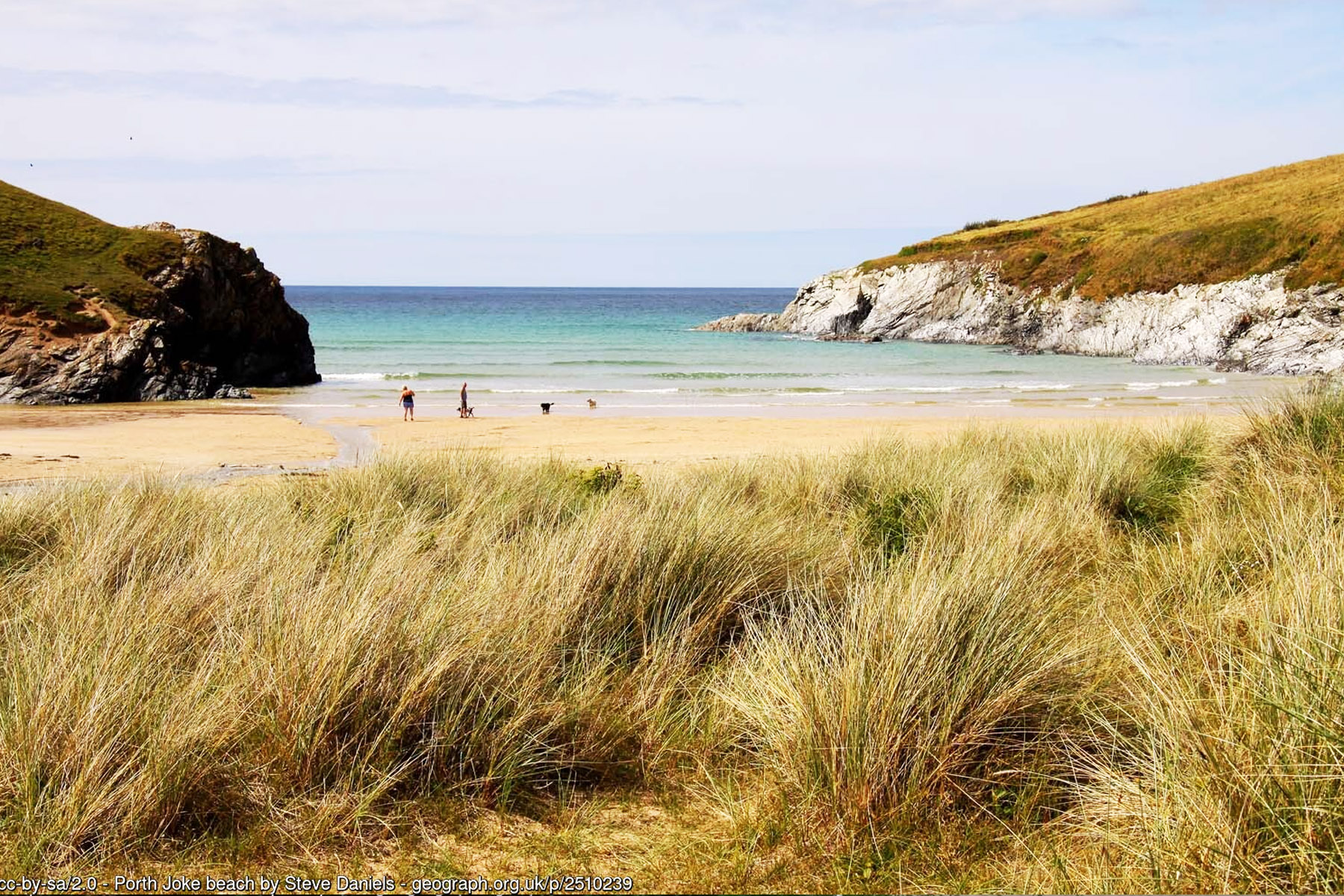
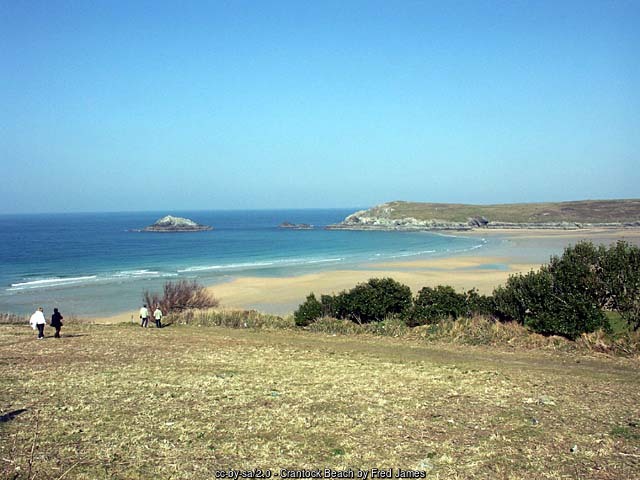
Behind the beach rise the dunes of Holywell and Penhale, part of one of the largest dune systems in Britain, criss-crossed by sandy paths and rich in wildflowers and insects. The South West Coast Path runs over Kelsey Head to Porth Joke and Crantock in one direction, and around Penhale Point towards Perranporth in the other.
The bay takes its name from its holy wells. One, linked with St Cubert, lay in a colourful sea cave at the northern end of the beach, visited by pilgrims for centuries until a great rockfall buried its entrance in August 2026; another, with a stone well-house, survives inland near the golf course. Holywell Bay is also a famous filming location, from the opening of the James Bond film Die Another Day to Poldark and House of the Dragon.
The village is small but well equipped for a seaside holiday, with two pubs – the thatched Treguth Inn and St Piran’s Inn near the beach – beach shops, a National Trust car park and the golf courses at Trevornick. Large holiday parks surround the village, and Newquay, Crantock and Perranporth are all a short drive away.
Holiday accommodation ranges from cottages and apartments to holiday parks, touring and camping sites – see Holywell Bay holiday cottages and holidays and short breaks in Holywell Bay.
Best Time to Visit Holywell Bay
Late spring and early summer bring wildflowers to the dunes and Cubert Common and quieter sands before the school holidays. July and August are the busiest months, with lifeguards on duty, surf schools in full swing and the holiday parks at their liveliest – arrive early for the car park on hot days.
September is a lovely time to visit, with warm seas, good surf and space on the beach. In autumn and winter Holywell Bay is wild and beautiful, perfect for long dune walks with the dog; many beach businesses close out of season, so check before you travel.
↑ Back to top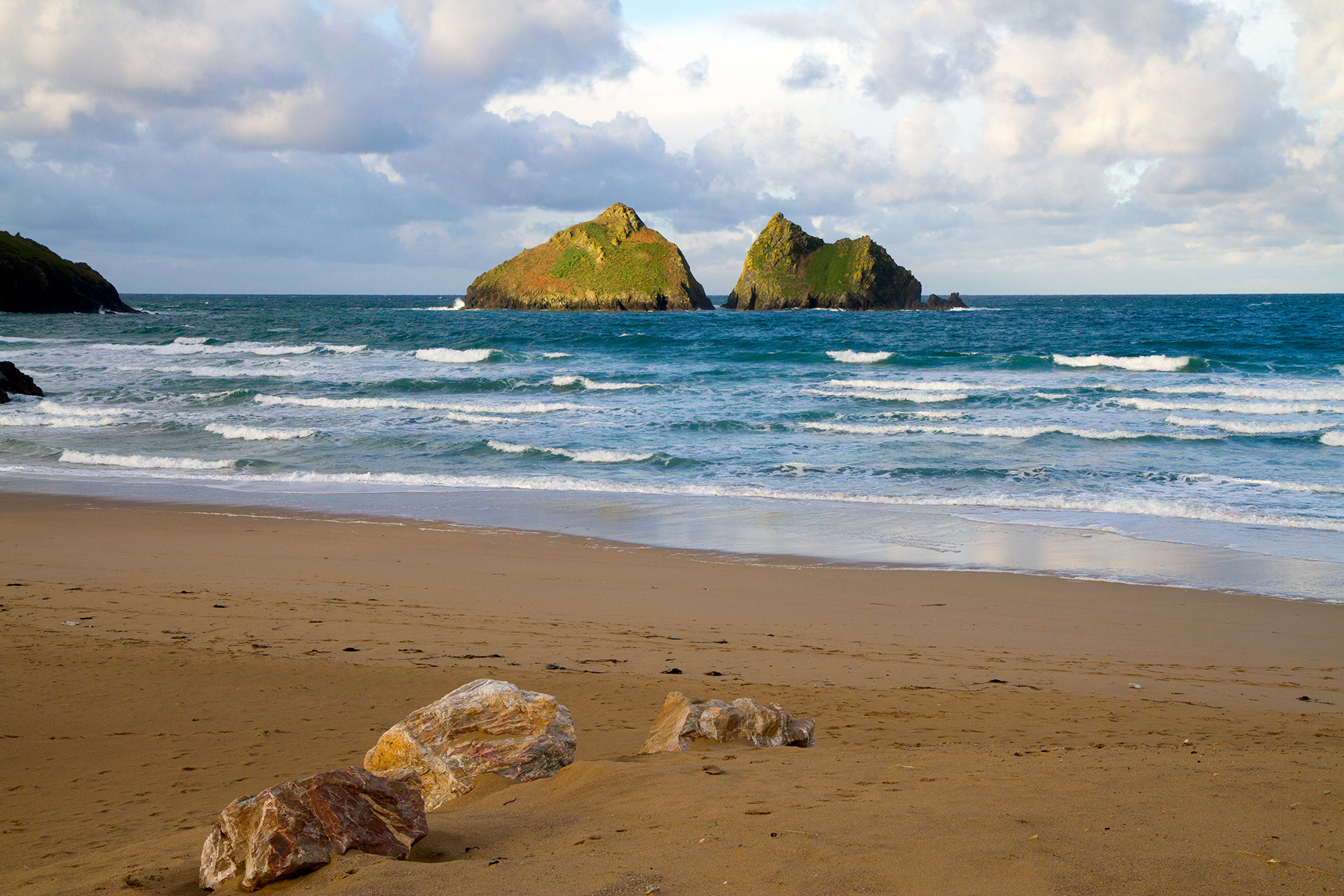
HOLYWELL BAY BEACH & THE GULL ROCKS
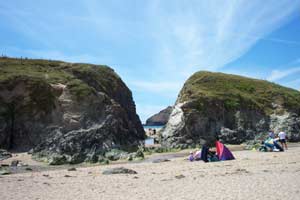
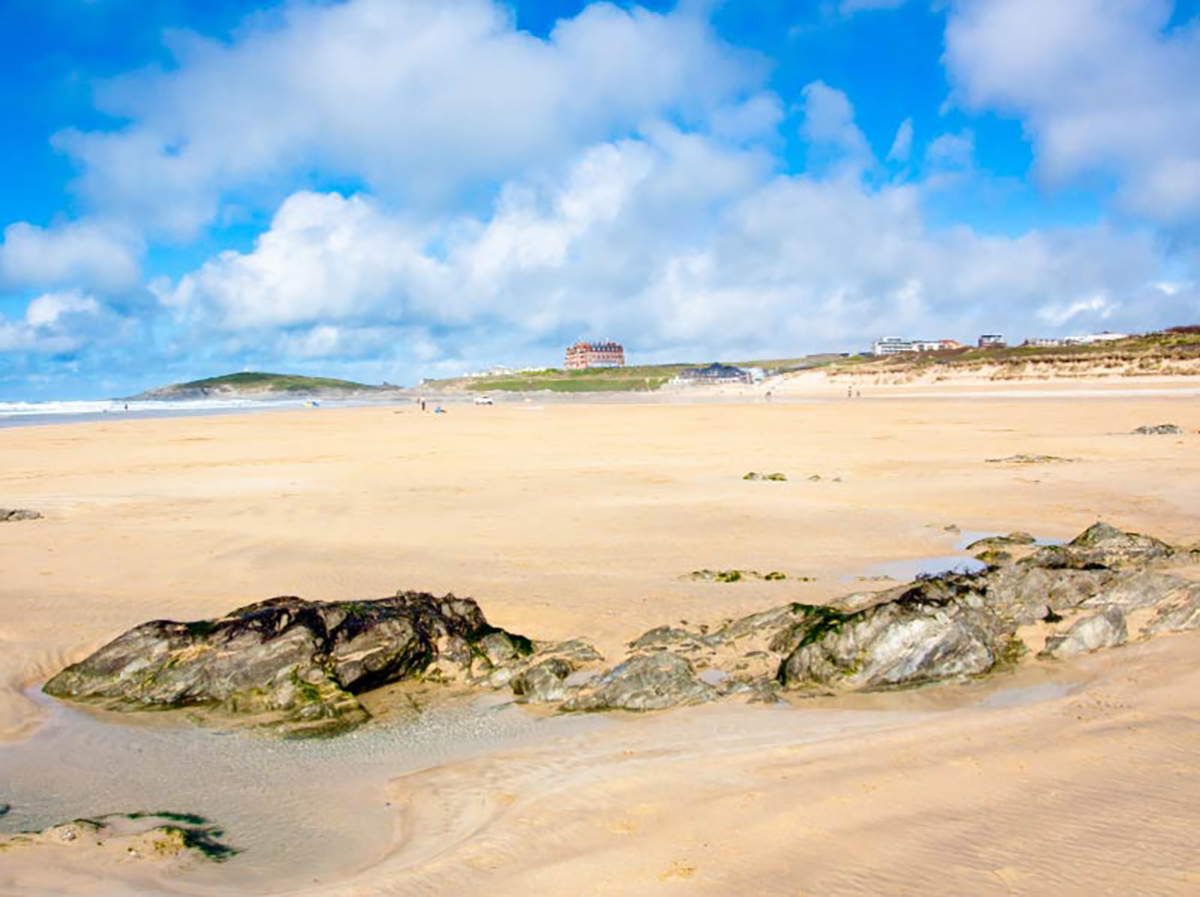
Holywell Bay beach faces west into the open Atlantic between Kelsey Head and Penhale Point. It is reached from the National Trust car park in the village along a sandy path through the dunes, beside the stream that runs down the valley and spreads out across the sand. At high tide the stream forms a shallow, sheltered pool behind the beach, and at low tide the sands open out into a huge, flat expanse with rock pools under the cliffs.
Off Penhale Point at the southern end of the bay stand the Gull Rocks – also known as Carter’s Rocks, or locally as the Fishtail Rocks because of their shape. Owned by the National Trust, the two jagged islets are a nesting place for gulls and other seabirds, and they make Holywell Bay one of the most instantly recognisable beaches in Cornwall. Seals are often seen around Kelsey Head, and dolphins are sometimes spotted offshore.
Holywell is a popular surf beach, with surf schools and hire on the beach in season and the long-established Holywell Bay Surf Life Saving Club. RNLI lifeguards patrol in the main season: swim and bodyboard between the red and yellow flags, and surf between the black and white chequered flags. Dogs are welcome on the beach all year.
Rip currents and rockfall. Rip currents are a known hazard at Holywell Bay, especially around the stream outflow and the rocks, so always swim at a lifeguarded beach between the flags and never swim alone. After a major rockfall at the northern end of the beach in August 2026, the National Trust asks visitors to stay well back from the affected area, not to walk beneath the cliffs or climb on the fallen rock, and to keep away from the clifftop above.
At low tide the remains of a wreck can sometimes be seen in the sand, generally said to be the steam coaster SS Francia, lost in 1917 soon after leaving Newquay, though accounts of exactly where she sank differ. For full beach details, see our Holywell Bay beach guide.
↑ Back to top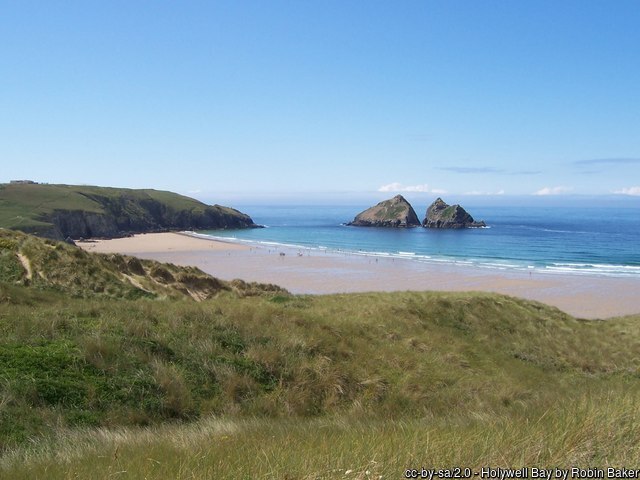
Holywell Bay at a glance
Owner: National Trust
Lifeguards: RNLI, in season
Dogs: welcome all year
Parking: NT car park, TR8 5PF
Facilities: toilets, beach kiosk, surf hire
Surf: exposed Atlantic beach – reliable waves
THE DUNES, KELSEY HEAD & CUBERT COMMON
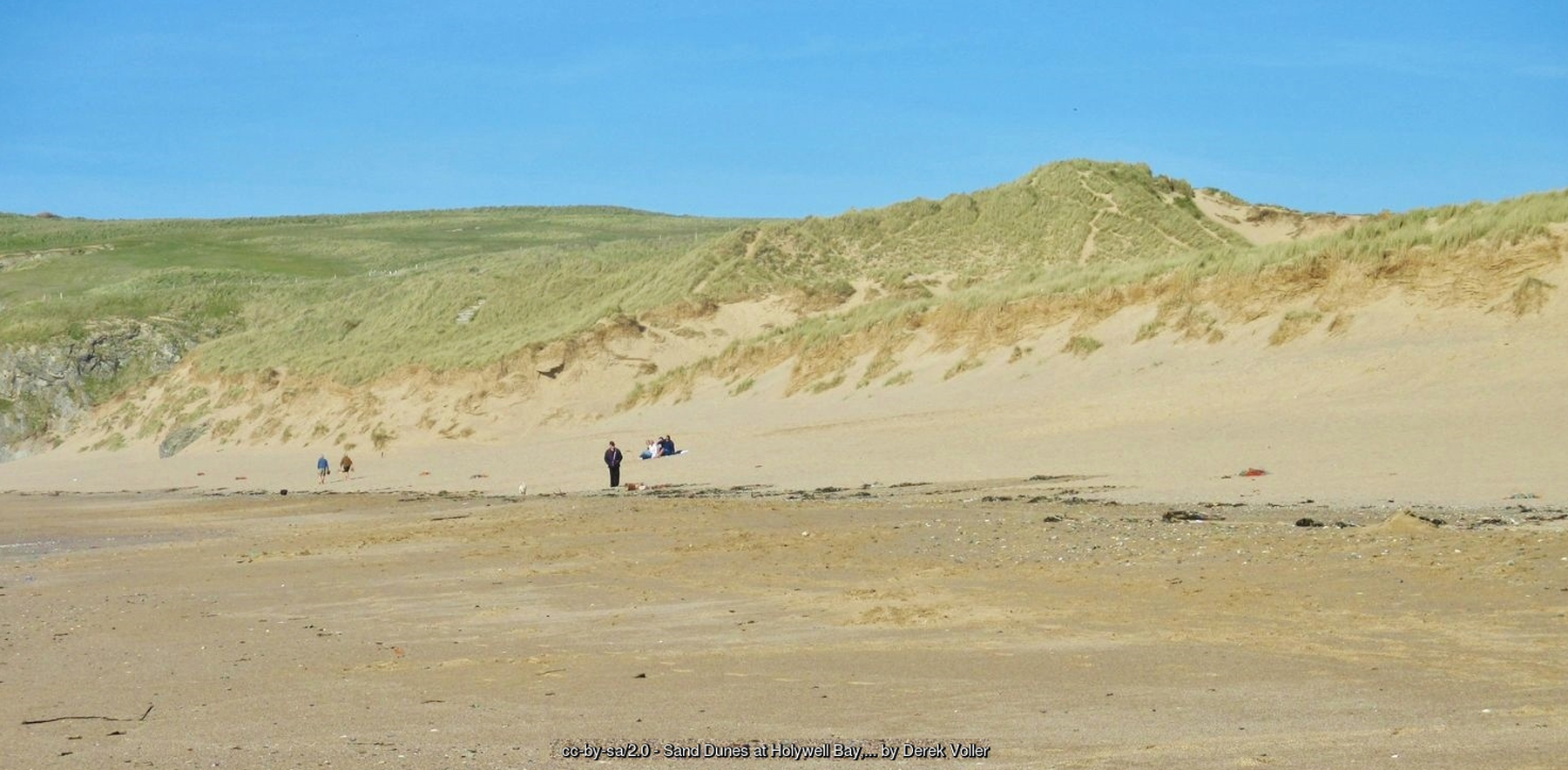
The dunes behind Holywell Bay are part of a vast system of wind-blown sand, thought to have formed around 5,000 years ago, that runs south as Penhale Sands for some two and a half miles to Perranporth. Penhale is one of the largest dune systems in Britain, a Site of Special Scientific Interest and a Special Area of Conservation, home to rare plants and a remarkable variety of butterflies and moths. Close to the beach the dunes are high and mobile; further inland they settle into grassy, flower-rich slopes.
There is no single path through the dunes – as the caption below says, it is a matter of finding your own route – so allow time, wear sensible shoes and keep an eye on small children on the steeper slopes. To the north, the grassy headland of Kelsey Head carries the banks of an Iron Age cliff castle, and beyond it lies the hidden cove of Porth Joke. Inland, Cubert Common is an ancient registered common and SSSI, with a Bronze Age barrow on its southern side.
The National Trust cares for Holywell, Kelsey Head and Cubert Common, and asks visitors to keep dogs under control around the grazing livestock and near the cliff edges. To the south, much of Penhale Sands was for many years an army training area, the former Penhale Camp, and military byelaws still apply in parts of the dunes – keep to the public paths and follow the signs.
↑ Back to top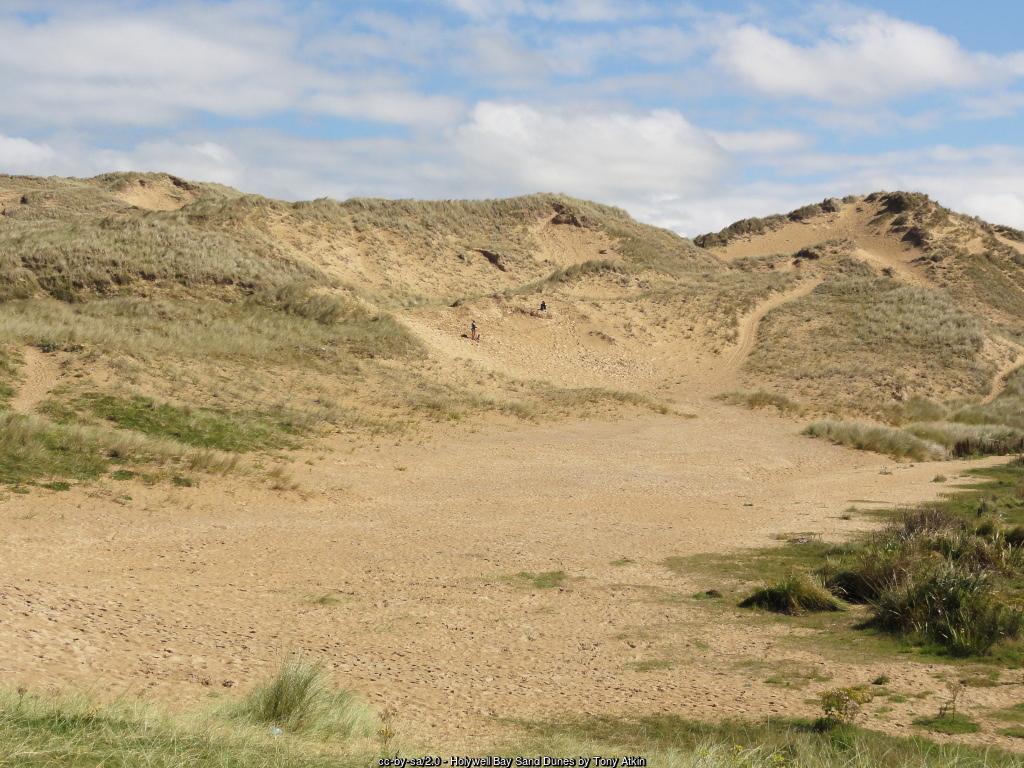
THE HOLY WELLS OF HOLYWELL BAY
Holywell Bay has not one holy well but two, both traditionally linked with St Cubert, the saint of the neighbouring parish. The more famous lay in a sea cave beneath Kelsey Head, at the northern end of the beach, reachable only for a couple of hours around low tide. Inside, a spring trickled down the wall of the cave into a series of small terraced pools, their basins stained white, red, green and purple by the minerals in the water. An 1877 guide described a “pink enamelled basin” formed by drips from the roof, and for centuries parents brought sick children here in the hope of a cure.
On the night of 30 August 2026 a large section of cliff collapsed over the cave, completely burying its entrance. The National Trust says the cave is not accessible and the cliff remains unstable, so visitors should stay well clear of the rockfall. Members of the Holywell Bay Surf Life Saving Club believe the well itself may be preserved behind the fallen rock, but it could be years before the sea clears the debris and anyone knows for sure.
The second well lies inland, hidden by trees in a small gully on the Holywell Bay Golf course at Trevornick, where a stone well-house with a cross marks the spring. Visitors to the golf club can ask for directions.
↑ Back to topHoly well cave closed
The sea cave at the northern end of the beach was buried by a rockfall on 30 August 2026 and is not accessible. Keep well back from the cliffs and the fallen rock.
HOLYWELL BAY FILMING GUIDE
With its huge beach, dunes and the unmistakable Gull Rocks, Holywell Bay has stood in for places all over the world:
- Top Secret! (1984) – the comedy’s “skeet surfing” scene was filmed here, with Holywell Bay standing in for California.
- Die Another Day (2002) – the opening sequence of the James Bond film, in which Bond surfs ashore in North Korea, was filmed at Holywell Bay.
- Poldark (BBC, 2015–2019) – many beach scenes in the series were filmed here.
- And Then There Were None (BBC, 2015) – scenes for the Agatha Christie adaptation were filmed at Holywell.
- House of the Dragon (HBO) – the beach became the shore below High Tide, the Velaryon castle on Driftmark, including Rhaenyra and Daemon’s moonlit beach walk and Aemond claiming the dragon Vhagar in season one, and the cast returned to film season two.
THINGS TO DO IN HOLYWELL BAY
Holywell Bay is a place for simple seaside pleasures – long days on the sand, paddling in the stream, surfing and exploring the dunes – with a good choice of things to do close by when you want a change from the beach.
For families, the stream and rock pools are perfect for young children, the dunes are made for running and rolling, and the golf courses at Trevornick include a pitch and putt and mini golf. On rainy days, the attractions of Newquay, the Lappa Valley Steam Railway and the National Trust’s Trerice are all within easy reach.
For walkers, the coast path north over Kelsey Head to Porth Joke and Crantock, or south around Penhale to Perranporth, gives some of the finest coastal walking in Cornwall. Here are some of the best things to do in and around Holywell Bay.
- Spend a day on Holywell Bay beach – surfing, paddling and rock pooling. Holywell Bay beach guide.
- Learn to surf with one of the surf schools on the beach – see our Newquay surf guide.
- Explore the dunes and the wildflowers of Cubert Common.
- Walk over Kelsey Head to the Iron Age cliff castle and down to Porth Joke.
- Carry on to Crantock along the coast path – see our Crantock guide.
- Play golf at Holywell Bay Golf, with an 18-hole par 3 course, a pitch and putt and mini golf – see our Cornwall golf guide.
- Visit the film locations of Poldark, Die Another Day and House of the Dragon.
- Visit Trerice, the Elizabethan manor house of the National Trust – Trerice guide.
- Ride the Lappa Valley Steam Railway near St Newlyn East – Lappa Valley guide.
- Spend a day in Newquay or Perranporth, each about five miles away.
HISTORY OF HOLYWELL BAY
People have lived on this coast for thousands of years. Worked flints of the Mesolithic and Neolithic have been found near Kelsey Head, a Bronze Age barrow stands on Cubert Common, and the ramparts of an Iron Age cliff castle survive on the headland. The village’s Cornish name is Tregew, and the bay itself was known as Porth Heylyn.
The parish takes its name from St Cubert, said to have been a Welsh missionary who came to Cornwall with St Carantoc of Crantock, and the holy wells of Holywell were long associated with him. Pilgrims visited the cave well through the Middle Ages, and later travellers and writers described its coloured pools. For centuries the area was farmland: the Treguth Inn began life as a farmhouse in the early 17th century.
In the 20th century Holywell changed again. In 1939 an army anti-aircraft training camp was set up at Penhale, on the dunes to the south; on 7 June 1940 a single German bomber attacked it, killing 22 soldiers, and in 1943 American army engineers were based there in preparation for D-Day. The camp closed in 2010. Meanwhile, holiday parks, surf culture and, more recently, film crews have made Holywell Bay one of the best-known beaches in Cornwall.
↑ Back to topHolywell Bay – key dates
Iron Age – cliff castle on Kelsey Head
Early 1600s – Treguth farmhouse built (now the inn)
1917 – loss of the SS Francia
1939 – Penhale army camp opens
1940 – air raid on Penhale Camp
2002 – Die Another Day filmed
2026 – rockfall buries the holy well cave
KEY BUILDINGS & LANDMARKS
- The Treguth Inn – a Grade II listed thatched inn of slate rubble and cob, built as a farmhouse in the early 17th century and extended later in the same century, with an old cloam oven in the fireplace.
- The Gull Rocks (Carter’s Rocks) – the twin rocky islets off Penhale Point, owned by the National Trust and a nesting site for seabirds.
- Kelsey Head cliff castle – the earthworks of an Iron Age promontory fort on the headland north of the beach.
- The holy well cave – St Cubert’s well in the sea cave beneath Kelsey Head, buried by a rockfall in August 2026.
- The inland holy well – a stone well-house with a cross in a gully on the Holywell Bay Golf course.
- St Cubert’s Church, Cubert – the parish church, dating from the 13th century and largely rebuilt in the 15th, whose spire is a landmark for miles around.
NOTABLE PEOPLE CONNECTED WITH HOLYWELL BAY
- St Cubert – the saint of the parish, said to have come from Wales with St Carantoc; the holy wells of Holywell are traditionally linked with him.
- W. J. Burley (1914–2002) – the Falmouth-born crime writer, creator of Detective Superintendent Charles Wycliffe, whose novels became the ITV series Wycliffe; he lived at Holywell until his death.
- Thomas Hosken (17th century) – the Cornish wrestler from Cubert, described as “the strongest man in the county”, who beat the champion Lyttelton Weynorth.
LOCAL EVENTS
Holywell is a quiet place, but there is plenty going on nearby through the year, from the old parish feast at Cubert to the big summer festivals of Newquay.
- St Cubert’s Feast (the Sunday after 4 October) – the parish feast of Cubert.
- Crantock Bale Push (September, a Friday evening) – bale racing and fun in the next village along the coast; see our Crantock guide.
- Boardmasters (early August) – the surf, skate and music festival in nearby Newquay.
- Royal Cornwall Show (June) – the county’s great agricultural show at Wadebridge.
Dates change from year to year – check our Cornwall events guide for current dates.
↑ Back to top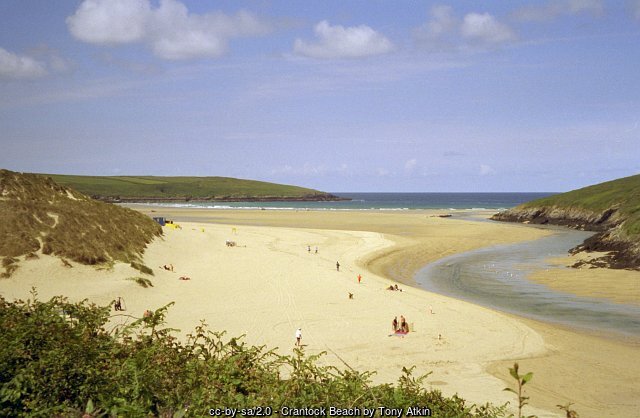
PLACES NEAR HOLYWELL BAY
- Crantock – the old village and National Trust beach on the Gannel, about 3 miles north by the coast path.
- Porth Joke – the hidden cove just over Kelsey Head.
- Newquay – Cornwall’s surf capital, about 5 miles north-east.
- Perranporth – three miles of sand beyond the Penhale dunes, about 5 miles south.
- St Agnes – the old mining village and its cove, further down the coast.
- Cubert – the parish village, about 1½ miles inland, with St Cubert’s Church.
VISITOR INFORMATION
Parking & EV Charging
The National Trust car park (TR8 5PF) is a short walk from the beach and open from 7am to 11pm, with no overnight parking or camping. National Trust members park free, and parking is free with a clearly displayed Blue Badge. The car park fills quickly on summer days.
Electric vehicle charging:
- Trevornick Holiday Park, Holywell Road – fast chargers (7kW), TR8 5PW – check access before you travel
- Crantock Village Hall car park, Halwyn Road – fast chargers (7kW and 22kW, Tap Electric app), TR8 5FR
- Texaco Gannel, A392, Newquay – ultra-rapid charger (Forward EV), TR7 2HS
Bus & Train
Transport for Cornwall bus route 85 links Newquay with Crantock, Cubert and Holywell Bay (stop at the Treguth Inn), then runs on via St Newlyn East to Truro, roughly hourly during the day. The nearest station is Newquay, about 5 miles away. Check timetables before you travel.
Facilities & Supermarkets
Public toilets are on the approach road to the car park, where the accessible toilet with baby-changing is open all year. The village has seasonal beach shops, and the holiday parks have their own shops. There is no supermarket in Holywell; the nearest are in Newquay, about 5 miles away:
- Morrisons – Treloggan Road, Newquay TR7 2GZ
- Aldi – Cliff Road, Newquay TR7 2NE
- Sainsbury’s – The Whim, Alma Place, Newquay TR7 1NF
- Asda – Oakleigh Terrace, Newquay TR7 1RN
Cafés & Restaurants
The thatched Treguth Inn in the village and St Piran’s Inn, closer to the beach, both serve food. On the beach, the independent Imi Ola kiosk sells food and drinks in season, and the holiday parks have their own bars and restaurants. There are more pubs in Cubert and plenty of choice in Newquay and Crantock.
Health
The nearest GP practices are in Newquay: Newquay Health Centre, St Thomas Road TR7 1RU, and Narrowcliff Surgery, Narrowcliff TR7 2QF. The Minor Injury Unit at Newquay Community Hospital is temporarily closed (update of 30 October 2026); the nearest open units are at Bodmin, St Austell and Camborne Redruth. Call NHS 111 for urgent advice and 999 in an emergency – ask for the Coastguard at sea or on the cliffs. The nearest A&E is the Royal Cornwall Hospital, Truro.
Disabled Access
The National Trust car park has Blue Badge parking, which is free with a displayed badge, and there is an accessible toilet. The path from the car park to the beach is uneven and the sand is soft, so wheelchair access onto the beach is difficult. Some coastal and inland paths have steps.
Vets & Dogs
The nearest vets are in Newquay, including NewquayVet, 21–22 Treloggan Trade Park, Newquay TR7 2QL. Dogs are welcome on Holywell Bay beach all year; keep them under control around the livestock on Cubert Common and near the cliff edges.
National Trust & English Heritage
The National Trust cares for Holywell Bay, the dunes, Kelsey Head, Cubert Common and the Gull Rocks, as well as Crantock, Porth Joke and Trerice, the Elizabethan manor near Newquay. Further afield are Lanhydrock near Bodmin and Restormel Castle (English Heritage) near Lostwithiel.
Attractions
The beach, the dunes and the coast path on the doorstep, with Holywell Bay Golf at Trevornick (an 18-hole par 3 course, pitch and putt and mini golf – see our Cornwall golf guide), Trerice, the Lappa Valley Steam Railway and the attractions of Newquay a short drive away.
STAY & EXPLORE NEAR HOLYWELL BAY
Local Attractions
FAMILY HOLIDAYS & SHORT BREAKS IN HOLYWELL BAY
Family holidays in Holywell Bay are about big skies and simple fun – a huge beach with RNLI lifeguards in season, a shallow stream that is perfect for paddling, rock pools at low tide, dunes to explore and surf lessons for older children. The holiday parks around the village add swimming pools, play areas and entertainment, and there is golf, pitch and putt and mini golf on the doorstep.
Holywell Bay holiday cottages and apartments put the beach within walking distance, while lodges, static caravans and camping pitches in the holiday parks suit every budget. Many are dog-friendly – ideal with a beach where dogs are welcome all year – and most have parking.
Holywell Bay is also a great choice for a short break or weekend away, especially in spring and autumn, when the beach and dunes are quiet and the coast path is at its best. Booking direct with the owner means no agency fees.
Browse Holywell Bay holiday cottages, or holidays and short breaks in Holywell Bay for every type of accommodation – holiday parks, B&Bs, camping and glamping – all listed on Cornwall Online by their owners.
↑ Back to topFREQUENTLY ASKED QUESTIONS ABOUT HOLYWELL BAY
Holywell Bay is on the North Cornwall coast, about five miles south-west of Newquay and five miles north of Perranporth, in the parish of Cubert. The beach lies between Kelsey Head to the north and Penhale Point to the south, with the small village of Holywell behind it.
The bay is named after its holy wells, traditionally linked with St Cubert. The best known was a spring in a colourful sea cave at the northern end of the beach, visited by pilgrims for centuries; another, with a stone well-house, lies inland on the Holywell Bay Golf course.
Not at present. A large rockfall on 30 August 2026 completely buried the entrance to the cave at the northern end of the beach. The National Trust says the cliff is unstable and asks visitors to stay well back from the affected area and not to climb on the fallen rock.
Yes. Dogs are welcome on Holywell Bay all year round. The National Trust asks owners to keep them under control, especially around the livestock grazing on Cubert Common and near the cliff edges.
RNLI lifeguards patrol Holywell Bay in the main season, so swim and bodyboard between the red and yellow flags. Rip currents are a known hazard, particularly around the stream outflow and the rocks, so never swim alone and stay out of the water when the lifeguards are not on duty unless you are experienced.
The National Trust car park (postcode TR8 5PF) is a short walk from the beach and open from 7am to 11pm, with no overnight parking. National Trust members park free, and parking is also free with a clearly displayed Blue Badge.
The twin islets off Penhale Point, at the southern end of the bay, are the Gull Rocks, also known as Carter’s Rocks or locally as the Fishtail Rocks. They belong to the National Trust and are a nesting place for gulls and other seabirds.
Holywell Bay has appeared in the comedy Top Secret! (1984), the opening sequence of the James Bond film Die Another Day (2002), BBC’s Poldark and And Then There Were None, and HBO’s House of the Dragon, where it became the beach below the Velaryon castle of High Tide.
Yes. Transport for Cornwall bus route 85 runs between Newquay and Truro via Crantock, Cubert and Holywell Bay, roughly hourly during the day, with a stop at the Treguth Inn. Check the current timetable before you travel.