Holidays in Bodmin, Cornwall – Bodmin Jail, County Town & Bodmin Moor

Bodmin in North Cornwall
North Cornwall Towns and Villages | Padstow | Wadebridge | The Camel Estuary | Rock | Daymer Bay | Polzeath | Port Isaac | Trebarwith Strand | Tintagel | Bossiney Cove | Rocky Valley | Boscastle | Crackington Haven | Bude | Launceston | Camelford | Altarnum | Bodmin |
On This Page
- Holidays in Bodmin
- Best Time to Visit
- Bodmin Jail
- Bodmin Gaol & Executions in Cornwall
- The Old County Town & Shire Hall
- Things to Do in Bodmin
- Bodmin Moor, Cardinham & the Camel Trail
- History of Bodmin
- Key Buildings & Landmarks
- Notable People
- Local Events & Bodmin Riding
- Places near Bodmin
- Visitor Information
- Stay & Explore near Bodmin
- Family Holidays & Short Breaks
- Frequently Asked Questions

HOLIDAYS IN BODMIN
Bodmin is the historic heart of Cornwall – the old county town, set on the south-western edge of Bodmin Moor, almost exactly midway between the north and south coasts. Its Cornish name, Bosvena, comes from the monks’ dwelling that grew up around the monastery founded here by St Petroc in the 6th century, and Bodmin was the only large Cornish town recorded in the Domesday Book.
For centuries Bodmin was the place where Cornwall’s law was made and enforced. The assizes sat in the Shire Hall, the county regiment was based at the Keep, and on the edge of the town stood the grim walls of Bodmin Jail, where public hangings drew crowds of thousands. Today the jail is one of Cornwall’s best-known visitor attractions, and the town’s fine granite buildings tell the story of its past.
Bodmin is also a superb base for exploring. The Camel Trail runs along the river on the edge of the town, the steam trains of the Bodmin & Wenford Railway leave from Bodmin General station, and the great National Trust house of Lanhydrock lies just to the south. Bodmin Moor, with its tors, stone circles and wild open spaces, begins on the town’s doorstep, and the A30 puts both coasts within easy reach.
The town centre is a lively mix of shops, arcades, cafés and pubs, with supermarkets and practical services close by, making Bodmin a good-value base for a holiday. Above it all, on Bodmin Beacon, the 44-metre Gilbert Monument looks out over the town and the moor, and the great parish church of St Petroc, the largest in Cornwall until Truro Cathedral was built, stands at its heart.
From Bodmin, Wadebridge and Padstow are a short drive or bike ride away along the Camel Trail, the beaches of Polzeath and Rock are around half an hour north, and Fowey, the Eden Project and the south coast are a similar distance south. Holiday accommodation ranges from town-centre B&Bs to farmhouses, cottages, holiday parks and campsites on the edge of the moor – see self-catering in Bodmin and all holiday accommodation in Bodmin.
Best Time to Visit Bodmin
Bodmin is a year-round destination. Spring brings bluebells to Cardinham Woods and lambs to the moorland farms, and is a lovely time for walking and cycling. Early July sees the town celebrate Bodmin Riding and its heritage festival, while high summer is the busiest time on the Camel Trail and the steam railway.
Autumn is perfect for walking on Bodmin Moor, when the bracken turns gold and the crowds have gone. In winter the jail, the museums and the town’s indoor attractions come into their own, and the steam railway runs special festive trains. Because Bodmin is inland, it makes a good choice when the weather on the coast is wild.
↑ Back to top
BODMIN JAIL
Bodmin Jail was built in 1779 to a design by Sir John Call, partly by prisoners of war, and was the first prison in Britain to hold its inmates in individual cells – although in practice several prisoners often shared a cell. It was rebuilt and enlarged in the 19th century, and from 1887 part of it served as a Royal Naval prison.
During the First World War the jail held some of Britain’s most precious state papers and records, including the Domesday Book, and according to tradition the Crown Jewels were also hidden here. The prison closed in 1927, and many of its buildings fell into ruin. Today the restored jail is a major visitor attraction, telling the story of crime and punishment in Cornwall through its dark corridors, cells and exhibitions, while another part of the old prison has been converted into a hotel, which opened in 2021.
The jail lies on Berrycoombe Road, a few minutes’ walk from the town centre and close to the end of the Camel Trail. There is no parking on site: use the pay-and-display Berrycoombe car park nearby. Some areas involve steps and uneven floors. See our Bodmin Jail guide for more details.
↑ Back to top


BODMIN GAOL & EXECUTIONS IN CORNWALL
Between 1735 and 1909 about 85 men and women were hanged in Cornwall. In the 18th century executions took place at the two assize towns – at Launceston, on the Castle Green or St Stephen’s Down, and at Bodmin on the edge of the town – but from 1802 they were carried out at the new county gaol in Bodmin, at first in public outside the prison walls. The first hangings there, of John Vanstone and William Lee for a burglary at Poughill, took place on 1 September 1802, and the last hanging at Launceston was in 1821.
The crowds could be enormous. On 13 April 1840 around 25,000 people came to see the brothers William and James Lightfoot hanged for the murder of Nevell Norway, a Wadebridge merchant robbed on the road from Bodmin, and special trains ran from Wadebridge on the new railway. In August 1844 Matthew Weeks, convicted at the Shire Hall of murdering Charlotte Dymond on Bodmin Moor, was hanged here. In the 18th century most people hanged in Cornwall had been convicted of crimes such as sheep stealing, burglary or even stealing from wrecks, but after 1834 only murderers were executed.
The last public execution in Cornwall was that of John Doidge in 1862, watched by several thousand people. After the 1868 Act, executions took place inside the prison: Selina Wadge was the first to be hanged privately at Bodmin, in 1878, a purpose-built execution shed was added in 1897, and the last person hanged in Cornwall was William Hampton, on 20 July 1909. For a fuller list of Cornish cases, see our page on executions in Cornwall.
↑ Back to topExecutions at Bodmin – key dates
1802 – first hangings at the new gaol
1840 – the Lightfoot brothers, watched by about 25,000
1844 – Matthew Weeks, for the murder of Charlotte Dymond
1862 – John Doidge, the last public execution
1878 – Selina Wadge, the first private execution
1909 – William Hampton, the last execution in Cornwall
THE OLD COUNTY TOWN & SHIRE HALL
Bodmin became Cornwall’s assize town in 1838, when the courts moved from Launceston, and the handsome granite Shire Hall on Mount Folly was opened for them in the same year. For 150 years the county’s most serious cases were tried here, until the courts moved to Truro in 1988. Bought by the town council in 1994 and restored, the Shire Hall was reopened by Queen Elizabeth II in 2000, with one courtroom restored to its original condition. Today it is home to Bodmin Town Council, and parts of the building are open to the public.
The restored courtroom has been used for the Charlotte Dymond Courtroom Experience, in which visitors sit in the dock and the jury box as the famous 1844 trial of Matthew Weeks is recreated – and decide for themselves whether the verdict was right. Check opening times before you visit. Close by on Mount Folly, the Bodmin Town Museum tells the story of everyday life in the town from early times to the mid-20th century, with displays including a Victorian Cornish kitchen and a blacksmith’s forge.
Another reminder of Bodmin’s role as county town is the Keep, built in 1859 as a depot for the Cornish militia and from the 1880s the headquarters of the Duke of Cornwall’s Light Infantry. It is now Bodmin Keep: Cornwall’s Army Museum, telling more than 300 years of the county’s military history through uniforms, medals, weapons and personal stories. See also our Courtroom Experience guide.
↑ Back to top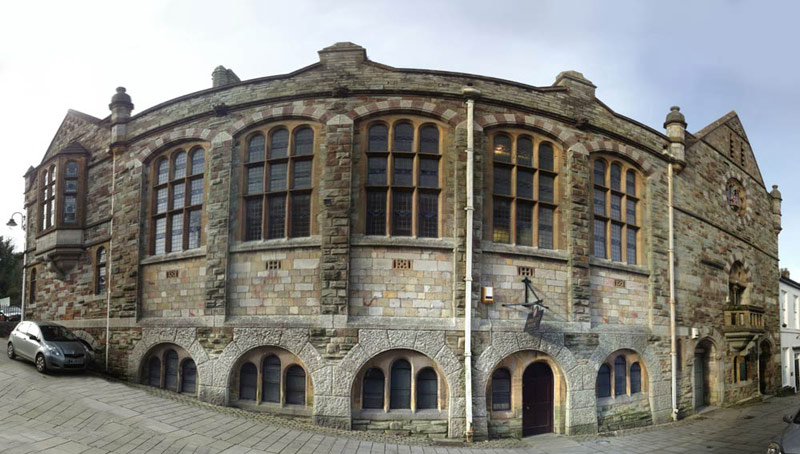
THINGS TO DO IN BODMIN
Bodmin has more to see than many visitors expect. The town’s history is everywhere, from the medieval church of St Petroc to the Victorian granite of the Shire Hall and the Keep, and a walk up Bodmin Beacon gives wonderful views across the town to the moor and, on a clear day, both coasts.
For families, the steam trains of the Bodmin & Wenford Railway, the trails and play areas of Cardinham Woods and a gentle ride along the Camel Trail are all close at hand, and the jail is a favourite with older children who enjoy a shiver. On rainy days, the jail, the Shire Hall, the town museum and Bodmin Keep make a full day out.
Further afield, Lanhydrock, Pencarrow House, the Camel Valley vineyard at Nanstallon and the wild tors of Bodmin Moor are all within a few miles. Here are some of the best things to do in and around Bodmin.
- Explore Bodmin Jail – Cornwall’s historic county gaol. Bodmin Jail guide.
- Ride a steam train on the Bodmin & Wenford Railway from Bodmin General.
- Visit the Shire Hall, where Matthew Weeks was tried in 1844 – see our Courtroom Experience guide.
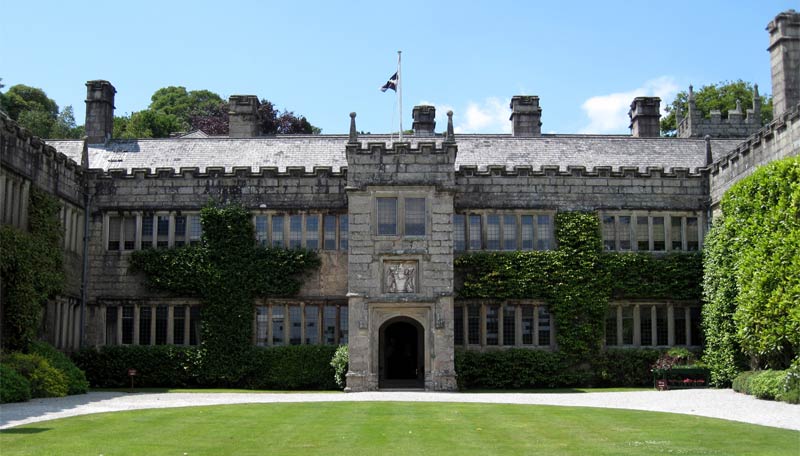
- Visit Lanhydrock, the great Victorian country house and gardens of the National Trust – Lanhydrock guide.
- Cycle or walk the Camel Trail to Wadebridge and Padstow, or north to Wenfordbridge – Camel Trail guide.
- Walk in Cardinham Woods, with waymarked trails, cycle routes and a woodland café.
- Climb Bodmin Beacon to the Gilbert Monument for views over the town and moor.
- Discover Bodmin Keep, Cornwall’s Army Museum.
- See St Petroc’s Church and its 12th-century ivory casket.
- Explore Bodmin Moor – Rough Tor, Brown Willy, Jamaica Inn and the moorland villages.
Bodmin & Wenford Railway
Steam and diesel heritage trains on about 6½ miles of line between Bodmin Parkway, Bodmin General and Boscarne Junction on the Camel Trail. Trains run on selected days – check the timetable before you travel.
BODMIN MOOR, CARDINHAM & THE CAMEL TRAIL
Bodmin Moor begins just to the north and east of the town – a wild granite upland of tors, heather and rough grazing, dotted with Bronze Age stone circles, hut circles and old tin workings. Its highest points, Rough Tor and Brown Willy, the highest hill in Cornwall, rise above Camelford, and on the A30 across the moor stands Jamaica Inn at Bolventor, made famous by Daphne du Maurier’s novel. Near Rough Tor Ford a memorial marks the place where Charlotte Dymond was murdered in 1844.
On the edge of the town, Cardinham Woods are a favourite for family walks and mountain biking, with waymarked trails through deep, wooded valleys. To the west, the Camel Trail follows the River Camel past the town on its way from Wenfordbridge to Wadebridge and Padstow, and the large Scarletts Well car park makes Bodmin an easy place to start. At Boscarne Junction the trail meets the Bodmin & Wenford Railway.
Walkers on the moor should be well prepared: weather can change quickly, paths are often boggy, and mist can make navigation difficult. Take a map, warm and waterproof clothing and good boots, keep dogs under close control near the ponies and grazing animals, and leave gates as you find them. English Heritage cares for several ancient monuments on the southern side of the moor, including the Hurlers stone circles and Trethevy Quoit.
↑ Back to top

HISTORY OF BODMIN
According to tradition, St Petroc founded a monastery at Bodmin in the 6th century, and the town grew up around it. The monastery was one of the most important religious houses in Cornwall, and Bodmin was the only large Cornish settlement recorded in the Domesday Book of 1086. In the Middle Ages it became a prosperous market and church town, with an Augustinian priory and a Franciscan friary.
Bodmin was at the centre of three Cornish uprisings. In 1497 the Bodmin lawyer Thomas Flamank and the blacksmith Michael An Gof led a march on London against royal taxation; later the same year the pretender Perkin Warbeck was proclaimed king here; and in 1549 Cornish men gathered at Bodmin at the start of the Prayer Book Rebellion against the new English prayer book. Many lost their lives in the aftermath.
In 1779 the new county gaol was built, and in 1834 the Bodmin & Wadebridge Railway, one of the first steam railways in the world, linked the town with the Camel estuary. Bodmin became the assize town in 1838, the Gilbert Monument was raised on the Beacon in 1857, and the Keep followed in 1859. The main line, however, passed the town by, with its station at Bodmin Road – today’s Bodmin Parkway – several miles away, and over time Truro took over the role of county town. Today Bodmin is a busy market town of around 17,000 people.
↑ Back to top
KEY BUILDINGS & LANDMARKS
- St Petroc’s Church – largely rebuilt in the 15th century, the largest church in Cornwall until Truro Cathedral was built; Grade I listed, and home to a 12th-century ivory casket thought to have held the relics of St Petroc.
- Bodmin Jail (1779) – designed by Sir John Call, the first British prison with individual cells; closed in 1927 and now a visitor attraction and hotel.
- The Shire Hall (1838) – built for the county assizes, reopened in 2000 with a restored courtroom; now home to Bodmin Town Council.
- The Gilbert Monument (1857) – a 44-metre granite obelisk on Bodmin Beacon, in memory of Lieutenant-General Sir Walter Raleigh Gilbert.
- The Keep (1859) – the former militia depot and headquarters of the Duke of Cornwall’s Light Infantry, now Cornwall’s Army Museum.
- Bodmin General Station – the town’s old station, now the headquarters of the Bodmin & Wenford Railway.
NOTABLE PEOPLE CONNECTED WITH BODMIN
- St Petroc (6th century) – the Welsh-born saint said to have founded the monastery at Bodmin; the town’s great church is dedicated to him.
- Thomas Flamank (died 1497) – the Bodmin lawyer who, with Michael An Gof, led the Cornish Rebellion of 1497.
- Sir E. A. Wallis Budge (1857–1934) – the Egyptologist and keeper at the British Museum, born in Bodmin.
- Sir Arthur Quiller-Couch (1863–1944) – the writer and Cambridge professor known as “Q”, born in Bodmin.
- Peter D. Mitchell (1920–1992) – winner of the 1978 Nobel Prize in Chemistry, who carried out his research at the Glynn Research Institute near Bodmin.
LOCAL EVENTS & BODMIN RIDING
Bodmin Riding is one of Cornwall’s oldest customs – a horseback procession around the town in which riders carry two large garlands, held around St Thomas Becket’s Day in early July. Its earliest written record dates from the church rebuilding accounts of 1469–72, and Cornish wrestling has always been part of the celebrations. The custom lapsed in the early 19th century and was revived in 1974; today it forms part of the Bodmin Riding and Heritage festival.
- Bodmin Riding & Heritage festival (early July) – processions, music, dancing and Cornish wrestling.
- Royal Cornwall Show (June) – the county’s great agricultural show at Whitecross, near Wadebridge.
- Steam galas and special trains (various dates) – on the Bodmin & Wenford Railway, including festive trains in December.
- Halloween and seasonal events (autumn) – at Bodmin Jail.
Dates change from year to year – check our Cornwall events guide for current dates.
↑ Back to top
PLACES NEAR BODMIN
- Wadebridge – the market town on the Camel, about 7 miles away by road or 6 miles by the Camel Trail.
- Padstow – the famous harbour town at the mouth of the estuary.
- Polzeath and Rock – sandy beaches and surf on the North Cornwall coast, around half an hour away.
- Camelford – the old market town below Rough Tor and Brown Willy.
- Launceston – Cornwall’s former assize town and ancient capital, with Launceston Castle (English Heritage), along the A30.
- Lostwithiel and Fowey – to the south, with Restormel Castle (English Heritage) above the Fowey valley.


VISITOR INFORMATION
Parking & EV Charging
Town-centre car parks include Fore Street long stay, with the pay-and-display Berrycoombe Road car park handy for Bodmin Jail (no parking at the jail itself) and the large Scarletts Well car park for the Camel Trail. Bodmin is easy to reach by car, just off the A30 and A38.
Electric vehicle charging:
- Berrycoombe Road car park – rapid chargers – one bay for electric taxis, one for all EVs (taxis have priority), PL31 2NS
- Bodmin Retail Park, Launceston Road – ultra-rapid chargers (up to 350kW), PL31 2GA
- Morrisons, Priory Road – fast and rapid chargers (22kW and 50kW), PL31 2ST
- Victoria Square car park – fast chargers (7kW), PL31 1EB
- Bodmin Parkway station – fast chargers (7kW), PL30 4BB
- Lanhydrock (National Trust) – fast chargers (7kW), PL30 5AD
Bus & Train
Bodmin Parkway station, on the main line between Plymouth and Penzance, is about 3½ miles south-east of the town. Go Cornwall Bus route 57 links the station with Bodmin, Wadebridge and Padstow, and heritage trains run from Bodmin Parkway to Bodmin General on operating days.
Facilities & Supermarkets
Public toilets in the town centre, banks, chemists, a post office and a wide range of shops. The town has a leisure centre, and supermarkets include:
- Aldi - Tollgate Rd, Bodmin PL31 2FJ
- Asda - Launceston Rd, Bodmin PL31 2AR
- Lidl - Priory Rd, Bodmin PL31 2AA
- Morrisons - Priory Rd, Bodmin PL31 2ST
- Sainsbury's - Dennison Rd, Bodmin PL31 2SS
- Hafords - Bodmin Retail Park, Launceston Rd, Bodmin PL31 2GA
- B&M - Callywith Retail Park, Forth an Hellier, Bodmin PL31 2GR
Cafés & Restaurants
Cafés, bakeries, pubs and restaurants in the town centre, with dining at Bodmin Jail, a woodland café at Cardinham Woods and plenty of country pubs on the edge of the moor.
Health
Bodmin Community Hospital has a Minor Injury Unit, and the town has several GP practices and pharmacies. Call NHS 111 for urgent advice and 999 in an emergency. The nearest major A&E is the Royal Cornwall Hospital, Truro, with Derriford Hospital, Plymouth, about 30 miles east along the A38.
Disabled Access
The town centre is mostly manageable, though some streets are steep. Historic buildings such as the jail and the town museum have steps and uneven floors, so access may be limited – check with each attraction before you visit. The Camel Trail is flat and surfaced.
Vets
Bodmin has its own veterinary practices, with more in Wadebridge and Liskeard. Use the RCVS directory to find the nearest practice and out-of-hours care.
National Trust & English Heritage
Lanhydrock (National Trust) is just south of the town. English Heritage cares for Restormel Castle near Lostwithiel, Launceston Castle, The Hurlers and Trethevy Quoit on the moor, and the St Breock Downs Monolith near Wadebridge.
Attractions
Bodmin Jail, the Bodmin & Wenford Railway, the Shire Hall, Bodmin Keep, Lanhydrock, Cardinham Woods and the Camel Trail, with the beaches of Polzeath and Padstow around half an hour away.
STAY & EXPLORE NEAR BODMIN
Official Information
FAMILY HOLIDAYS & SHORT BREAKS IN BODMIN
Family holidays in Bodmin offer a bit of everything – steam trains, spooky jail corridors, woodland trails and a traffic-free cycle path, with the beaches of the north and south coasts both within easy reach. Children love the Bodmin & Wenford Railway, the story of Bodmin’s old courts and jail, and the dens and trails of Cardinham Woods, while older children enjoy the shivers of Bodmin Jail.
A self-catering holiday in Bodmin makes a central, good-value base for exploring the whole of Cornwall, with supermarkets and shops on the doorstep and the A30 close by. Holiday cottages around Bodmin range from town houses to farmhouses, barn conversions and dog-friendly cottages on the edge of Bodmin Moor, many with parking, gardens and wide views.
Bodmin is also a great choice for a short break or weekend away, especially out of season, when the moor is quiet and the town’s indoor attractions come into their own. B&Bs, inns, hotels – including the hotel at Bodmin Jail – holiday parks and campsites offer shorter stays, and booking direct with the owner means no agency fees.
Browse self-catering holidays in Bodmin for holiday cottages and apartments, or holidays and short breaks in Bodmin for every type of accommodation – B&Bs, hotels, holiday parks, camping and glamping – all listed on Cornwall Online by their owners.
↑ Back to topFREQUENTLY ASKED QUESTIONS ABOUT BODMIN
Yes. Bodmin Jail, built in 1779 on Berrycoombe Road, is open to visitors as a historic attraction telling the story of crime and punishment in Cornwall, and part of the old prison has been converted into a hotel. There is no parking on site; use the pay-and-display Berrycoombe car park, about five minutes’ walk away.
In 1838 the county assizes moved from Launceston to Bodmin, and the new Shire Hall was opened for the courts. Bodmin remained the county’s assize town until the main courts moved to Truro in 1988, although Cornwall County Council had met in Truro since 1889.
Yes. The Camel Trail runs along the River Camel on the western edge of Bodmin, linking the town with Wadebridge and Padstow to the west and Wenfordbridge on the edge of Bodmin Moor to the north. The large Scarletts Well car park gives easy access to the trail.
Bodmin Parkway, on the main line from London and Plymouth to Penzance, is about 3½ miles south-east of the town. Go Cornwall Bus route 57 links the station with Bodmin, Wadebridge and Padstow, taxis are available, and on operating days the Bodmin & Wenford Railway runs heritage trains from Bodmin Parkway to Bodmin General.
A heritage railway run largely by volunteers, with steam and diesel trains on about 6½ miles of line between Bodmin Parkway, Bodmin General and Boscarne Junction, where it meets the Camel Trail. Services run on selected days, so check the railway’s timetable before you go.
Charlotte Dymond was an 18-year-old servant girl murdered at Roughtor Ford on Bodmin Moor on 14 April 1844. Matthew Weeks was tried at the Shire Hall in Bodmin and hanged at Bodmin Gaol in August 1844. A memorial stands near the ford, and the case is still argued over today.
Bodmin Riding is an ancient horseback procession through the town, held around St Thomas Becket’s Day in early July and now part of the Bodmin Riding and Heritage festival. Its earliest record dates from the 1460s, and it was revived in 1974 after lapsing in the early 19th century.
Yes. Bodmin sits on the south-western edge of the moor, with the A30 giving quick access to Jamaica Inn, Colliford Lake, Rough Tor and Brown Willy, the highest point in Cornwall, while Cardinham Woods and the Camel Trail are right on the town’s doorstep.
North Cornwall Towns and Villages | Padstow | Wadebridge | The Camel Estuary | Rock | Daymer Bay | Polzeath | Port Isaac | Trebarwith Strand | Tintagel | Bossiney Cove | Rocky Valley | Boscastle | Crackington Haven | Bude | Launceston | Camelford | Altarnum | Bodmin |