Penzance, Cornwall – Harbour Town, Promenade, Jubilee Pool & Gateway to the Isles of Scilly
Penzance
Cornwall Online | West Cornwall Towns and Villages | Isles of Scilly | Sennen Cove & Land’s End | Pendeen | St Just | Porthcurno | Lamorna | Mousehole | Newlyn | Penzance | Marazion – St Michael’s Mount | Praa Sands | Porthleven | Gunwalloe – Church Cove | Mullion | Helston | The Lizard Peninsula
On This Page
- Holidays in Penzance
- Best Time to Visit
- Town Centre & Market House
- Chapel Street & the Egyptian House
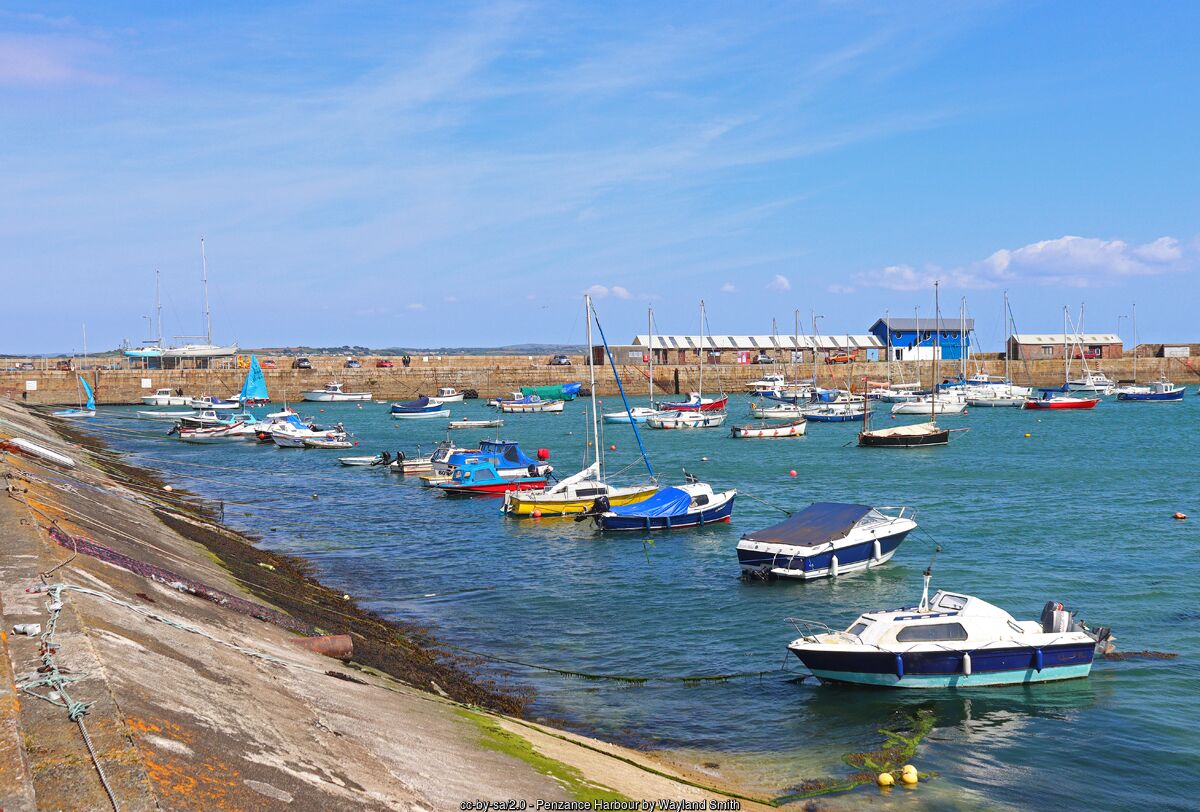
- Penzance Harbour
- Getting to the Isles of Scilly
- Jubilee Pool & the Promenade
- Penlee House & Morrab Gardens
- History of Penzance
- Notable People
- Penzance Beaches
- Walks from Penzance
- Things to Do
- Events & Festivals
- Places near Penzance
- Visitor Information
- Stay & Explore
- Family Holidays & Short Breaks
- Frequently Asked Questions
Penzance at a Glance
The main town of west Cornwall and the most westerly town in England, on the shore of Mount’s Bay. Market charter 1332, incorporated by James I in 1614. Terminus of the main railway line from London Paddington and the port for the Isles of Scilly. Seafront Promenade, the Art Deco Jubilee Pool, Georgian Chapel Street, the Egyptian House, Penlee House gallery and the Golowan and Montol festivals. Population about 20,700 (parish, 2021 census), including Newlyn and Mousehole.
Isles of Scilly ferry – 2027
The Scillonian III made her last sailing in November 2026 after almost 50 years on the route. Her replacement, the new Scillonian IV, is due to start sailing between Penzance and St Mary’s in March 2027. Check sailing times and book with the Isles of Scilly Steamship Group.
HOLIDAYS IN PENZANCE
Penzance is the busy, friendly harbour town at the far end of Cornwall – the last town before Land’s End and the most westerly town in England. It faces south-east across Mount’s Bay to St Michael’s Mount and the Lizard, and is sheltered from the worst of the Atlantic weather by the granite hills of Penwith behind it.
For more than a century Penzance has been the place where holidays in the far west begin and end. The main railway line from London Paddington finishes here, beside the harbour, and the town is the mainland port for the Isles of Scilly, 28 miles out in the Atlantic. In March 2027 a brand-new ship, the Scillonian IV, takes over the crossing from the much-loved Scillonian III, which retired in November 2026.
But Penzance is very much worth a visit for its own sake. Along the seafront the Promenade runs west towards Newlyn, past the Art Deco Jubilee Pool, the UK’s largest seawater lido. Up in the old town, Chapel Street is lined with Georgian and Regency houses, antique shops, historic inns and the extraordinary Egyptian House, while Market Jew Street climbs to the domed Market House and the statue of Penzance’s most famous son, the scientist Sir Humphry Davy.
The town has a strong arts scene, from the Newlyn School paintings at Penlee House to independent galleries and bookshops, and two of Cornwall’s most colourful festivals – Golowan at midsummer and Montol at the winter solstice. The sub-tropical Morrab Gardens, Penlee Park and the gardens around the town show off the famously mild climate.
Penzance makes an excellent base for exploring west Cornwall without a car, with buses to St Ives, Land’s End, Mousehole, Marazion and the Lizard leaving from the bus station next to the railway station.
For somewhere to stay, see Penzance holiday cottages and holidays and short breaks in Penzance.
Best Time to Visit Penzance
Spring sees the gardens at their best, with camellias, magnolias and sub-tropical plants in flower, and the Jubilee Pool opening for the season. Summer brings the Golowan Festival and Mazey Day in late June, the Penzance Literary Festival in July, sea swimming at Battery Rocks and busy sailings to Scilly. Autumn is quieter and still mild, ideal for walking the coast path, while in winter the town celebrates the solstice with the Montol Festival on 21 December and the geothermal pool at the Jubilee Pool stays warm whatever the weather.
If you are travelling to the Isles of Scilly, remember that the passenger ferry only sails in the main season (usually from March to early November); out of season the islands are reached by air.
↑ Back to topPENZANCE TOWN CENTRE – MARKET JEW STREET & THE MARKET HOUSE
The main shopping street of Penzance is Market Jew Street, which climbs from the railway station and the harbour up to the centre of the town. Its odd name has nothing to do with a Jewish market: it is simply the road to Marazion, whose old name, Market Jew, came from the Cornish Marghas Yow, ‘Thursday market’. Along its upper side runs a raised pavement known as the Terrace, lined with shops, banks and cafés.
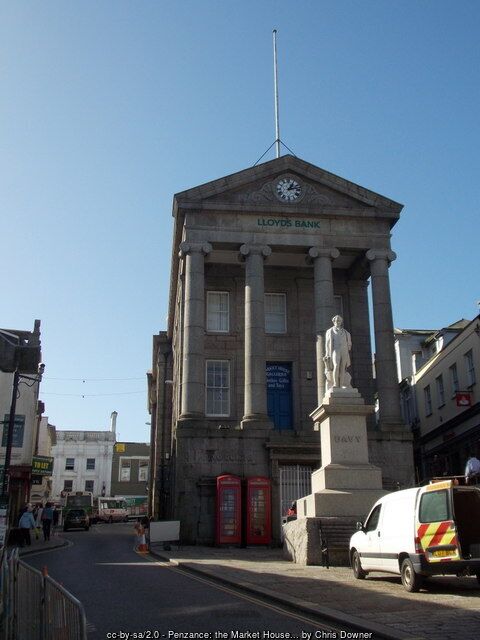
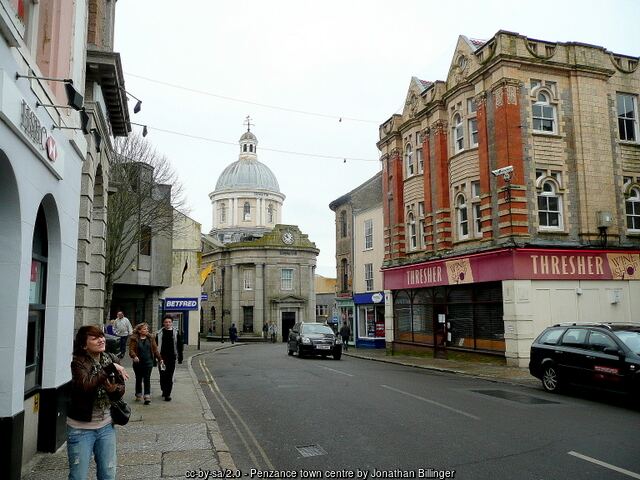
At the top of the street stands the town’s best-known landmark, the granite Market House, with its great portico and leaded dome. Built between 1836 and 1838 to a design by William Harris of Bristol, it was opened on 28 June 1838, the day of Queen Victoria’s coronation. It held the corn and meat markets and the guildhall, and later became a bank. Today it is a Grade I listed building and the focus of the town’s regeneration.
In front of the Market House is the white marble statue of Sir Humphry Davy, erected by public subscription in 1872. Davy, who was born in Market Jew Street in 1778, became one of the most famous scientists of his age – he discovered several chemical elements, experimented with laughing gas and invented the miners’ safety lamp. Look for the statue’s hand resting on his famous lamp.
From the Market House, Causewayhead leads uphill, a narrow pedestrian street full of independent shops, while Chapel Street runs downhill towards the harbour. The streets in between – Parade Street, Queen Street, Bread Street and Alverton Street – are worth exploring for galleries, delis and second-hand bookshops. Wharfside Shopping Centre, by the harbour car park, has high-street stores.
↑ Back to top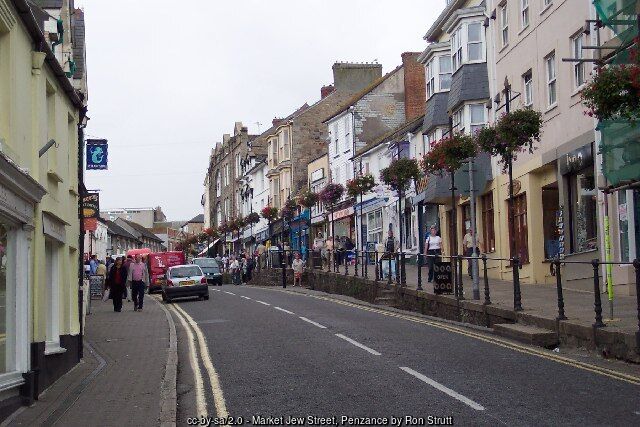
CHAPEL STREET & THE EGYPTIAN HOUSE
Chapel Street was once the main street of Penzance, running from the Market House down to the harbour and St Mary’s church. Today it is the most historic and characterful street in the town, lined with Georgian and Regency houses, antique and vintage shops, restaurants and some of Cornwall’s best-known old inns.
Near the top stands the astonishing Egyptian House, with its painted façade of lotus columns, sphinx-like figures and the Royal Arms. It was created in the mid-1830s by John Lavin, a Penzance bookseller and mineral dealer, as a shop and museum for his mineral collection, at a time when anything Egyptian was the height of fashion. After years of neglect it was bought by the Landmark Trust in 1968 and carefully restored; it is Grade I listed, with shops on the ground floor and holiday apartments above.
Opposite is the Union Hotel, which in 1805 housed the town’s Assembly Rooms. Local tradition says that news of the victory at Trafalgar and the death of Nelson was first announced in Britain here, from the minstrels’ gallery during a ball, after a Penzance fishing boat met the naval schooner HMS Pickle in Mount’s Bay. The hotel also contains a Georgian theatre of the 1780s, though it is not open to the public.
Further down, the Admiral Benbow, with a figure of a smuggler on its roof, is said to have been the haunt of a real-life smuggling gang and is often linked with the inn in Treasure Island. On the other side of the street a plaque marks the home of the Branwell family, where Maria Branwell, mother of the Brontë sisters, grew up. At the bottom of the street, the granite tower of St Mary’s church, built in 1835 on the site of the old chapel that gave the street its name, is a landmark for ships entering the harbour.
Chapel Street comes alive at festival time – it is on the route of the Golowan parades in June and the torch-lit processions of Montol on 21 December.
↑ Back to top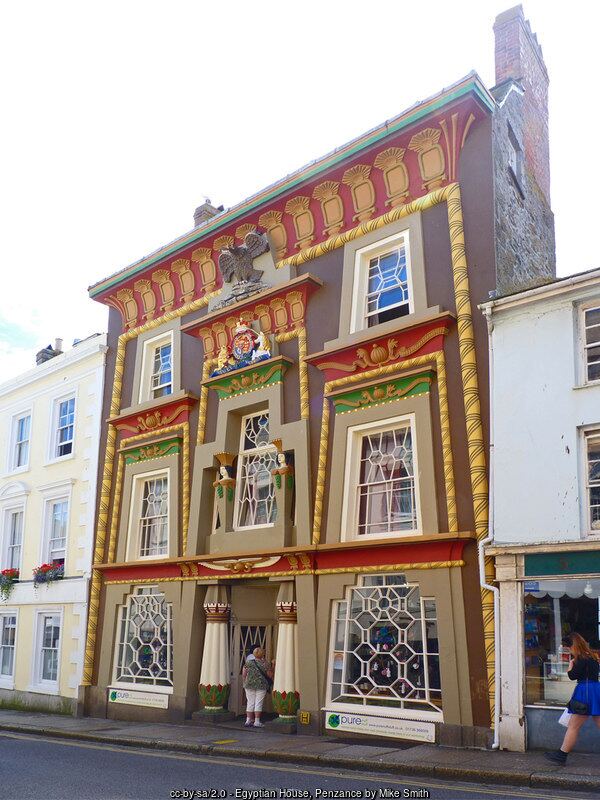
Chapel Street highlights
Egyptian House – Egyptian Revival façade, Grade I, Landmark Trust
Union Hotel – the Trafalgar news, 1805
Admiral Benbow – historic smugglers’ inn
Branwell house – home of the Brontës’ mother
St Mary’s church – 1835, overlooking the harbour
PENZANCE HARBOUR
Penzance has been a port since the Middle Ages – Henry VIII allowed the town to charge harbour dues in 1512 – and the harbour is still a working one. Fishing boats, pleasure boats and yachts moor in the inner harbour and the wet dock, the old dry dock still repairs ships, and the Lighthouse Pier is the departure point for the passenger ferry to the Isles of Scilly, and freight for the islands is shipped from the harbour too.
The harbour is right beside the railway station, the bus station and the main Harbour car park, so it is the first thing most visitors see. It is a pleasant place for a stroll, with views across the bay to St Michael’s Mount, and a short walk around the harbour brings you to Battery Rocks, the Jubilee Pool and the Promenade.
Opposite the station, the brightly painted Longboat is a traditional Cornish pub, restaurant and inn – a handy first or last stop for rail and ferry passengers.
↑ Back to top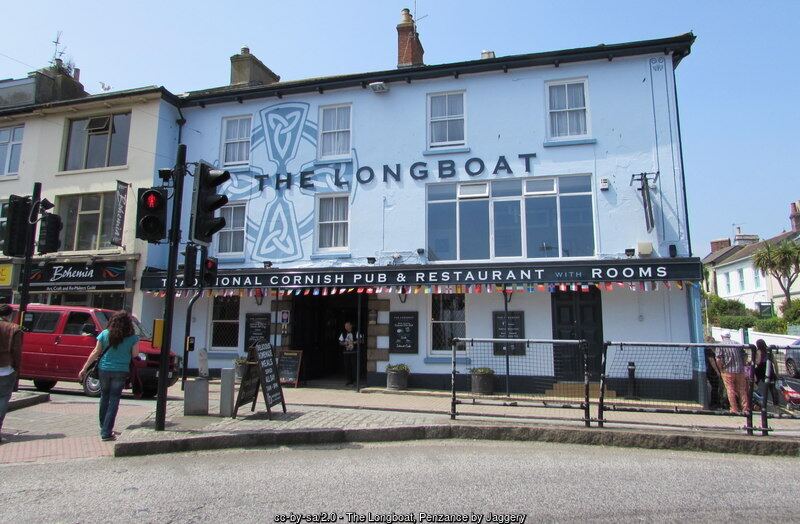
GETTING TO THE ISLES OF SCILLY FROM PENZANCE
The Isles of Scilly lie about 28 miles south-west of Land’s End – five inhabited islands and around 140 rocks and islets, with white sand beaches, clear water and a mild climate. Penzance has been their main link with the mainland for generations, and there are now three ways to cross.
By sea – the Scillonian
The passenger ferry sails from Penzance to Hugh Town on St Mary’s, taking around two hours and forty-five minutes. For almost fifty years the crossing was made by the Scillonian III, which entered service in 1977 and became one of the best-known ships in the West Country. She made her final sailing in November 2026.
Her replacement, the Scillonian IV, is due to enter service between Penzance and St Mary’s in March 2027. The new ship carries up to 600 passengers and is designed to give a more comfortable crossing of the often lively waters off Land’s End. Like her predecessor, she will sail in the main season, roughly from March to early November. Sailings are operated by the Isles of Scilly Steamship Group.
By air – helicopter and Skybus
Penzance Helicopters flies all year from Penzance Heliport, just off the A30 on the eastern edge of the town, to St Mary’s and Tresco – the only direct flights to Tresco – in around 20 minutes. The Isles of Scilly Steamship Group’s Skybus fixed-wing aircraft fly from Land’s End Airport, near St Just, west of Penzance.
Tip: book ferry and flights early for summer, and allow plenty of time to park or arrive by train – check-in times are strict.
↑ Back to top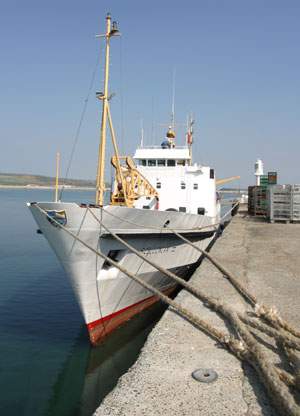
Scilly crossings at a glance
Ferry: Scillonian IV from March 2027, Penzance to St Mary’s, about 2¾ hours, main season only
Helicopter: Penzance Heliport to St Mary’s or Tresco, about 20 minutes, all year
Skybus: Land’s End Airport, St Just, to St Mary’s
THE JUBILEE POOL, BATTERY ROCKS & THE PROMENADE
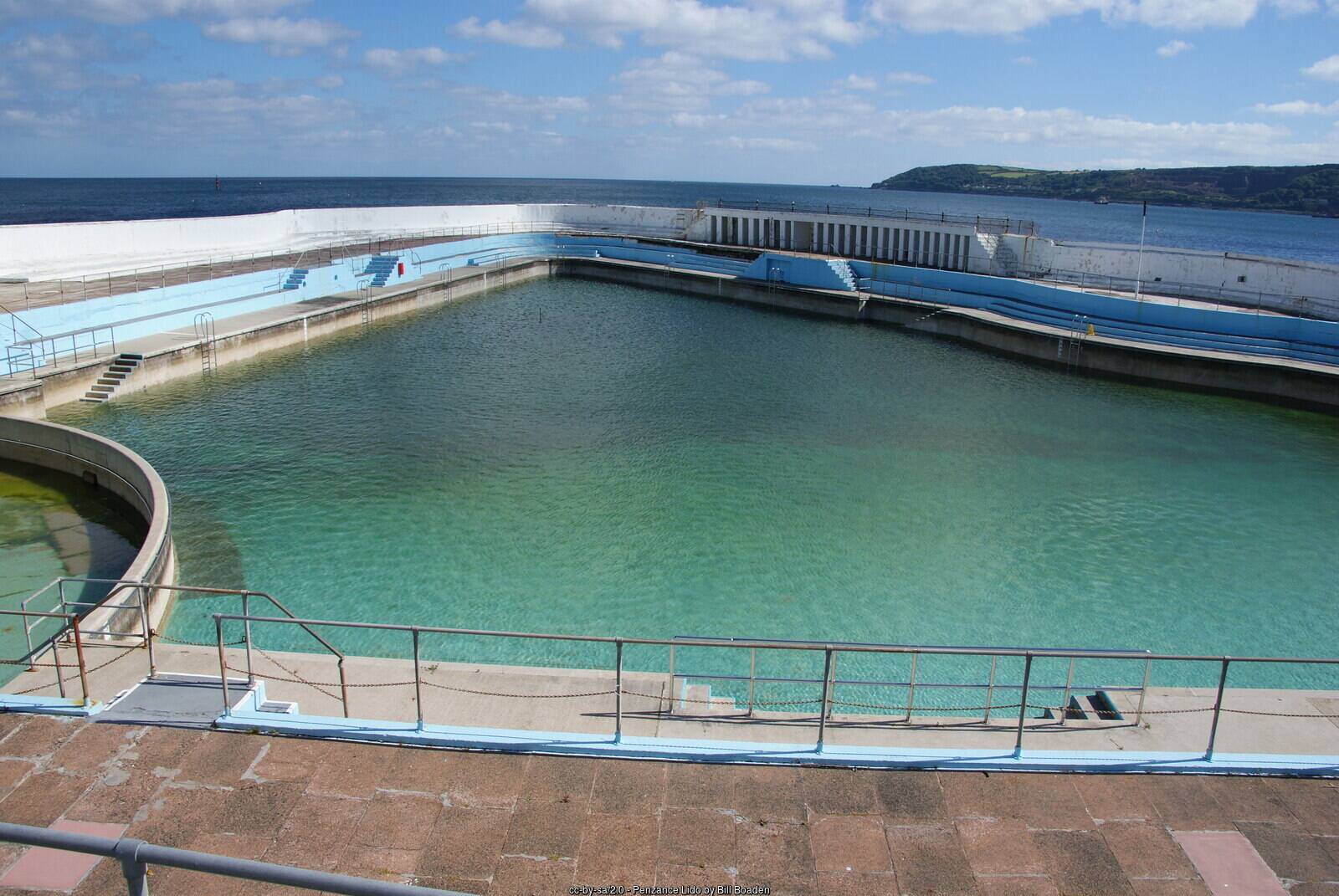
The Jubilee Pool is the jewel of the Penzance seafront. This triangular Art Deco lido, designed by the borough engineer Captain Frank Latham, was opened on 31 May 1935 in the year of King George V’s Silver Jubilee. Built out over the rocks and filled by the sea, it is the largest seawater lido in the UK and a Grade II listed building, with stepped terraces for sunbathing and sweeping views across Mount’s Bay.
Since 2020 part of the site has been a geothermal pool, heated by water from a borehole deep beneath the lido to around 30°C, so you can swim in warm seawater even in winter. The main pool opens in the season (spring to autumn), and there is a café on site. Opening times and booking change through the year, so check before you go.
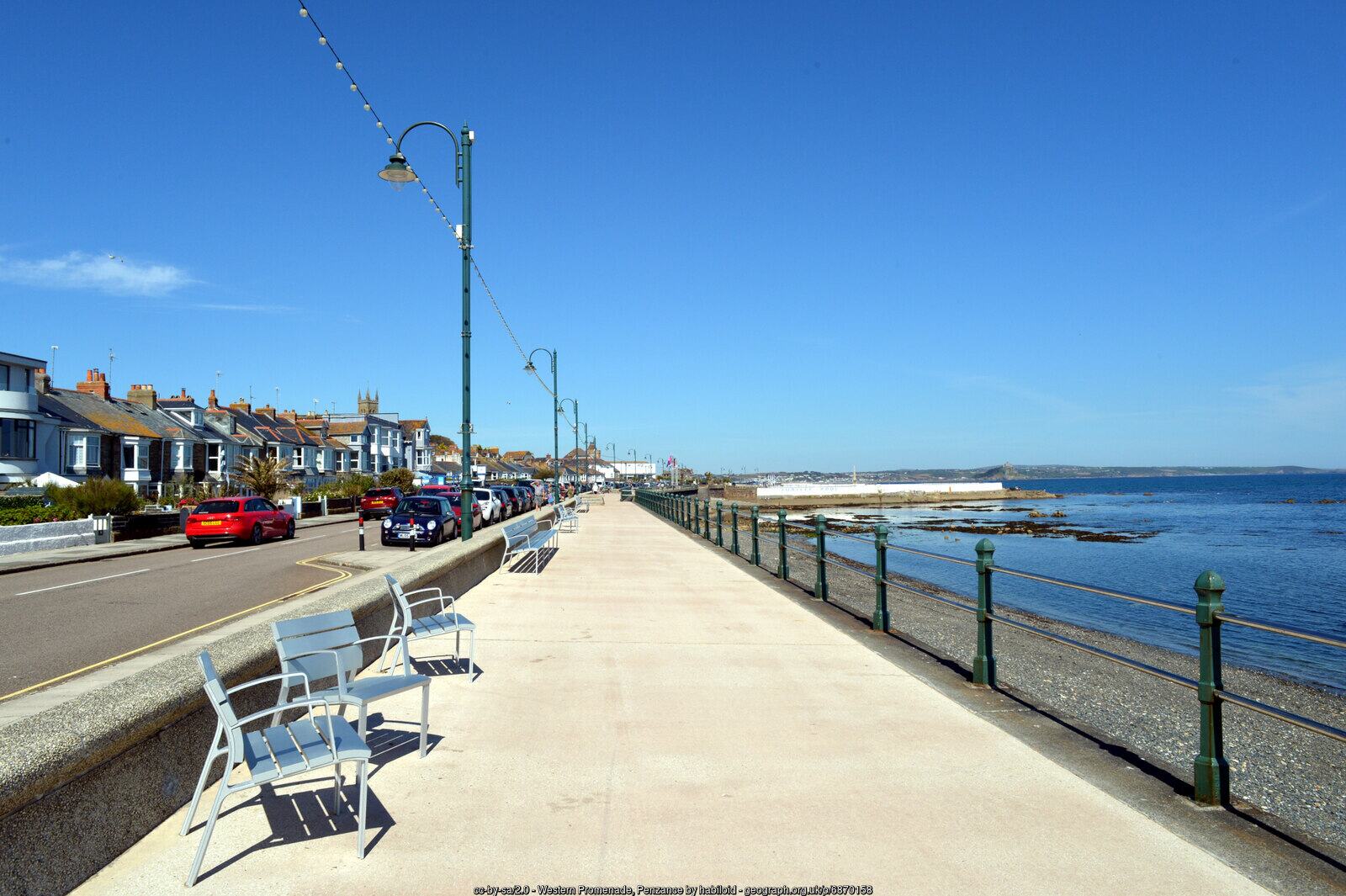
Next to the pool, the rocks and old gun platform of Battery Rocks are a favourite spot for year-round sea swimming, with steps and a slipway into the water. From here the Promenade sweeps west along the shore towards Newlyn – a wide, level walk beside the sea, lined with Victorian and Edwardian terraces and hotels. It is perfect for an evening stroll, for watching storms crash against the sea wall in winter, and for views across the bay to St Michael’s Mount and the Lizard.
The beaches along the seafront are mostly shingle and rock, but at low tide there is sand at Wherrytown, and east of the harbour the long sands of Eastern Green and Long Rock stretch towards Marazion. See Penzance beaches below.
↑ Back to top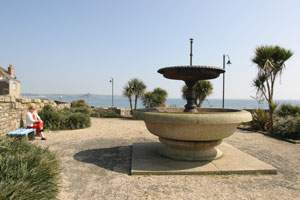
Jubilee Pool
Opened: 31 May 1935
Style: Art Deco, Grade II listed
Pools: seawater lido (seasonal) and geothermal pool (about 30°C)
Where: Battery Road, Penzance TR18 4FF
Good for: swimming, families, sunbathing, the café
PENLEE HOUSE, MORRAB GARDENS & THE ARTS
Penlee House Gallery & Museum is set in a Victorian villa built in 1865 for the Branwell family, in the middle of Penlee Park. It is the only public gallery in Cornwall that specialises in the art of west Cornwall, with an outstanding collection by the Newlyn School painters of around 1880 to 1940 – Stanhope and Elizabeth Forbes, Walter Langley, Norman Garstin, Lamorna Birch and their circle. Its museum rooms tell the story of the Penwith peninsula, from prehistoric times to fishing, mining and tourism, and the Orangery Café looks out over the park.
Just across Morrab Road, the sub-tropical Morrab Gardens are full of palms, tree ferns and exotic plants that flourish in the mild climate, with a bandstand, a fountain and quiet benches. In the old house at the top of the gardens is the Morrab Library, one of the few independent subscription libraries left in the country, whose photographic archive is a treasure trove of old Penzance.
Penzance has a lively arts scene beyond the galleries, too. The Exchange, a contemporary art gallery run with Newlyn Art Gallery, is in Princes Street, and the town has independent galleries, craft studios, the Acorn arts centre and theatre, and a cluster of good bookshops. Just outside the town, the National Trust’s Trengwainton Garden is famous for its spring flowers.
↑ Back to topPenlee House Gallery & Museum
Where: Morrab Road, Penzance TR18 4HE
Building: Victorian villa of 1865, in Penlee Park
Collections: Newlyn School paintings, west Cornwall history and archaeology
Also: Orangery Café, shop, park and children’s play area
Tip: check opening times and exhibitions before you visit
HISTORY OF PENZANCE
The name Penzance comes from the Cornish Pennsans – pen, ‘headland’, and sans, ‘holy’ – after the ancient chapel of St Mary that stood on the headland above the harbour, where St Mary’s church stands today. The head of St John the Baptist on the town’s arms comes from the same holy headland.
Penzance grew up as a small fishing and market town in the manor of Alverton. In 1332 Edward III granted it the right to hold a weekly market and an annual fair, and in 1512 Henry VIII allowed it to charge harbour dues. On 23 July 1595 the town was attacked and burnt by Spanish troops who landed at Mousehole, in one of the last raids by foreign forces on English soil. It recovered, and on 9 May 1614 James I made Penzance a borough with its own mayor and corporation.
In 1663 Penzance became a coinage town, where tin from the mines of west Cornwall was assayed and taxed, and the town grew rich on tin, copper, fishing and trade. Merchants built fine houses in Chapel Street and along the new terraces, and by the early 19th century Penzance was known as a genteel resort, admired for its mild climate. The Market House was opened in 1838, and in 1852 the railway arrived, later linking Penzance directly with London and bringing holidaymakers, flower growers and fish merchants.
By the time Gilbert and Sullivan wrote The Pirates of Penzance in 1879, the town was so peaceful and respectable that the idea of pirates there was a joke. In the 20th century the Jubilee Pool (1935) and the Promenade made it a seaside resort, while Newlyn, now part of the same parish, became England’s leading fishing port.
↑ Back to topPenzance timeline
1332 – market and fair charter from Edward III
1512 – harbour dues granted by Henry VIII
1595 – Spanish raid burns the town
1614 – incorporated as a borough by James I
1663 – becomes a coinage town for tin
1778 – Humphry Davy born in Market Jew Street
1805 – news of Trafalgar reaches the Union Hotel
1835–36 – the Egyptian House and St Mary’s church
1838 – Market House opened
1852 – the railway reaches Penzance
1879 – The Pirates of Penzance
1935 – Jubilee Pool opened
1977 – Scillonian III enters service
2026 – Scillonian III retires
2027 – Scillonian IV takes over the Scilly route
NOTABLE PEOPLE OF PENZANCE
- Sir Humphry Davy (1778–1829) – chemist and inventor, born in Market Jew Street. He discovered sodium, potassium and other elements, and invented the Davy safety lamp for miners. His statue stands in front of the Market House, and the town holds a lantern parade in his honour each December.
- Maria Branwell (1783–1821) – born and brought up in Chapel Street, she married Patrick Brontë and was the mother of Charlotte, Emily and Anne Brontë.
- John Lavin – bookseller and mineral dealer who created the Egyptian House in Chapel Street.
- The Newlyn School – Stanhope Forbes, Elizabeth Forbes, Walter Langley and the other artists who settled in nearby Newlyn from the 1880s; their work is shown at Penlee House.
PENZANCE BEACHES
Penzance is a harbour town rather than a beach resort, but there are several beaches within walking distance, and some of the best sands in west Cornwall are a short bus ride away.
- Battery Rocks – rocks and a slipway beside the Jubilee Pool, the town’s favourite sea-swimming spot.
- Penzance Promenade – shingle and rock below the sea wall, with sand at low tide.
- Wherrytown – a sandy stretch at the western end of the Promenade towards Newlyn.
- Eastern Green and Long Rock – the long sandy beach running east from the heliport towards Marazion, popular with dog walkers and kitesurfers.
- Marazion Beach – lifeguarded in summer, facing St Michael’s Mount, about three miles away.
WALKS FROM PENZANCE
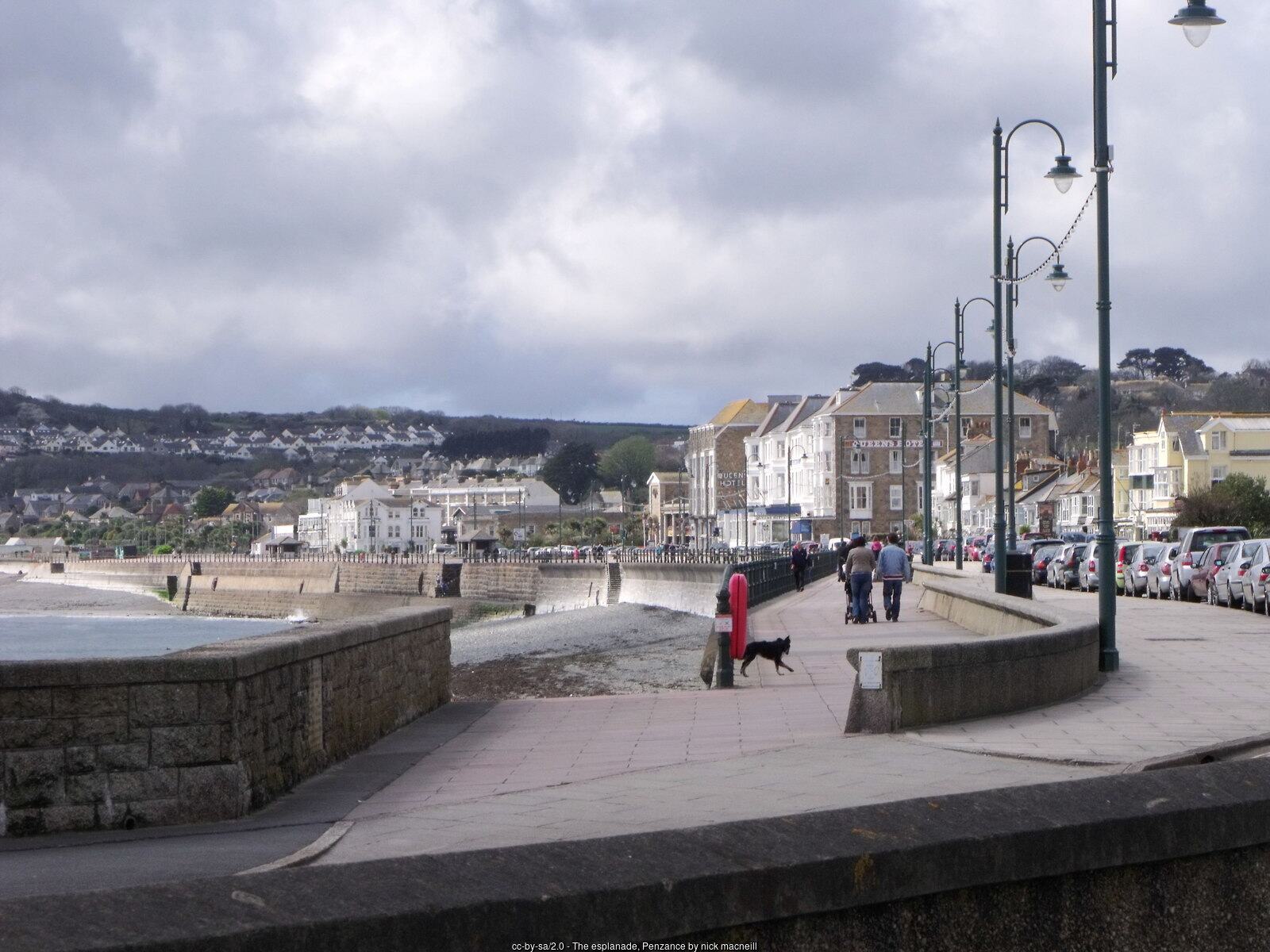
The South West Coast Path runs right along the Penzance seafront. Walk west along the Promenade to Newlyn (about a mile) and on along the coast to Mousehole – around three miles in all, mostly level, with a bus back. East of the harbour, a flat path follows the shore past Eastern Green and Long Rock to Marazion and St Michael’s Mount, about three miles, with views of the Mount all the way.
Inland, footpaths climb to the village of Madron, the mother church of Penzance, and on to the ancient sites of the Penwith moors. The pilgrim route of the St Michael’s Way links Marazion with Lelant and St Ives across the peninsula.
↑ Back to topTHINGS TO DO IN PENZANCE
- Swim in the Art Deco Jubilee Pool – or the warm geothermal pool in winter.
- Stroll the Promenade to Newlyn and watch the fishing boats come in.
- Explore Chapel Street, the Egyptian House and the historic inns.
- See the Newlyn School paintings at Penlee House and relax in Morrab Gardens.
- Take the ferry or helicopter for a day trip to the Isles of Scilly.
- Walk along the shore to Marazion and cross the causeway to St Michael’s Mount.
- Catch the bus to Land’s End, the Minack Theatre at Porthcurno or Mousehole.
- Join in Golowan and Mazey Day in June, or Montol on 21 December.
EVENTS & FESTIVALS IN PENZANCE
Golowan Festival (late June) – Penzance’s midsummer festival, a revival of the old Cornish celebrations of the feast of St John. It runs for around ten days, with music, art and the fireworks of Mazey Eve, and reaches its climax on Mazey Day, the Saturday, when the streets are filled with parades, giant puppets, bands and stalls. The Quay Fair Day follows on the Sunday.
Penzance Literary Festival (July) – talks, readings and events with writers in venues around the town.
Humphry Davy Lantern Parade (December) – a parade of lanterns through the town to celebrate the birthday of Sir Humphry Davy on 17 December.
Montol Festival (21 December) – Penzance’s winter solstice festival, held since 2007 and based on old Cornish midwinter customs, with masked guise dancers, ‘Obby ‘Osses, lanterns, a Mock Mayor, torch-lit processions down Chapel Street and a bonfire.
Nearby, the Newlyn Fish Festival (August) and the Newlyn Harbour Lights and Mousehole Harbour Lights at Christmas are well worth a visit. Dates change each year – check before you travel.
↑ Back to topPLACES NEAR PENZANCE
- Newlyn – England’s leading fishing port and home of the Newlyn School of artists, a mile along the Promenade.
- Mousehole – a picture-postcard harbour village about three miles south, famous for its Christmas lights.
- Marazion & St Michael’s Mount – the ancient market town and tidal island, three miles east along the bay.
- Lamorna and Porthcurno – a wooded cove and a white-sand beach below the Minack Theatre.
- Land’s End and St Just – the far west of Cornwall, about ten miles away.
- St Ives – on the north coast, about eight miles away, with the Tate St Ives and golden beaches.
VISITOR INFORMATION
Penzance is easy to reach by road, rail and bus. The A30 runs right into the town past the heliport and the big supermarkets at Long Rock and Eastern Green, and the railway station, the bus station, the harbour and the main long-stay car park are all together on the seafront at the eastern end of the town – a few minutes’ walk from Market Jew Street.
Parking & EV Charging
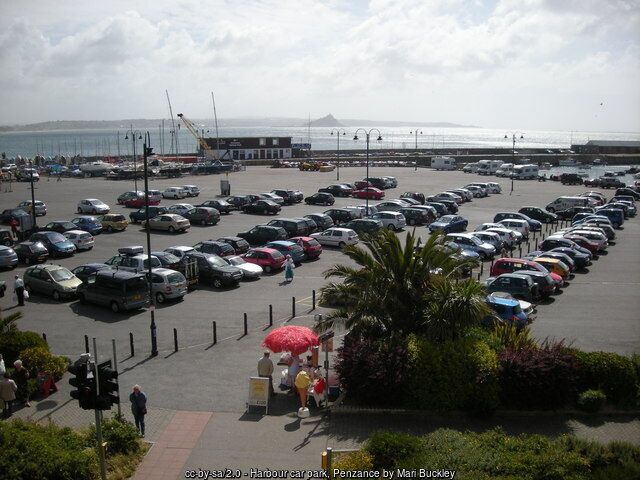
Cornwall Council runs the main car parks. The large Harbour (Wharfside) long stay car park (TR18 2GB), beside the railway and bus stations, is the most convenient for the town, the harbour and the Scilly ferry; the Maritime car park shares the same postcode. Other long-stay car parks are St Erbyn’s (TR18 2RG), Wherrytown on the western Promenade (TR18 4NP) and Long Rock (TR20 8HZ). Short-stay car parks include Causewayhead, Clarence Street, Greenmarket and Penalverne. Charges and free periods vary by season – check the council website or the parking app.
Electric vehicle charging:
Public chargers in Penzance change often – the largest sites are at the supermarkets at Long Rock and Eastern Green. Check the live map before you travel.
Train & Bus
Penzance station is the end of the line – the most westerly station in England, with direct trains from London Paddington (about five hours), Exeter and Plymouth, and the Night Riviera sleeper to London. Change at St Erth for St Ives. The bus station is next to the railway station, with services to St Ives, Land’s End, St Just, Mousehole, Marazion, Helston and Falmouth, and the open-top Land’s End Coaster in summer. Check timetables before you travel.
Facilities & Supermarkets
The town centre has banks, a post office, chemists, the library, public toilets and plenty of shops, with the Wharfside Shopping Centre by the harbour. The large supermarkets are on the eastern edge of the town:
- Morrisons – Long Rock, Penzance TR20 8HT
- Sainsbury’s – Eastern Green, Penzance TR18 3AP
- Tesco – Branwell Lane, Penzance TR18 3DU
Cafés, Pubs & Restaurants
Chapel Street is the place for historic inns, including the Admiral Benbow and the Turk’s Head, and for some of the town’s best restaurants. There are cafés and bistros along Market Jew Street, Causewayhead and the Promenade, the café at the Jubilee Pool, the Orangery Café at Penlee House, and fresh fish from the boats in Newlyn, a short walk away.
Health
West Cornwall Hospital, St Clare Street, Penzance, has an Urgent Treatment Centre; the nearest A&E is the Royal Cornwall Hospital, Truro. There are several GP surgeries and pharmacies in the town. Call NHS 111 for urgent advice and 999 in an emergency – ask for the Coastguard if someone is in trouble at sea.
Disabled Access
The Promenade and the harbour area are level and good for wheelchairs and pushchairs, with benches and sea views. The town centre is on a hill – Market Jew Street climbs steadily, and Chapel Street is steep in places with narrow pavements. Penlee House has step-free access to most areas. Check access at the Jubilee Pool and on the Scilly ferry before you travel.
Vets & Dogs
Vets in Penzance: Rosevean Veterinary Practice, Coombe Road, Penzance TR18 3HU; Vets4Pets, inside Pets at Home, Eastern Green, Penzance TR18 3AP; and Mounts Bay Veterinary Centre, Long Rock Industrial Estate, TR20 8HX. The long beach at Eastern Green and Long Rock is popular with dog walkers – check seasonal restrictions on other beaches.
National Trust & English Heritage
The National Trust looks after St Michael’s Mount, three miles away at Marazion, and Trengwainton Garden, just outside Penzance. The Egyptian House belongs to the Landmark Trust, not the National Trust.
Attractions
The Jubilee Pool, Penlee House, Morrab Gardens and Chapel Street in the town, with St Michael’s Mount, the Minack Theatre, Land’s End and the Isles of Scilly all within easy reach.
STAY & EXPLORE IN PENZANCE
Isles of Scilly
Official Information
FAMILY HOLIDAYS & SHORT BREAKS IN PENZANCE
Family holidays in Penzance combine a real working town with the seaside – the Jubilee Pool and the Promenade on the doorstep, boat trips and the adventure of the Isles of Scilly, and easy buses to the beaches of Marazion, Porthcurno and St Ives. Arriving by train is easy, and many visitors never need their car.
Browse Penzance holiday cottages for self-catering homes in the town and the surrounding countryside, or holidays and short breaks in Penzance for every type of accommodation.
Short breaks in Penzance are good value outside the school holidays – a spring break for the gardens, an autumn weekend of coast path walks and galleries, or a midwinter visit for Montol and a warm swim in the geothermal pool. Booking direct with the owner means no agency fees.
↑ Back to topFREQUENTLY ASKED QUESTIONS ABOUT PENZANCE
Penzance is the main town of west Cornwall and the most westerly town in England. It lies on the shore of Mount’s Bay, about ten miles from Land’s End, three miles west of Marazion and St Michael’s Mount, and around 300 miles from London.
From March 2027 the new passenger ferry Scillonian IV sails from Penzance to St Mary’s in the main season, taking around two hours and forty-five minutes. It replaces the Scillonian III, which retired in November 2026. Penzance Helicopters flies all year from Penzance Heliport to St Mary’s and Tresco in about 20 minutes, and Skybus planes fly from Land’s End Airport near St Just.
The Scillonian IV is due to enter service between Penzance and St Mary’s in March 2027. She carries up to 600 passengers and replaces the Scillonian III, which had served the route since 1977 and made her final sailing in November 2026.
The Jubilee Pool is an Art Deco seawater lido on the Penzance seafront, opened on 31 May 1935 and the largest seawater lido in the UK. Since 2020 it has also had a geothermal pool heated to around 30°C, which is open all year. The main lido is open in the season – check opening times and book online.
Yes. Penzance is the end of the main line from London Paddington, with direct trains taking around five hours, as well as the Night Riviera sleeper. The station is next to the harbour, the bus station and the Isles of Scilly ferry.
The Harbour (Wharfside) long stay car park, TR18 2GB, next to the railway station and the harbour, is the most convenient for the town and the Scilly ferry. Other Cornwall Council long-stay car parks are St Erbyn’s, Wherrytown on the Promenade and Long Rock, with short-stay car parks at Causewayhead, Clarence Street, Greenmarket and Penalverne.
Penzance is a harbour town rather than a beach resort. Along the Promenade the shore is mostly shingle and rock, with sand at low tide at Wherrytown, and Battery Rocks is a popular sea-swimming spot. The long sandy beach at Eastern Green and Long Rock runs east towards Marazion, where Marazion Beach is lifeguarded in summer.
Golowan is Penzance’s midsummer festival, reviving old Cornish celebrations of the feast of St John. It runs for around ten days in late June, with fireworks on Mazey Eve and the big day of parades, music and stalls on Mazey Day, the Saturday.
Penzance comes from the Cornish Pennsans, meaning ’holy headland’, after the ancient chapel of St Mary that stood on the headland above the harbour, where St Mary’s church stands today.