Polperro Cornwall - Historic Fishing Village, Smuggling Harbour & Coastal Walks
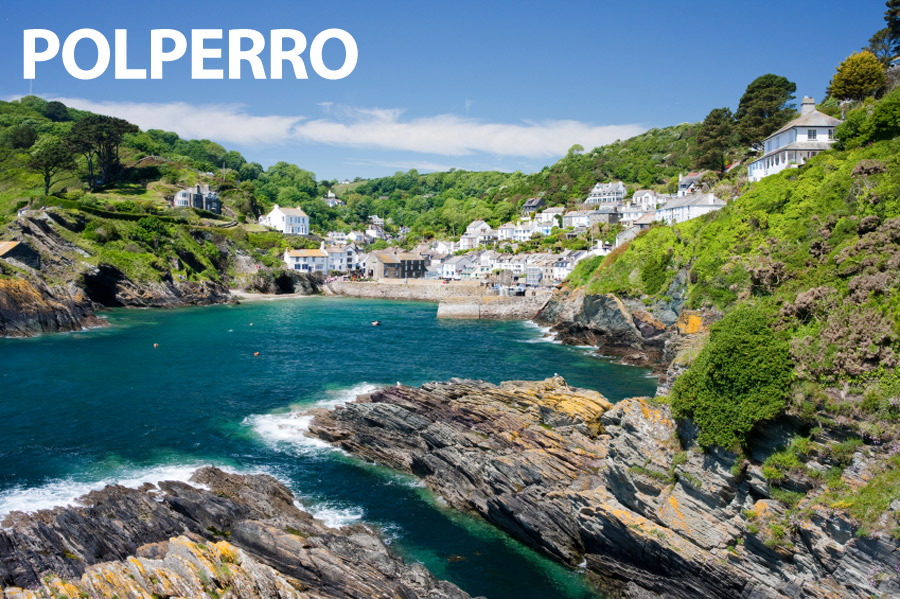
Polperro Cornwall
Cornwall Online | Looe| Talland Bay | Polperro | Polruan | Fowey | Lostwithiel | Mevagissey | Whitsandbay & The Rame Peninsula | Kingsand | Cawsand | Mount Edgecumbe Country Park | Torpoint | St Germans | Saltash | Liskeard | Siblyback Lake - Water Park | Minions - Bodmin Moor | St Neot | St Cleer | Callington | Gunnislake | Calstock | Cardinham Woods -Walking & Cycle Trails | Launceston |
POLPERRO - A HISTORIC FISHING VILLAGE IN SOUTH EAST CORNWALL
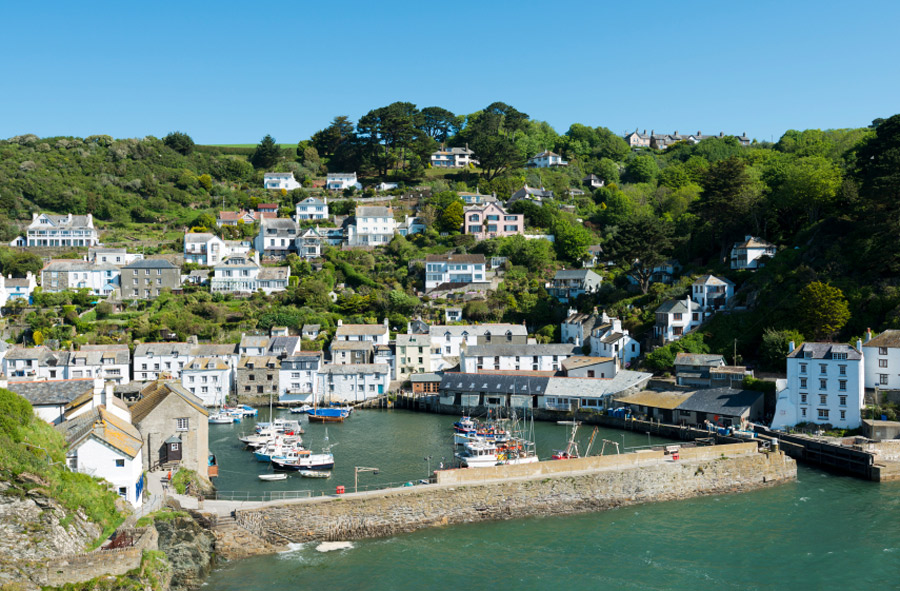
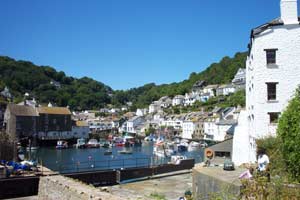
Polperro is a picture-postcard fishing village on Cornwall's south coast, just a few miles from Looe. Sheltered in a steep cliff ravine, it's an enchanting jumble of colour-washed cottages, each one built in the traditional style of a Cornish fisherman's home - gear and pilchard catch stored below, living quarters in a loft above, reached by outside stone or wooden steps like a ship's gangway.
Wandering the traffic-free streets down to the small harbour, you're treading paths where barrows of fish were once carted and, under cover of night, brandy casks and tobacco bales were smuggled into hidden cellars. This peaceful fishing cove has a history as one of Cornwall's most notorious smuggling centres.
Polperro's Smuggling Past
Wagonloads of contraband once left Polperro, some routes heading across Bodmin Moor towards London. The "free-traders" have long since passed into folk history, and the great shoals of pilchards that once sustained the village are gone - but a visit to the Polperro Heritage Museum of Smuggling and Fishing, housed in the village's old pilchard factory, brings this rich past vividly back to life.
Today, in cellars where furtive smugglers once dodged customs officers' muskets, you'll find shops selling local crafts and traditional fishermen's smocks, or you can dine in style at one of Polperro's many excellent restaurants.
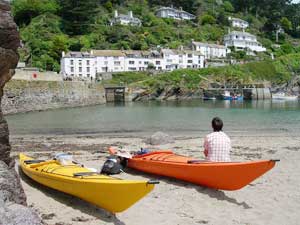
HISTORIC LANDMARKS IN POLPERRO
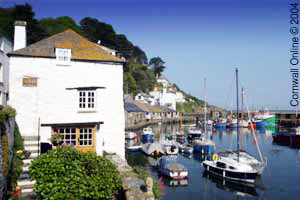
One of the most popular places in Cornwall, Polperro is undoubtedly one of its prettiest villages. Packed tightly into a steep valley on either side of the River Pol, its twisting streets offer a surprise at every turn:
- The quaintly-named Saxon and Roman bridges - despite their traditional names, both were actually rebuilt in the 19th century
- The famous House on Props, reputed to date from the 16th century, jettied out over the stream on wooden posts
- The old Watch House and the working fish quay
- The house on Lansallos Street where Dr Jonathan Couch lived - naturalist, village doctor for sixty years, and grandfather of the celebrated writer Sir Arthur Quiller-Couch
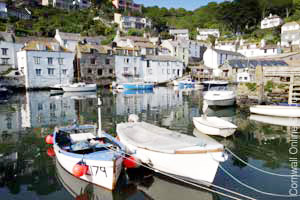
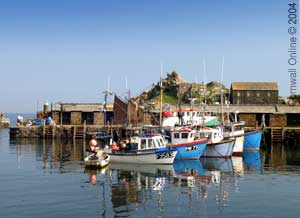
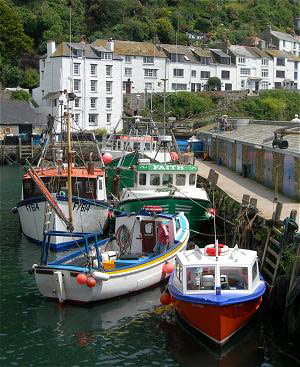
With its protected inner harbour full of colourful boats, Polperro remains a working fishing village, though tourism now provides the main source of income. Alongside the Heritage Museum, the village's other main attraction is the Polperro Model Village.
POLPERRO BEACH & CHAPEL ROCK TIDAL POOL
Polperro has a small sandy beach just outside the main breakwater, in front of Willy Wilcox Cave - believed to have been used by smugglers. A small walkway crosses the beach at low tide, carrying holidaymakers to the frequent boat trips leaving from Polperro's small inlet.
The village also has a tidal sea pool on the seaward side of Chapel Rock, which guards the western entrance to the harbour. Chapel Pool, built in the 1940s, has been popular with holidaymakers and local children alike for generations. The south-facing pool is accessible from about half tide, though there's a steep climb down the cliff to reach it - steps are cut into the rock, but caution is advised.
Chapel Pool is best visited a couple of hours either side of low tide - it's completely submerged at high water. Though it looks like a giant natural rock pool, it's technically part man-made, tucked into the rock on the seaward side of Chapel Cliff. There's no lifeguard cover or safety equipment, so check the tide before you go, and take care on the steep steps down.
Pulling into Polperro from the sea is an unforgettable experience, especially with a basket full of fish. Fishing trips and pleasure cruises are easy to arrange from the quayside, or take the cliff path to explore the secluded smuggling coves of Talland Bay and Lantivet Bay.
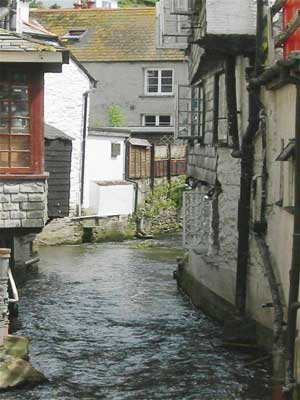
LOOE AND POLPERRO HERITAGE COAST
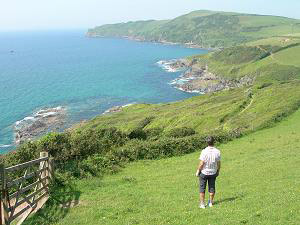
The coastline here forms part of the 80-mile South Cornwall Heritage Coast. From Polperro, beautiful walks extend to Talland in the east or Lansallos in the west, both with beaches and interesting churches - these and other secluded coves have, over the centuries, provided ample opportunity for smuggling.
Pelynt & the Song of the Western Men
North of Polperro, the village of Pelynt was the birthplace of Bishop Jonathan Trelawny, subject of Robert Stephen Hawker's famous ballad The Song of the Western Men - better known by its refrain, "And shall Trelawny die?" Trelawny was one of seven bishops imprisoned in the Tower of London by James II in 1688. He is commemorated in Pelynt's parish church, where he was later buried.
To the northeast, you can walk and picnic in the Deer Park Forest, or watch craft demonstrations at the Folk & Farm Museum in Lanreath.
Polruan & the Fowey Estuary
At the mouth of the River Fowey, the village of Polruan faces St Catherine's Castle across the water.
During the Hundred Years' War, a defensive chain was strung between blockhouses at Fowey and Polruan to bar the harbour to invading French ships, lowered only to let friendly vessels pass. Today the river carries pleasure craft and china clay vessels instead, with a regular car and passenger ferry from Bodinnick and a passenger ferry from Polruan, both crossing to Fowey.
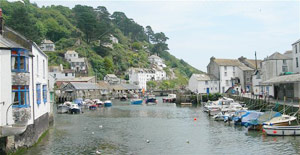
Literary Connections
This stretch of coast abounds with literary history:
- Beside the Bodinnick ferry slipway stands Ferryside, where a young Daphne du Maurier began writing her first novel, The Loving Spirit, in 1929 - inspired by the wreck of the schooner Jane Slade in nearby Pont Creek
- Along the secluded southern bank of Pont Pill, writer Leo Walmsley lived in an old army hut through the 1930s, later writing his autobiographical book Love in the Sun
- At Penleath Point, on the famous Hall Walk footpath, stands the granite memorial to "Q" - Sir Arthur Quiller-Couch - the novelist and scholar who lived in nearby Fowey for over fifty years and made the town famous worldwide as his fictional "Troy Town"
Upstream, the riverside villages and countryside carry associations with the legend of Tristan and Iseult, with pleasant woodland walks along the banks of the River Lerryn. This whole area, along the Fowey river and around the coast as far as Looe, is designated an Area of Outstanding Natural Beauty.
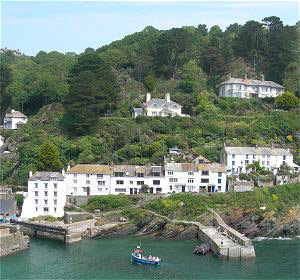
LANSALLOS & LANTIC BAY
Lansallos Village & Beach
A couple of miles west of Polperro, the tiny village of Lansallos is little more than a scatter of cottages around its Grade I listed parish church, St Ildierna's, which dates from the early 14th century and has interesting 16th-century bench ends inside. From beside the church, a footpath drops through wooded farmland along a stream for almost a mile to reach Lansallos Beach (also known as West Combe) - a quiet, south-facing cove of sand and shingle with a small waterfall, Reed Water, tumbling onto the western side.
The walk down is steep and uneven in places, unsuitable for wheelchairs or pushchairs, and there are no facilities, toilets or lifeguard cover at the beach itself - the nearest amenities are back in Polperro. Dogs are welcome on Lansallos Beach all year round. The adjoining Parson's Cove, a little further along the coast path, offers a more secluded spot to swim.
Parking: a small National Trust car park sits in Lansallos village, just up the road from the church (do not park directly by the church itself). It's free for National Trust members, with a charge for non-members.
Lantic Bay & Pencarrow Head
Further west again, towards Fowey, Lantic Bay is one of the most beautiful and unspoilt beaches in this part of Cornwall - a wide sweep of sand and shingle backed by dramatic cliffs, with clear turquoise water that draws swimmers from across the county. The beach sits within National Trust land taking in Lantic Bay, Lantivet Bay and Pencarrow Head, an area rich in fishing and smuggling history, with the remains of old pilchard cellars, known locally as "palaces," still visible above some of the smaller coves.
Reaching the beach itself takes a properly steep 20-25 minute walk down from the car park, and the same back up - most visitors agree it's worth the effort, but wear proper footwear rather than flip-flops. There's no lifeguard service and no facilities at the beach, so bring everything you need with you.
Parking: the main National Trust car park for Lantic Bay is near Triggabrowne Farm (postcode PL23 1NP), with space for around 75 cars - free for National Trust members, with a charge for non-members. A second, smaller National Trust car park serves neighbouring Lantivet Bay, about a mile further along the coast road.
HOLIDAYS IN POLPERRO

- Holidays in Polperro
- Looe
- Bed and Breakfast holidays in Polperro
- Self Catering Holiday Cottages in Polperro

VISITOR INFORMATION
Parking
Cars are not permitted in Polperro's village centre - the streets are simply too narrow. All visitors park at the large Crumplehorn car park at the top of the village, a pay-and-display facility that is coins-only (a note-change machine is available). A seasonal "Tuk Tuk" shuttle runs between the car park and the village centre from Easter to October, or it's a level walk of around 10-15 minutes down into the harbour. Separate National Trust car parks serve Lansallos and Lantic Bay - see the sections above for details.
Bus & Train Travel Links
Polperro has no railway station of its own - the nearest is at Looe, around 4 miles away, on the scenic Looe Valley Line from Liskeard. Regular bus services connect Polperro directly with Looe, Pelynt and Liskeard, including the 73/73A route via Widegates and the 481 service.
Facilities
Public toilets are available near the Crumplehorn car park and in the village itself. Polperro has a Post Office, small shops, art galleries, and a cash point at the Post Office - worth noting since the main car park doesn't accept card payment. The village's steep, narrow streets mean mobility access can be limited in places, and there are no facilities at all at Lansallos or Lantic Bay.
Cafés & Restaurants
Despite its small size, Polperro has a great concentration of pubs, cafés and restaurants clustered around the harbour, many serving fresh, locally landed seafood. The historic 14th-century Crumplehorn Inn, beside the main car park, has a working watermill and makes a good first or last stop.
Trips From Polperro
The Polperro Heritage Museum of Smuggling and Fishing, housed in the village's former pilchard factory, is the obvious first stop for local history. Families often enjoy the Polperro Model Village. Fishing trips and pleasure cruises can be arranged from the quayside in season, and the coastal path offers spectacular walks in both directions - east to Talland Bay and Looe, or west to Lansallos, Lantic Bay and the Fowey estuary via the Hall Walk.
Cornwall Online | Looe| Talland Bay | Polperro | Polruan | Fowey | Lostwithiel | Mevagissey | Whitsandbay & The Rame Peninsula | Kingsand | Cawsand | Mount Edgecumbe Country Park | Torpoint | St Germans | Saltash | Liskeard | Siblyback Lake - Water Park | Minions - Bodmin Moor | St Neot | St Cleer | Callington | Gunnislake | Calstock | Cardinham Woods -Walking & Cycle Trails | Launceston |