Looe Cornwall – Seaside Town, Sandy Beaches & Historic Fishing Harbour
Looe in Cornwall
Cornwall Online | Looe| Talland Bay | Polperro | Polruan | Fowey | Lostwithiel | Mevagissey | Whitsandbay & The Rame Peninsula | Kingsand | Cawsand | Mount Edgecumbe Country Park | Torpoint | St Germans | Saltash | Liskeard | Siblyback Lake - Water Park | Minions - Bodmin Moor | St Neot | St Cleer | Callington | Gunnislake | Calstock | Cardinham Woods -Walking & Cycle Trails | Launceston |
HOLIDAYS IN LOOE
Looe in South East Cornwall is a very popular family Holiday Resort town, divided into two distinct parts - East and West Looe - with the Looe river running through the centre of the town.
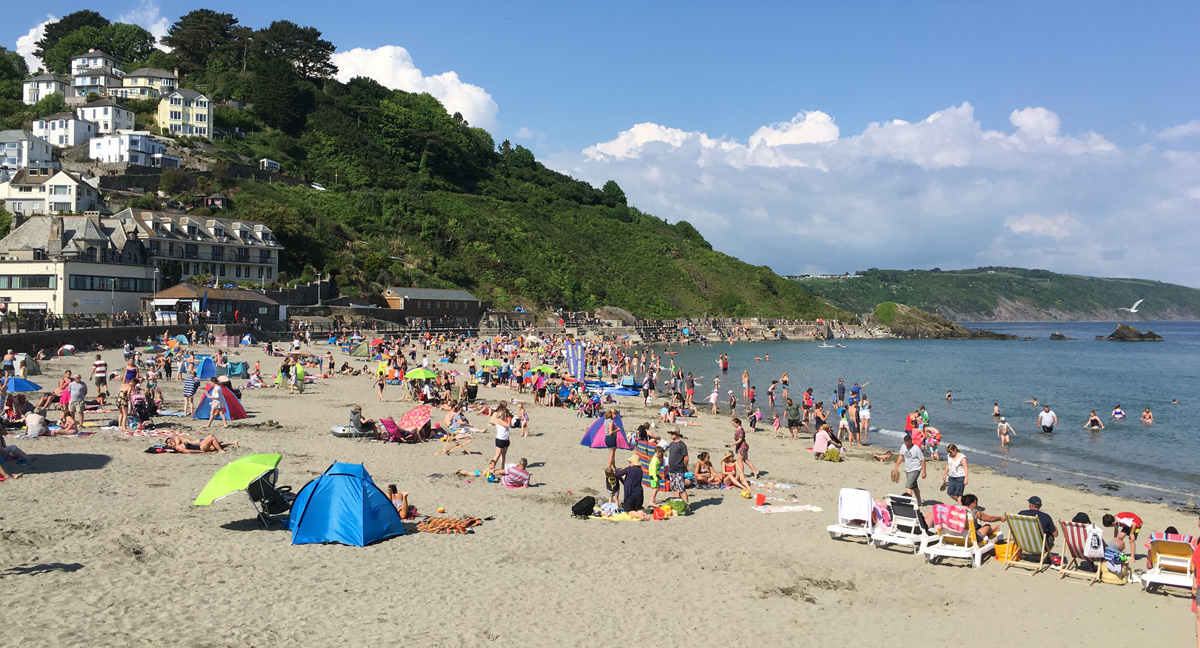
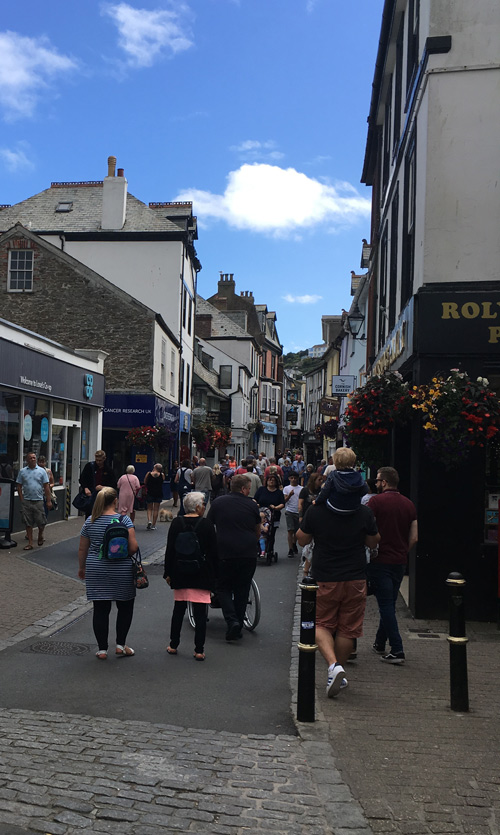
East Looe is the main tourism centre - a collection of narrow streets lined with shops, cafes and pubs that lead through to the main town beach. The Beach is ideal for families. Bordered on the west by the Banjo pier - entrance to the main harbour and by a rocky promontory at the eastern edge, it is a compact beach.
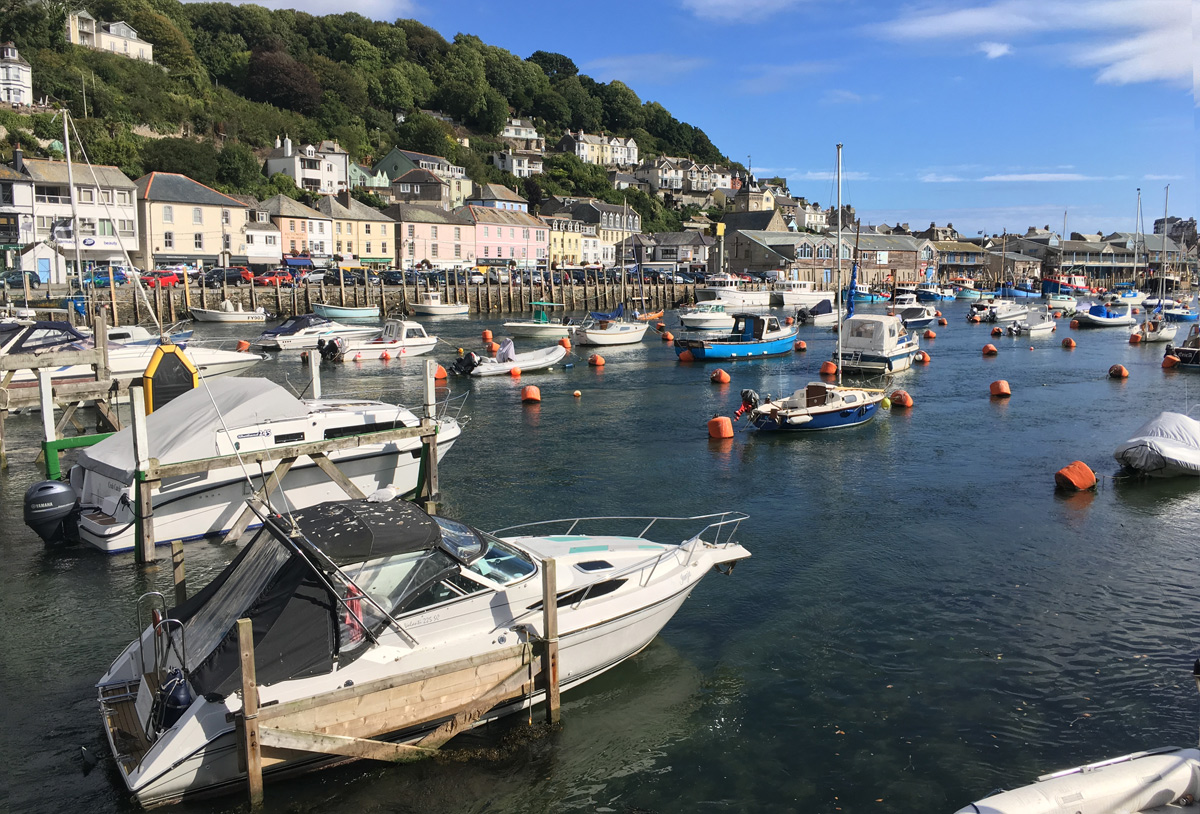
Over the years, the town has retained a small fishing fleet, whose day boats return to land their catch alongside the riverside quay on the town's east side, close to the site of the old fish market - more on which further down this page.
Looe has been a holiday resort for well over 200 years, but it was the arrival of the railway in 1879 that truly established the town as a tourist destination - even before then, Looe was an early adopter of wheeled bathing machines beside the Banjo Pier. The distinctive pier itself was built in the late 19th century to ease the silting of the river, and remains one of the town's most photographed landmarks.
History runs deep in Looe's narrow streets. The Old Guildhall Museum and Gaol, on Higher Market Street in East Looe, occupies a Grade II* listed building dating from around 1450, which served as the town hall and magistrates' court between 1587 and 1878. Inside, exhibits cover Looe's fishing and boatbuilding heritage, its smuggling past, Looe Island, the Looe Valley Railway, and the town during the Second World War - along with the original raised magistrates' bench and old prison cells.
Looe's respectable seaside image today belies a more colourful past as a centre for smuggling. Throughout the 18th and 19th centuries, "free traders" used Looe Island and the surrounding coves to land contraband tea, brandy and tobacco brought in from the Channel Islands and France, evading the duty imposed on legitimate imports. In West Looe, the historic Jolly Sailor Inn was long known as a smugglers' haunt, and colourful local tales - including landladies concealing kegs beneath their skirts during customs searches - are still told about the trade today.
More recently, Looe's timeless harbour scenery has brought it a new kind of fame as a filming location for the BBC drama Beyond Paradise - see the dedicated section further down this page for a full guide to where the show films in town.
Life on the Water in Looe
Looe's RNLI lifeboat station was established in 1866, after several local boatmen lost their lives attempting to rescue the crew of a fishing vessel. The station's first lifeboat, the Oxfordshire, was launched 31 times over the following decades, saving 74 lives, before the station closed in 1930 when motor lifeboats at Fowey and Plymouth took over coverage of the area. After a 62-year gap, the RNLI re-established Looe as an inshore lifeboat station in 1992, and the current boathouse, home to an Atlantic 85 and a D class inshore lifeboat, dates from 2003. Since reopening, volunteer crews have launched over a thousand times, and the station's boathouse is usually open to visitors daily between 11am and 4pm from Easter to the October half term, subject to crew availability.
Down on Pennyland Rocks, opposite the lifeboat station at the mouth of the East Looe River, stands a life-size bronze statue of Nelson - a distinctive one-eyed bull grey seal who was a familiar and much-loved visitor to Looe harbour for over 25 years. Nelson made his home on nearby Looe Island, treating the harbour as his "dining room," where he was fed and his company enjoyed by generations of local fishermen, townsfolk and visitors. When Nelson died in 2003, the town commissioned a memorial in his honour - sculpted by Cornish artist Suzie Marsh, the bronze statue was unveiled on 28 May 2008 by round-the-world sailor Sir Robin Knox-Johnston. It remains a popular spot for photographs, and at low tide you can walk out onto the rocks to get a closer look.
Alongside the Victorian bridge, a small foot ferry still crosses the river between East and West Looe when the tide allows - a tradition that predates the bridge itself, run by a handful of local boatmen and a pleasant, low-key way to cross the water rather than taking the five-minute walk over the bridge. It doesn't run to a fixed timetable, so simply look out for it at the water's edge on either side.
For a closer look at the river itself, self-drive boat hire is available right on East Looe's quayside, near the RNLI lifeboat station - small, stable outboard-powered boats that need no experience to handle, letting you explore the estuary's woodland banks, swans and kingfishers at your own pace.
↑ Back to top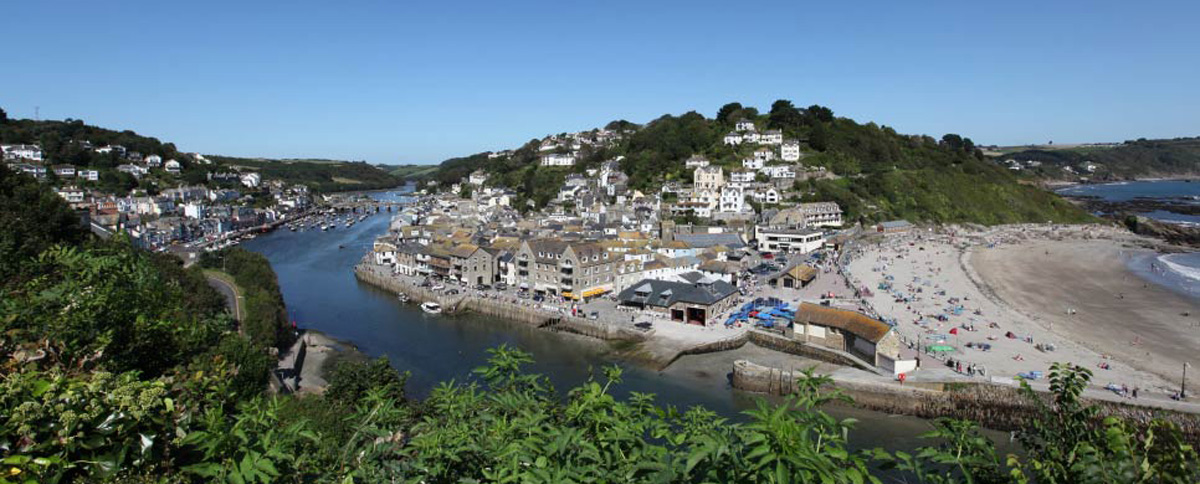
HISTORY OF LOOE
Looe grew up as two separate medieval settlements facing each other across the river - East Looe and West Looe each had their own parish, market and charter, and for centuries the two towns were run quite independently, right down to having their own mayors. The river divided them but also connected them: a bridge is recorded as early as the 15th century, rebuilt in its present stone form in 1853.
By the 13th century, Looe was already a working fishing port, and tin and copper mined on nearby Bodmin Moor was shipped out through the harbour. From the 1500s onward, herring and later pilchard fishing became the mainstay of the local economy, with whole families working the boats or sorting the catch on the quay - by the early 1930s the town's fleet numbered well over 200 vessels.
Not everything landed on the quayside was legitimate. Like much of South East Cornwall, Looe had a lively smuggling trade throughout the 18th and 19th centuries, with brandy, tea and tobacco slipped ashore from the Channel Islands and France to avoid import duty. East Looe was also, unusually for such a small town, a "rotten borough" that sent two Members of Parliament to Westminster from the 16th century until the electoral reforms of the 1830s.
The railway reached Looe in 1860 to carry minerals down from the moor, but it was the start of passenger services in 1879 that transformed the town's fortunes, opening it up to Victorian holidaymakers keen to swap the city for sea air. The elegant Banjo Pier followed in the 1890s, designed by local architect and civil engineer Joseph Thomas to ease silting at the harbour mouth, and guesthouses and bathing huts soon lined the seafront as Looe became one of Cornwall's most popular resorts.
During the Second World War, Looe took in evacuees from Plymouth and London, and local fishing boats were sometimes requisitioned for war service. The town's wartime history includes a bombing incident near Looe Island in October 1940, and the crash of a badly damaged B-17 Flying Fortress into Looe Bay in March 1944, in which all ten crew members survived after being rescued by local boatmen. Since the war, Looe has continued as both a working harbour and a well-loved holiday town - a balance that still defines it today.
↑ Back to topKEY BUILDINGS IN LOOE
- The Old Guildhall Museum and Gaol - dating from around 1450 on Higher Market Street, this Grade II* listed building served as East Looe's town hall, courthouse and gaol between 1587 and 1878. It's now a small museum covering fishing heritage, smuggling, wartime history and the town's civic past, including the original magistrates' bench and prison cells.
- St Nicholas Church - on the West Looe side of the river, this 15th-century building has served over the centuries as a place of worship, a town hall and a schoolhouse. It's now a working church again, with memorials to local sailors and occasional concerts and exhibitions.
- The Banjo Pier - designed by architect Joseph Thomas and built in the 1890s to reduce silting at the harbour mouth, the pier's distinctive curved shape gives it its name. It's one of the best vantage points in town for photographs of the beach and harbour.
- The RNLI Lifeboat Station - established in 1866 and rebuilt in its current form in 2003, the East Looe boathouse is usually open to visitors between Easter and the October half term.
- The Victorian Bridge - the seven-arched stone bridge linking East and West Looe dates from 1853, replacing earlier timber crossings recorded from the 15th century.
LOOE HARBOUR & THE FISHING FLEET
Looe's harbour has been a working fishing port since at least the 13th century, and for much of the 19th and early 20th centuries it was one of Cornwall's leading pilchard ports, with a fleet that numbered in the hundreds of boats at its peak in the 1930s. That fleet declined sharply after the pilchard shoals collapsed in the mid-20th century, and today's Looe fleet is a much smaller - but still very active - group of day boats: trawlers, netters and potters, alongside a growing number of hand-line fishermen who target bass and mackerel close to shore.
Day boats go to sea and return within a single tide, which means the fish landed on Looe's quayside is typically only hours old. Historically, that catch was sold at Looe's own fish auction, which ran from 1988 until it closed in 2019. Since then, arrangements for grading and selling the catch have shifted more than once, with fish generally transported by road to markets in Devon before some finds its way back to be sold in Looe itself, through the harbourside fishmonger and the town's seafood restaurants. It's an evolving situation that the Looe Harbour Commissioners and local fishing families continue to work through, but the boats themselves are still very much a daily fixture on the quay.
For visitors, the working harbour is as much a part of Looe's charm as its beaches - it's worth timing a stroll along the quay for when the boats come in, and the harbour is also the departure point for the town's shark, reef and mackerel fishing charters, as well as the Looe Island boat trips described in the Visitor Information section below.
↑ Back to top
NOTABLE PEOPLE FROM LOOE
- Thomas Bond (1765–1837) - a Looe-born solicitor and topographer who became the town's clerk and wrote Topographical and Historical Sketches of the Boroughs of East and West Looe (1823), still an important early source for the town's history. He is buried at St Martin-by-Looe.
- Joseph Thomas (1838–1901) - the architect and civil engineer who spent most of his working life in Looe, designing the Banjo Pier and creating the Hannafore estate in West Looe during the late 19th century. He died in the town he had helped to shape.
- Ray Bowden (1909–1998) - born in Looe, Bowden played for the local non-league club before signing for Plymouth Argyle and then Arsenal under legendary manager Herbert Chapman. He won an England cap in 1934 and remains one of the best-known footballers to come out of the town.
BEYOND PARADISE FILMING GUIDE
Since 2023, Looe's timeless harbour scenery has brought it a new kind of fame as one of the main filming locations for the BBC One drama Beyond Paradise, the Death in Paradise spin-off starring Kris Marshall as DI Humphrey Goodman. In the show, Looe stands in for the fictional Devon coastal town of "Shipton Abbott" - and much of what you see on screen is recognisably the real town. Filming has continued into a fourth series, so Looe's connection to the show shows no sign of ending soon.
Fans exploring Looe on foot can spot several familiar locations:
- Shipton Abbott Police Station - the Old Guildhall on Higher Market Street doubles as the police station where Humphrey and his colleagues work.
- Shipton Abbott's market square - Fore Street in East Looe stands in for the town's fictional market square.
- Shipton Abbott Bridge - Looe's own seven-arched Victorian bridge appears on screen under its fictional name.
- East Looe Beach - the town's main sandy beach features heavily throughout the series, along with the harbour and quayside.
A handful of other nearby locations also appear in the series, including Launceston (used for Shipton Abbott's high street scenes) and Pentillie Castle near Saltash (the home of Humphrey and Martha in the show), though Looe remains the heart of the fictional town. Guided walking tours of the Looe filming locations are also available locally for fans wanting a more structured look behind the scenes.
↑ Back to topLOCAL EVENTS IN LOOE
Looe has a busy calendar of recurring community events throughout the year, run largely by local volunteers, the Looe Lions and the town's harbour commissioners. Exact dates shift slightly from year to year, so it's worth checking the current listings before planning a visit around any of them.
- Looe Carnival Week (late July / early August) - a week of family entertainment building up to the Grand Carnival Procession, plus the town's famous Duck Race, in which thousands of numbered rubber ducks are released at Looe Bridge and carried down on the tide to be collected near the RNLI station.
- Looe Food & Drink Festival (June) - a one-day celebration of Cornish food and drink on East Looe Quayside, with local producers, chefs and live music.
- Looe Weekender (September) - a free three-day live music event held around the town.
- Looe Lantern Parade & Christmas Light Switch-On (late November) - a community lantern procession through the streets marking the start of the festive season.
For up-to-date dates and additional smaller events - including the Looe Beer Festival, raft races and RNLI open days - the Visit Looe events calendar is the best source to check before you travel.
↑ Back to top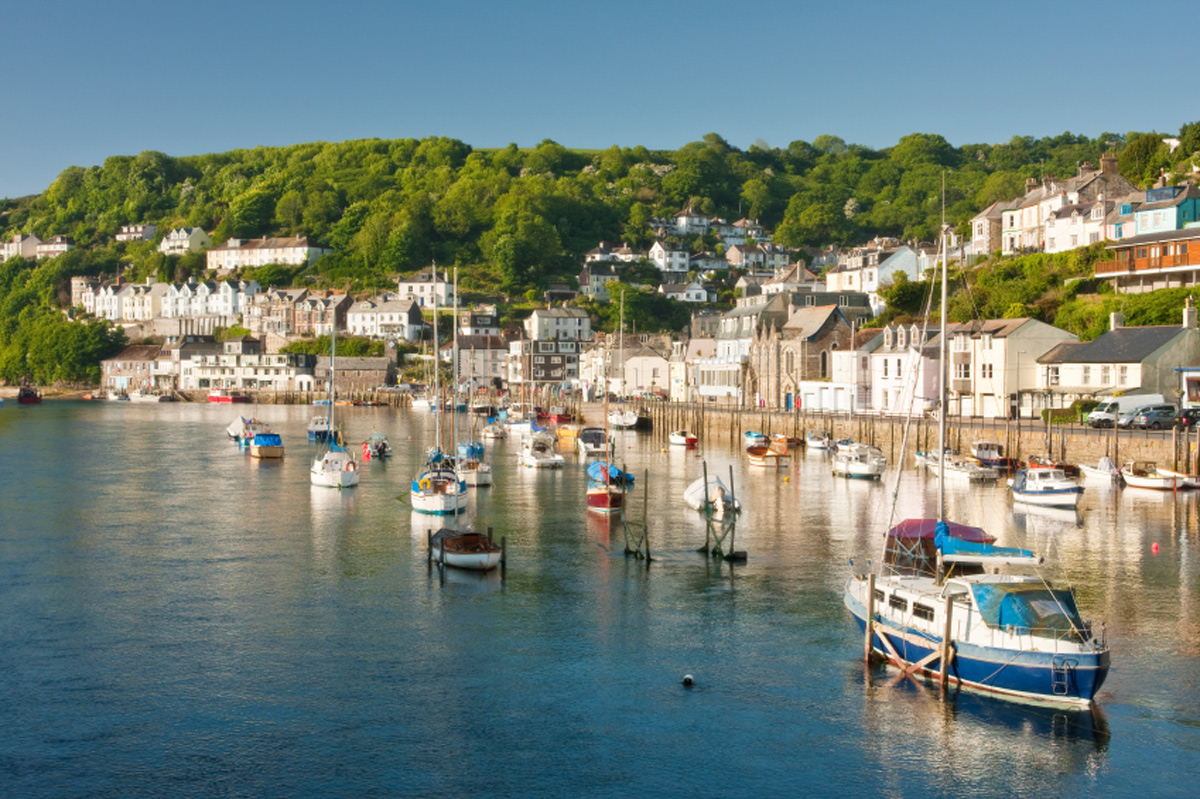
LOOE RIVER & THE MILL POOL
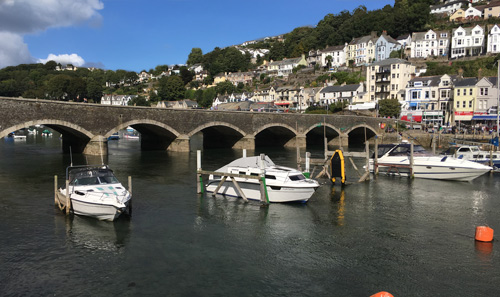
The river is spanned by a seven-arched Victorian bridge, giving access to both sides of the town and to the main Mill Pool Car Park. Looe has two parking areas, both in scenic locations - one adjacent to the river by the eastern side of the bridge, the other, larger car park, is on the western side of the river at the large Mill Pool Car park.
The Mill pool runs along the length of the Western arm of the Looe river, with stunning scenery on the opposite bank, including a heronry. Children love to play along this stretch of the river, catching small fish and crabs from the relative safety of the path that runs along the banks of the Looe river.
Across the seven-arched Victorian bridge lies West Looe, with its 16th century Jolly Sailor Inn and St Nicholas Church, and at Hannafore you can explore the rock pools on the beach and look across to St George's, or Looe Island, which has 12th century monastic cells and belonged once to the Abbot of Glastonbury. The island was popularised by the Atkins sisters in their books "We Bought an Island" and "Tales from our Cornish Island".
There are boat trips to the island in the summer season, as well as along the coast. For the more adventurous there are shark-fishing trips. A train journey on the Looe Valley Line will take you to Causeland station, from where it's roughly a 1.3-mile uphill walk to the ancient stone circle at Duloe, or to St Keyne Wishing Well Halt, about half a mile below the holy well at St Keyne itself. Both stops sit down in the valley the railway follows, so allow a bit of a climb on foot to reach either site.
↑ Back to top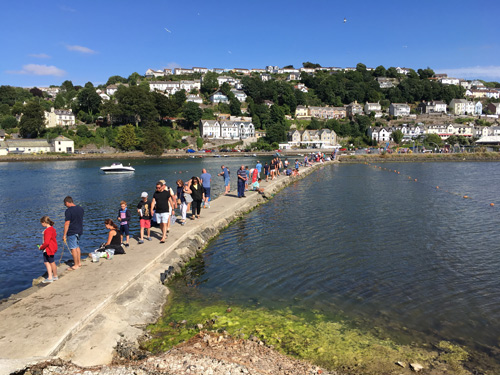
SOUTH EAST CORNWALL BAYS & BEACHES
Travelling east along the coast, you can see Amazon woolly monkeys in the protected breeding colony of the Monkey Sanctuary.
At the end of long, winding, wooded valleys are the beaches of Millendreath and Seaton, and beyond Downderry the road runs along the cliffs through the village of Crafthole, standing high above the tiny harbour of Portwrinkle, a former fishing hamlet.
To the east lies the stunning four-mile stretch of sand and surf at Whitsand Bay, popular with beachgoers and shore fishermen. Guarding the entrance to Plymouth Sound is Rame Head, with its superb views, 400ft cliffs and 14th century chapel, where a beacon blazed at the time of the Armada. Look out for the many stone fortresses known as Palmerston Follies, a legacy of a 19th century defence initiative.
Continuing around the headland you will come across the little-visited, attractive and unspoilt coastal villages of Kingsand and Cawsand, backed by high wooded cliffs. The villages were once a notorious smugglers' haven, with tales of hidden passages and secret cellars still part of local lore.
East Looe Beach
Featured as the main photo at the top of the page, East Looe Beach is the main tourist beach in South East Cornwall. The beach is a traditional family friendly, sandy beach that slopes gently to the sea - with safe swimming for young and old alike.
The beach is well maintained and cared for by the East Looe Town Trust. The beach is sheltered by the downs on the West Looe side of the river and the Banjo Pier separates it from the fishing and boating traffic. Located at the edge of the town, the beach has all services (toilets, cafes, restaurants and shops) nearby. There is an all year round dog ban on the beach. Parking is in the main car parks at Mill Pool or the Harbour Quay - a 10 to 15 min walk through the town.
Plaidy Beach - East Looe
A small grey sand, shingle and rock beach to the east of Looe, with rock pools revealed at low tide. Plaidy Beach has no parking nearby and no facilities - at high tide there is very little beach left, as the sea covers most of the sand and shingle. There is a slipway giving access to the beach. It can be reached from East Looe Beach - follow the sea defences, and at the eastern edge of the sea wall there is a small gap between the rocks, which leads down onto Plaidy Beach. Alternatively, park at Millendreath and walk the short distance (around 20 minutes) along the coast path. Plaidy is dog friendly all year round, and there is no lifeguard service.
Hannafore Beach - West Looe
The seafront at Hannafore is a great place to spend a few hours. There is free parking along the length of the long promenade and sea wall, with easy access down to the beach and great views of Looe Island and along the coast to Rame Head. The beach at West Looe is a mix of rock pools and shingle. Hannafore Point sits at the heart of the Looe Voluntary Marine Conservation Area, and its rocky ledges and gullies are uncovered twice a day at low tide, making it one of the best rockpooling spots in Cornwall. A concrete path leads down from the promenade onto the middle and lower shore, where children (and adults) can go crabbing among the rocks and turn over stones to find starfish, anemones, squat lobsters and the occasional shark egg case washed up in the seaweed - do turn stones back afterwards so their occupants aren't left exposed. With the Looe Island marine nature reserve as a backdrop, Hannafore is a popular spot for holidaymakers and marine biologists alike, and the Looe Marine Conservation Group runs regular guided rockpool rambles throughout the year. As with any low-tide exploring, keep an eye on the sea - the water can come in quickly across the exposed ledges, and it's best to go out an hour or two before low tide so you're not caught out on the way back. There is free parking on the road above, with facilities nearby including toilets and a kiosk. Hannafore is a dog friendly beach - dogs are allowed all year - though there is no lifeguard cover, so care should be taken at high tide.
Millendreath - Black Rock Beach Resort
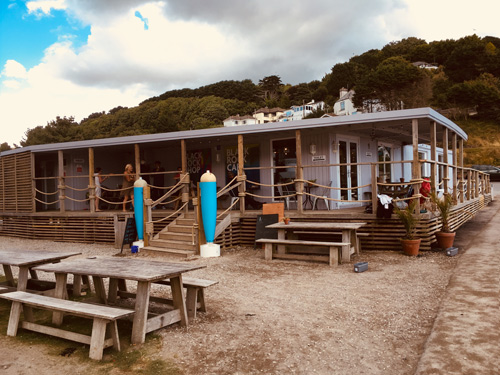
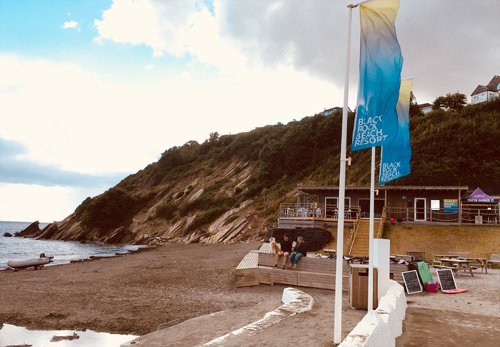
Set at the end of a wooded valley, Millendreath is a south facing, sandy beach with a small stream running across the middle section. The sheltered little cove provides safe swimming and the southerly aspect means that it is a great sun trap. The Black Rock Beach Resort is in the process of redeveloping the area and has a café on the sea front. Situated on the beach terrace is the comprehensive water sports area offering paddle boarding and kayaking under professional supervision as well as wet suit and equipment hire.
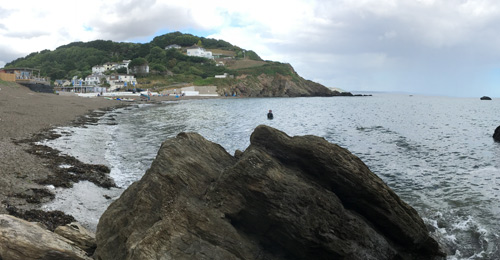
Millendreath beach is well maintained and is one of the safest bathing beaches in the area with stunning coastal views and one of very few locations in the UK to support a species of native, British Seahorse.
There are toilets on site and ample parking nearby. Millendreath beach has a year round dog ban.
Talland Bay
Located close to Polperro, the twin coves of Talland Bay are located in an area designated as both an Area of Outstanding Beauty and a Heritage Coast. Talland Bay with its two coves (both a mixture of rock pools and sand), two seasonal cafes and parking is reached via narrow lanes that lead down from the Looe to Polperro road.
Talland Sand is the main beach (the most westerly of the two beaches). This sheltered little cove is an ideal family beach with safe swimming and numerous rock pools as the tide goes out. There is the Talland Bay Beach café adjacent to the beach and coastal path - which offers car parking and a shop. There are toilets located 100 yds from the beach on the main access road.
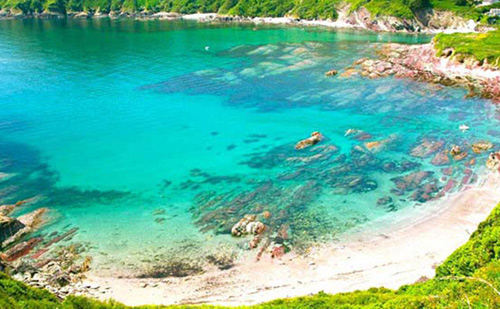
The smaller and quieter Rotterdam Beach, on the east side of the bay, is overlooked by St Tallanus. There is less sand and access is via steps. The beach offers numerous rock pools and safe swimming. Set back from the beach is the Smugglers Rest café - which has a car park.
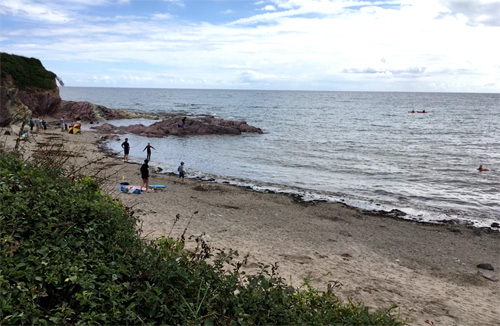
Talland Sands
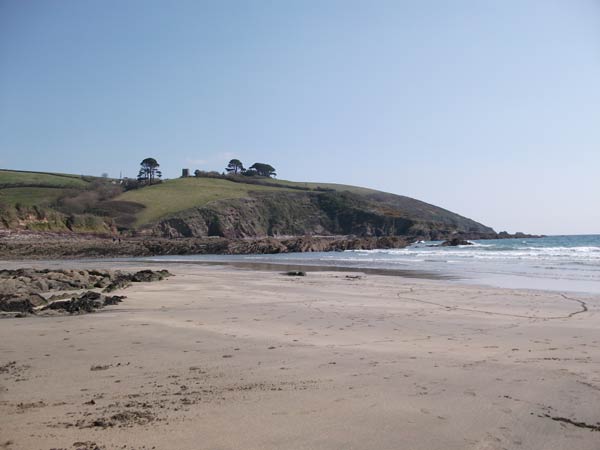
Talland Sands
Between the two beaches, the shoreline is very rocky - good for fishing and snorkelling. The underlying rock strata is Meadfoot bedrock (Devonian period; slates, siltstones and sandstones), which erode at different rates to reveal red, green and brown rocks.
Seaton Beach
Located at the end of the Hessenford valley, Seaton beach is a large coarse sand and shingle beach five miles east of Looe. The beach is a great family beach with a large beach café, shop and toilets set in a quieter part of the East Cornwall coast. The River Seaton crosses the beach, an attraction for children who can safely play here. The bathing waters are safe to swim in and the beach is quite sheltered from the high cliffs to the west. Parking is behind the beach adjacent to the Seaton Valley Countryside Park. Seaton has a shop, pub and cafes.
The beach is bordered by flat rocks, which reveal rock pools as the tide goes out, as well as an extensive area of flat sand. At low tide, you can walk as far as Downderry to the East and the Looe beaches in the west. Seaton beach has a promenade along the sea defences leading to Downderry beach. Seaton Beach is very popular with dog owners who like to walk along the beach or the promenade to Downderry.
Seaton Valley Countryside Park
Set in a steep-sided, wooded valley between Seaton and Hessenford, Seaton Valley Countryside Park is one of Cornwall's four Country Parks and was the first in the county to win a Green Flag Award, in 2005. Covering around 54 hectares on the site of a former caravan park, it's now a Local Nature Reserve home to otters, kingfishers, dormice and fritillary butterflies, spread across semi-ancient woodland, ponds, and rough and wet grassland along the River Seaton.
A flat, level path over a mile long runs the length of the valley floor, linking the car park to Seaton beach at the southern end and continuing north through woodland towards Hessenford - making it accessible for pushchairs and wheelchair users on the main route. Facilities include a car park, toilets, a picnic area, a children's play area, an outdoor gym and a sensory garden. The park is well used by dog walkers, and the beach café at the coastal end is dog friendly too.
Downderry Beach
A little further along the coast from Seaton, on the western fringe of Whitsand Bay, Downderry is a mile-long stretch of grey sand and shingle with rock pools revealed at low tide. The village sits right behind the beach, with the Inn on the Shore pub overlooking the sand, along with a café, a small shop and public toilets. There is a small free car park in the village, though spaces fill quickly during summer - Seaton's larger car park is a short walk away if Downderry's is full.
At low tide it's possible to walk the full length of the beach through to Seaton, and a promenade along the sea defences links the two villages at higher tides. Downderry is dog friendly all year round, though there is no lifeguard cover, so care should be taken with tides and currents, particularly at the beach's eastern end near the cliffs.
Whitsand Bay
Located between Rame Head and Portwrinkle, Whitsand Bay offers three miles of stunning sand and is considered to be one of Cornwall's hidden gems. There is parking at various points along the coast road and steep paths and steps wind down the sloping cliffs to the long sandy beaches at the bottom. Whitsand Bay is the best place for surfing in South East Cornwall. Life Guards are stationed at Freathy during summer season - but on the rest of the coastline rip currents can make it dangerous for swimming.
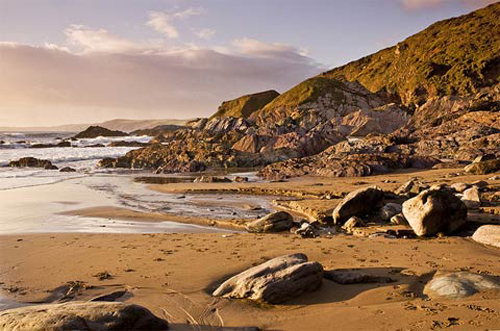
Portwrinkle
At the western end of Whitsand Bay, Portwrinkle is a small former fishing village with two beaches either side of its tiny harbour - the sandy Hoodny Cove to the west, and Finnygook Beach to the east, popular with surfers. The village's 17th-century pilchard cellars, once central to its fishing industry, still stand today, now converted into holiday cottages.
There's a small café behind the beach and limited parking in the village - the approach road is narrow, so care is needed during busy periods. Portwrinkle is also home to the cliff-top Whitsand Bay Golf Club, established in 1905 and open to visitors as well as members, with sea views from every hole. Dogs are not permitted on the beach between 10am and 6pm during July and August; outside these times, and throughout the rest of the year, dogs are welcome. There is no lifeguard service at either beach.
Mount Edgcumbe Country Park
At the eastern edge of the Rame Peninsula, on the banks of the Tamar river and Plymouth Sound, are the 865 acres of the Mount Edgcumbe Country Park, with an orangery, Italian Garden and historic house rebuilt after the original was destroyed in the Blitz. There is also a passenger ferry to Plymouth. Nearby is the charming medieval village of St John, and the sheet of tidal water known as St John's Lake is recommended for bird-watching and its views.
At Torpoint you can enjoy a fine view of the naval dockyards at Devonport, across the stretch of the Tamar Estuary called the Hamoaze. A car ferry can take you to Plymouth itself, with its fascinating harbour and numerous attractions.
VISITOR INFORMATION
Parking
Looe has two main Cornwall Council car parks — Millpool on the West Looe side (the largest, with disabled bays and EV charging points) and the smaller Riverbank car park on Station Road, East Looe, which fills quickly in peak season. A long-stay car park is also available at Kilminorth Woods. Free parking operates at Millpool overnight from 4pm to 9am between 1 November and 31 March.
Bus & Train Travel Links
Looe railway station sits at the terminus of the scenic Looe Valley Line, connecting to Liskeard for onward mainline services to Plymouth and beyond. Regular bus services also run from Plymouth and Liskeard, including routes via Saltash, Landrake and Widegates.
Facilities
The town has public toilets at both Millpool and near the Harbour, along with a Tourist Information Centre, banks, a pharmacy, and a small supermarket. East Looe Beach and Hannafore Beach both have nearby facilities, though several of the outlying beaches (Plaidy, Seaton, Millendreath) have more limited amenities — check individual beach listings above for details.
Cafés & Restaurants
East Looe's narrow streets are packed with independent cafés, traditional fish and chip shops, and harbourside restaurants serving locally landed seafood. West Looe offers a quieter selection of pubs and eateries, including the historic Jolly Sailor Inn.
Trips From Looe
Looe is a popular departure point for boat trips, including sightseeing cruises, mackerel fishing, shark and reef fishing charters, and glass-bottom boat tours around Looe Bay. Official landing trips to Looe Island Nature Reserve are run by Cornwall Wildlife Trust in partnership with local boat operators, departing from the floating pontoon near the RNLI lifeboat station in East Looe — landing is only permitted as part of an organised trip.
Accommodation in Looe
``` ```Local Beaches
```- Looe Beach In Looe
- Hannafore Beach Approx. 1 mile
- Talland Bay Approx. 3 miles
- Seaton Beach Approx. 4 miles
- Downderry Beach Approx. 5 miles
- Lansallos Beach Approx. 6 miles
- Lantic Bay Approx. 8 miles
- Beaches in Cornwall Complete beach guide
Local Attractions
```- Polperro Approx. 5 miles
- Old Guildhall Museum & Gaol In Looe
- Looe Island Approx. 1 mile offshore
- Polperro Model Village Approx. 5 miles
- Adrenalin Quarry Approx. 8 miles
- Porfell Wildlife Park & Sanctuary Approx. 9 miles
- South West Coast Path Walks from Looe
FREQUENTLY ASKED QUESTIONS ABOUT LOOE
Looe is pronounced simply as "Loo", rhyming with "too".
The Looe River splits the town in two. East Looe is the busier side, with the main tourist beach, shops, cafes, pubs and the old fish market quay. West Looe is quieter, with narrow streets, the historic Jolly Sailor Inn, and St Nicholas Church. A Victorian bridge and a small foot ferry connect the two sides.
East Looe Beach and Millendreath have a year-round dog ban. Hannafore Beach and Plaidy Beach allow dogs all year. At some other South East Cornwall beaches, such as Portwrinkle, seasonal restrictions apply in July and August.
Yes. Looe Island (St George's Island) is a nature reserve managed by Cornwall Wildlife Trust. Landing is only permitted as part of an organised boat trip, which departs from the pontoon near the RNLI lifeboat station in East Looe.
The BBC drama Beyond Paradise uses Looe as the fictional Devon town of "Shipton Abbott". The Old Guildhall doubles as the show's police station, Fore Street stands in for the market square, East Looe Beach appears throughout, and Looe's Victorian bridge appears on screen as "Shipton Abbott Bridge".
Looe railway station is the terminus of the scenic Looe Valley Line, connecting to Liskeard for onward mainline services. The line first opened for goods in 1860 and began carrying passengers in 1879.
The main car parks are Millpool on the West Looe side, and the smaller Riverbank car park on Station Road in East Looe. A long-stay option is also available at Kilminorth Woods.
Yes. A small fleet of day boats - trawlers, netters and potters - still lands at Looe's quayside every day, though the fleet is far smaller than in its early 20th-century pilchard-fishing heyday. Looe's own fish auction closed in 2019, so most of the catch is now graded and sold at markets in Devon before some of it returns to be sold locally.
Looe's recurring annual events include Carnival Week and the Duck Race in early August, the Looe Food & Drink Festival in June, the Looe Weekender live music event in September, and the Lantern Parade and Christmas Light Switch-On in late November. Exact dates vary each year.
Cornwall Online | Looe| Talland Bay | Polperro | Polruan | Fowey | Lostwithiel | Mevagissey | Whitsandbay & The Rame Peninsula | Kingsand | Cawsand | Mount Edgecumbe Country Park | Torpoint | St Germans | Saltash | Liskeard | Siblyback Lake - Water Park | Minions - Bodmin Moor | St Neot | St Cleer | Callington | Gunnislake | Calstock | Cardinham Woods -Walking & Cycle Trails | Launceston |